
Antimonumenta
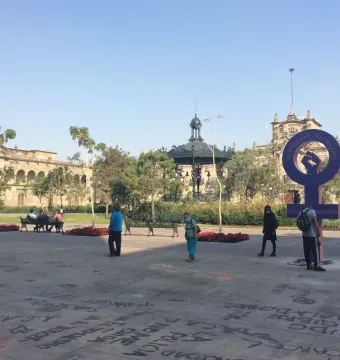
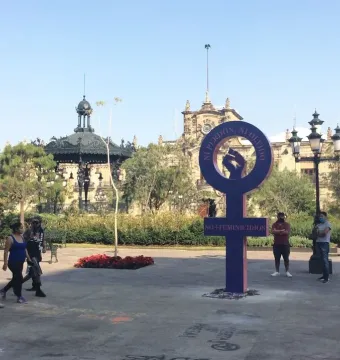
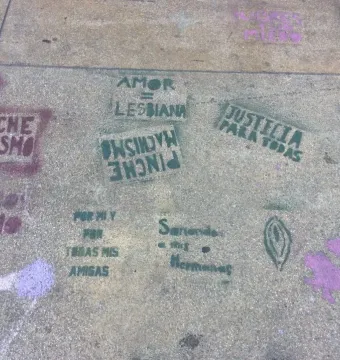
Antimonumenta was installed in Plaza de Armas in Guadalajara, Jalisco, on November 25, 2020, during the annual women’s march held on the International Day for the Elimination of Violence against Women. The sculpture’s name is symbolic and was inspired by another antimonument of the same name installed in Mexico City a year earlier. Its creation is tied to feminist protests against gender violence and to the demand for justice for women who suffer violence in the country. During the same march, activists also installed a red bench and symbolically renamed Plaza de Armas as Plaza Imelda Virgen, in memory of a murdered woman.
November 2020 © Salvador alc · CC BY-SA 4.0
November 2020 © Salvador alc · CC BY-SA 4.0
November 2020 © Salvador alc · CC BY-SA 4.0
November 2020 © Salvador alc · CC BY-SA 4.0
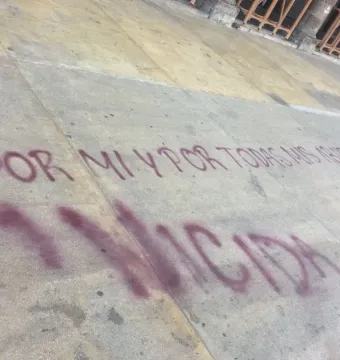
November 2020 © Salvador alc · CC BY-SA 4.0
Identification | |
| Type | Antimonument / anti-monument sculpture / protest monument / metal sculpture / artwork |
| Name | Antimonumenta |
Historical context | |
| Installation date | 25 November 2020 |
| Event context | Installed during the annual women's march protesting gender violence on the International Day for the Elimination of Violence against Women |
| Historical context | Installed amid the COVID-19 pandemic in Mexico |
| Related social context | In Mexico between January and September 2020, 230 women were murdered and 39 of those cases were investigated as femicides |
| Later event | On 8 March 2021, during the International Women's Day march, several women performed Canción sin miedo next to the Antimonumenta |
Creator | |
| Installers | Women feminists / activists (not individually named) |
Discovery and provenance | |
| Inspiration | Inspired by the anti-monument of the same name installed in Mexico City one year earlier |
| Related installation | A red bench was also installed during the same march |
| Related bench location | In front of the Rotonda de los Jaliscienses Ilustres, a few blocks from Plaza de Armas |
Location and ownership | |
| Legal status of namesake case | In 2017 her husband received a sentence that was appealed and retried; by November 2020 the second trial had also been appealed and was awaiting a new trial |
| Location context | Placed in a historic area surrounded by historic stone-colored buildings |
| Legal charges in namesake case | Her husband was charged with parricide and the other two men with first-degree homicide; none were charged with feminicide |
| Namesake case details | According to prosecutors, in September 2012 her husband hired two other men to rape and kill her |
| Namesake identity | Academic and the first woman killed after feminicide was made a crime in Jalisco |
| Person commemorated by symbolic renaming | Imelda Josefina Virgen Rodríguez |
| Symbolic renaming | The site was symbolically renamed Plaza Imelda Virgen |
| Current location | Plaza de Armas, historic center of Guadalajara, Jalisco, Mexico |
Physical characteristics | |
| Height | 3.8 meters (12 feet) |
| Weight | 300 kilograms (660 pounds) |
| Form | Cross |
| Appearance | Similar in shape to antimonumentas installed elsewhere in Mexico |
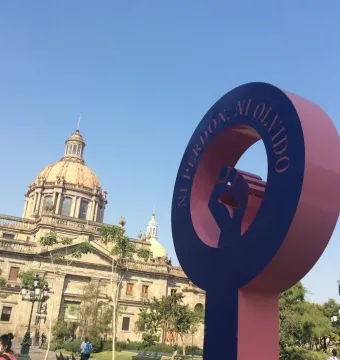
| Color | Painted violet and pink |
| Symbol depicted | The feminist struggle symbol based on the Venus symbol with a raised fist in the center |
Materials | |
| Material | Metal |
Appearance | |
| Alternative name | Banca Roja |
| Bench context | Installed as part of a global campaign of red benches denouncing gender violence |
| Bench symbolism | Red benches symbolize those who were and those who will come |
| Bench type | Red bench |
| Upper inscription | Ni perdonar ni olvidar |
| Plaque location | In the middle of the bench |
| Plaque inscription | In memory of all the women murdered by those who claimed to love them or just because they were women. |
| Inscription note | Its inscriptions differ from those on similar antimonumentas elsewhere in the country |
| Central inscription | Ni una más |
| Cross-arm inscription | No + feminicidios |
| Opposite-side inscription | Memoria, verdad y justicia |
Meaning | |
| Symbolic renaming meaning | The plaza was renamed in memory of Imelda Josefina Virgen Rodríguez |
| Symbolic interpretation | Its colorful appearance contrasts with the surrounding historic stone-colored buildings, emphasizing that violence against women is out of place |
| Purpose | To comfort women silenced for centuries, make observers uncomfortable, and symbolize disappeared or murdered women |
| Interpretation | According to the installers, it represents the victims of femicide in Jalisco and demands that authorities and society stop femicides |
| Symbolic meaning of violet | In feminism, violet represents loyalty, constancy toward a purpose, and unwavering firmness toward a cause |
History and restoration | |
| Government involvement | During installation, Enrique Ibarra Pedroza, Secretary General of the State Government, tried to negotiate the site placement and later attempted to negotiate removal, arguing it violated INAH guidelines for a historic area |
| Public reaction | He received complaints that he should have addressed them when they had requested meetings to speak with him |
| Institution involved | State branch of the National Institute of Anthropology and History (INAH) |
| Defense of permanence | Alicia García Vázquez said it should remain in that space and that its permanence should be analyzed like any other monument |
| Reference building | Guadalajara Centro railway station, cited as an example of earlier omissions of the guidelines |
Significance | |
| Commemorated date | International Day for the Elimination of Violence against Women |