
Equestrian Statue of Victor Emmanuel II
The Equestrian Statue of Victor Emmanuel II is a bronze work by Enrico Chiaradia and the architectural centre of the Vittoriano in Rome. Set above the Altar of the Fatherland and in front of the portico colonnade, it is the only non-symbolic representation in the monument, depicting the monarch himself. The marble base is carved with personifications of fourteen noble Italian cities, created by Eugenio Maccagnani, and decorated with symbols of the armed forces victorious in the wars of the Risorgimento. The statue weighs 50 tons, and its placement recalls classical traditions in which equestrian statues emphasized centrality, civic virtue, and martial excellence.
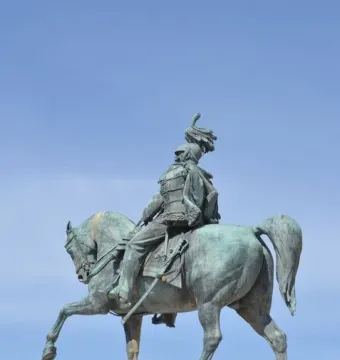
July 2016 © Darafsh · CC BY-SA 3.0
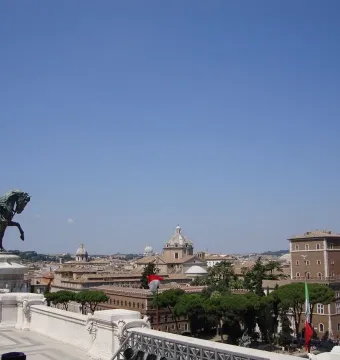
© Toronto_guy · CC BY 3.0
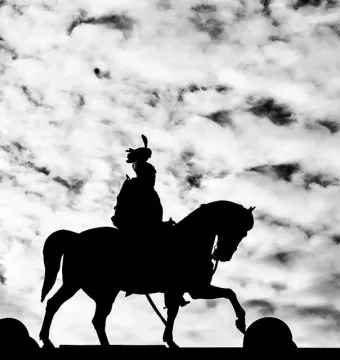
© Emanuele Meschini · CC BY-SA 3.0
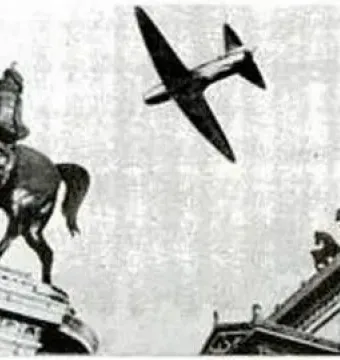
© Unknown authorUnknown author · Public domain
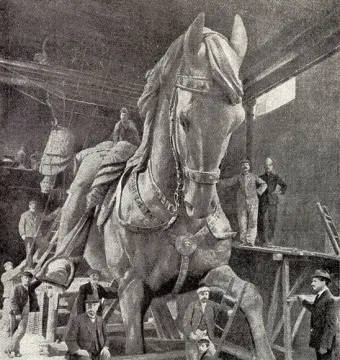
May 1909 © Unknown authorUnknown author · Public domain
Identification | |
| Title | Equestrian Statue of Victor Emmanuel II |
| Type | Equestrian statue |
Historical context | |
| Subject | Victor Emmanuel II |
| Commissioned | 1889 |
Creator | |
| Designer and commissioner | Enrico Chiaradia |
| Completion | Completed by Emilio Gallori after Chiaradia's death in 1901 |
| Relationship to architect | Maccagnani was much appreciated by Sacconi |
| City personifications sculptor | Eugenio Maccagnani |
Materials | |
| Material | Bronze |
| Bronze source | Cannons of the Royal Italian Army |
Physical characteristics | |
| Lower plinth decoration | Symbols of the victorious armed forces of the Risorgimento: Engineer Corps, Navy, Artillery, and Cavalry |
| Composition | Bronze equestrian statue on a marble base |
| Hoof length | 50 cm |
| Base | Marble base with carved personifications of fourteen noble Italian cities |
| Weight | 50 tons |
| Length | 10 meters |
| Height | About 12 meters |
Location and ownership | |
| Location within monument | Above the Altar of the Fatherland, in front of the colonnade of the portico, at the architectural center of the Vittoriano |
| Uniqueness within the Vittoriano | The only non-symbolic representation in the Vittoriano |
Appearance | |
| Symbolism | Equestrian statues exalt the subject's warlike virtues and, by showing control of the horse, civic virtues and control over primordial instincts |
| Placement tradition | Its central placement follows classical antiquity traditions for equestrian statues in front of colonnades, public squares, temples, or along triumphal streets |
History and restoration | |
| Source of plinth relief inspiration | Trajan's Column |
| Pre-closing event | A lunch for 21 people was organized before the belly was closed |