
Francisco Pizarro Equestrian Statue
The Francisco Pizarro equestrian statue is a monument by American artist Charles Cary Rumsey, donated to Lima by his widow Mary Harriman. It was inaugurated on 18 January 1935 for the city’s 400th anniversary and originally installed in the atrium of Lima Cathedral. Due to objections from the archdiocese, it was moved in 1952 to Plaza Pizarro, then removed in 2003 and relocated in 2004 to the Parque de la Muralla. In December 2024, the Municipality of Lima announced its return to the historic center, where it was to be placed in Pasaje Santa Rosa between the Plaza Mayor and the Municipal Palace, beside the monument to Taulichusco.
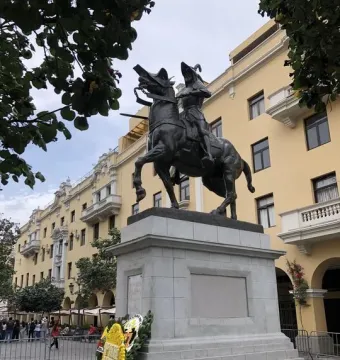
January 2025 © AlejandroFC · CC BY-SA 4.0
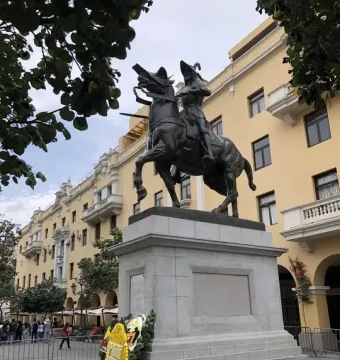
January 2025 © AlejandroFC · CC BY-SA 4.0
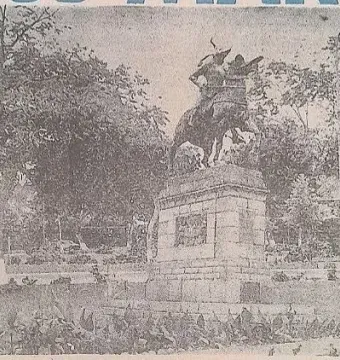
1970 © Diario Extra · Public domain
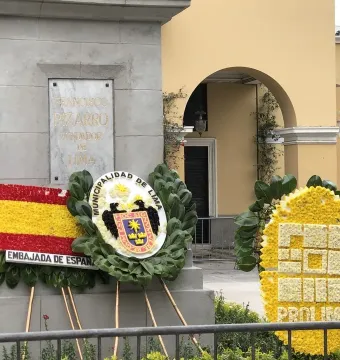
January 2025 © AlejandroFC · CC BY-SA 4.0
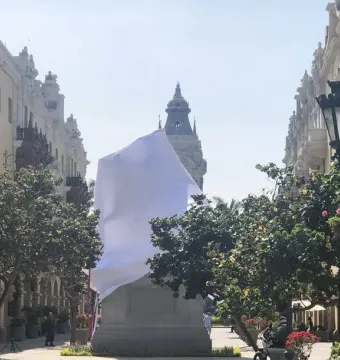
January 2025 © AlejandroFC · CC BY-SA 4.0
Identification | |
| Title | Monument to Francisco Pizarro |
| Type | Equestrian statue |
| Alternative title | Equestrian statue of Francisco Pizarro |
Iconography and meaning | |
| Subject | Francisco Pizarro |
Creator | |
| Sculptor | Charles Cary Rumsey |
| Artist nationality | American |
| Casting foundry | E. Gargani |
Discovery and provenance | |
| Made in | New York |
| Transported from | New York to Lima |
| Donor | Mary Harriman, widow of Charles Rumsey |
| Donated to | The city of Lima |
Historical context | |
| Inauguration occasion | 400th anniversary of the founding of Lima |
| Inauguration praise | Then-mayor Luis Gallo Porras praised it as the "clear figure of the hero and the civilizer" |
| Historical context | Recovery of the Historic Centre of Lima |
| Inaugurated in Lima | 18 January 1935 |
| Dedicated to | The founding of Lima by Francisco Pizarro on 18 January 1535 |
Location and ownership | |
| Square renamed | Plaza Perú |
| Responsible office | PROLIMA (Management of Planning, Management and Recovery of Lima's Historic Center) |
| Shared location with | Monument to the curaca Taulichusco |
| Purpose of planned placement | As a tribute and recognition of the mestizo character and the Hispanic reality of Peruvian identity |
| Announcement date | December 2024 |
| Announced return to | Santa Rosa Passage, between the Plaza Mayor and the Municipal Palace |
| Time at Parque de la Muralla | About two decades |
| Reinstalled in | 2004 |
| Reinstalled at | Parque de la Muralla |
| Relocation reason | Complaints from the new archbishop of Lima, Cardinal Juan Landázuri Ricketts, and resistance from the Archdiocese of Lima, which opposed its presence in front of the cathedral because it diminished the visibility of the Mother Church of Peru |
| Removed by | Mayor Luis Castañeda Lossio |
| Removed in | 28 April 2003 |
| Removed from | Pizarro Square |
| President of Peru during relocation | General of the Army Manuel Arturo Odría Amoretti |
| Municipal government during relocation | Luis Dibós |
| Relocated in | 1952 |
| Relocated to | Pizarro Square, at the intersection of Jirón de la Unión and Jirón Conde de Superunda, on the left side of the Government Palace and next to the Municipal Palace of Lima, in a corner of Lima's Plaza Mayor |
| Original location | Atrium of the Cathedral of Lima |
History and restoration | |
| Square after removal | The square was remodeled and a fountain and a Peruvian flagpole were installed |
| Proposed removal from Plaza Mayor | Since 1997, during the administration of Alberto Andrade Carmona, initiatives were made but not completed to remove the monument from the vicinity of the Plaza Mayor |
| Official return inauguration | Presided over by Lima mayor Rafael López Aliaga and Community of Madrid president Isabel Díaz Ayuso |
| Isabel Díaz Ayuso role | She traveled to Lima as part of the Spanish delegation, composed of diplomats and descendants of Pizarro |
Physical characteristics | |
| Pedestal status after reinstallation | Reinstalled without the pedestal used at its inauguration and much of its history; placed on a concrete base |