
The Ideal Scout
The Ideal Scout, also known as The Boy Scout, is a work by Canadian sculptor R. Tait McKenzie. Inspired by the Boy Scouts organization, McKenzie chose several young scouts to model in uniform. In 1915, he presented an 18-inch bronze version to the executive board along with the rights to royalties from copies. The scout’s uncovered head was meant to suggest reverence, obedience to authority, and discipline, while the hatchet symbolized truthfulness and the rejection of treachery, cowardice, and dishonesty. A life-sized version was unveiled in Philadelphia in 1937 and stood there until 2013. Replicas are installed at scouting councils across the United States, as well as in London, Ottawa, and on William D. Boyce’s grave in Ottawa, Illinois.

December 2023 © Rnyalko · CC BY-SA 4.0
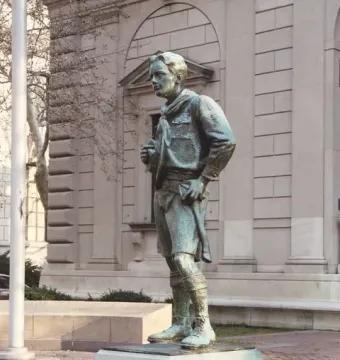
March 2006 © R. Tait McKenzie · Public domain
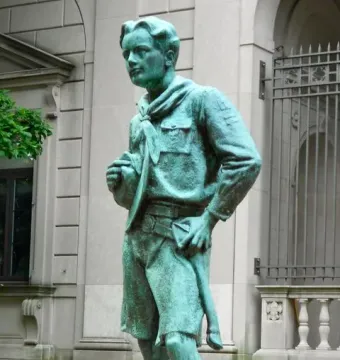
June 2012 © R. Tait McKenzie · Public domain
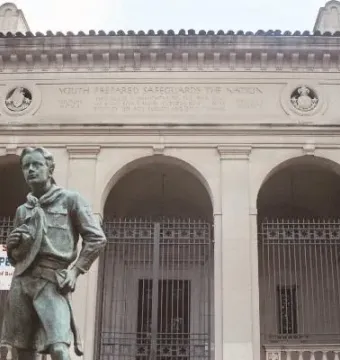
March 2006 © Bruce Andersen · CC BY-SA 1.0
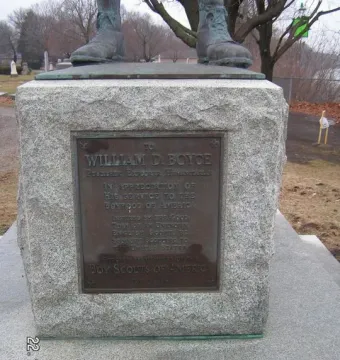
December 2007 © Sue Lyons-Oleary · Public domain
Identification | |
| Title | The Ideal Scout |
| Alternate title | The Boy Scout; El Scout Ideal |
| Type | Sculpture |
Creator | |
| Artist | R. Tait McKenzie |
| Artist nationality | Canadian |
| Artist lifespan | 1867–1938 |
Historical context | |
| Commissioned by | the Boy Scouts organization in Philadelphia |
| Date delivered | 1915 |
| Recipient | the executive board of the Boy Scouts organization in Philadelphia |
| Gift included | royalty rights from sales of copies |
| McKenzie role | served for more than 20 years on the executive council of the Boy Scouts organization in Philadelphia |
| Known copies | 18 copies in the Smithsonian American Art Museum database |
| Copies made for | Scouting America councils across the United States; Gilwell Park, London, England; Scouts Canada's national office in Ottawa; Australia |
Physical characteristics | |
| Height | 18 inches |
Materials | |
| Material | Bronze |
Appearance | |
| Models used | several young scouts in uniform |
| Head depiction | bareheaded |
| Held object | a hatchet |
| Depicted figure | an ideal scout |
Iconography and meaning | |
| Head symbolism | reverence, obedience to authority, and discipline |
| Hatchet symbolism | truthfulness; intended as something that would never be used for wanton destruction, but instead be applied against treason, treachery, cowardice, discourtesy, dishonesty, and dirt |
Location and ownership | |
| Original location | in front of the Cradle of Liberty Council at 22nd Street and Winter Street in Philadelphia, Pennsylvania |
| Life-sized version unveiled at | the Philadelphia Council's office at 22nd and Winter Streets |
| Life-sized version unveiled on | June 12, 1937 |
| Removed from original location | 2013 |
| Removal reason | after the successor Cradle of Liberty Council vacated the building |
| Replica locations | Gilwell Park, London, England; Ottawa, Illinois, on the grave of William D. Boyce; Scouting America councils across the United States; Scouts Canada's national office, Ottawa |
| Donation to Gilwell Park | donated in 1966 by the Boy Scouts of America |
| Received by President | President Calvin Coolidge |
| Reception location | outside the White House |
| Reception date | 1927 |
| William D. Boyce significance | Founder of the Boy Scouts of America, who modeled the organization on Great Britain's Boy Scouts Association |
Other | |
| Description | the most famous statue by Robert Tait McKenzie |