
Statue of Amenemhat III
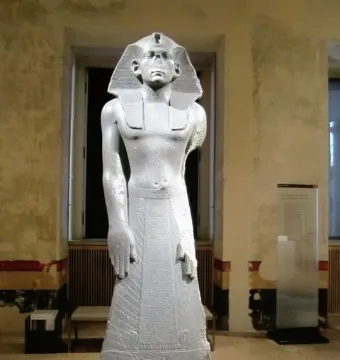
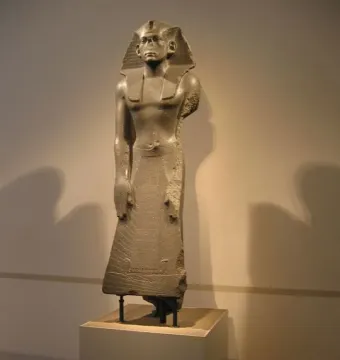
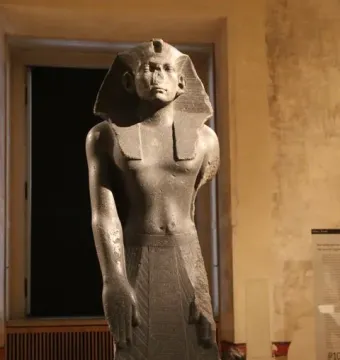
The Statue of Amenemhat III in the Berlin Egyptian Museum (inv. no. 1121) was found in Memphis, Egypt, in 1854 by Joseph Hekekyan and purchased by the Egyptian Museum in 1855. Made of granodiorite and standing two metres tall, it is one of the museum’s most notable works and one of the most important sculptures discovered from ancient Egypt. The king is shown standing in prayer, with his arms at his sides and his palms resting on his thighs, wearing the nemes headdress and a long skirt with a decorated belt. The statue was later re-inscribed for Merenptah in the 19th Dynasty, when its face was also altered and the figure coated with plaster and paint.
· CC BY 3.0
· CC BY-SA 3.0
· CC0
· CC BY-SA 4.0
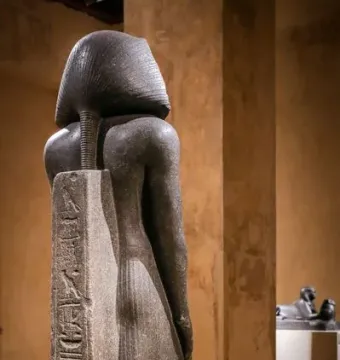
· CC BY-SA 4.0
Identification | |
| Depicted person | Amenemhat III, Egyptian king of the Middle Kingdom |
| Title | Statue of Amenemhat III |
Location and ownership | |
| Inventory number | 1121 |
| Current museum | Egyptian Museum of Berlin |
Discovery and provenance | |
| Discovery date | 1854 |
| Discovered by | Joseph Hekekyan (1807–1875) |
| Discovery location | Memphis, Egypt |
| Acquired by museum | 1855 |
Physical characteristics | |
| Clothing | Long garment with a belt and fine hanging embroidered borders |
| Comparative style note | Contrasts with other contemporary statues of the same king that show a mature face with clear signs of old age |
| Facial appearance | Ageless face |
| Decoration | Solar cobras decorating the hem |
| Pose | Standing in a prayer position with arms along the body and hands resting on the thighs |
| Headgear | Nemes headdress |
| Preserved condition | Feet and left arm are missing |
| Height | 2 metres |
Materials | |
| Material | Granodiorite |
Iconography and meaning | |
| Inscription preserved on belt | The king's throne name is preserved in the knot of the belt |
History and restoration | |
| Later reworking | Re-carved in resin during the 19th Dynasty for King Merenptah |
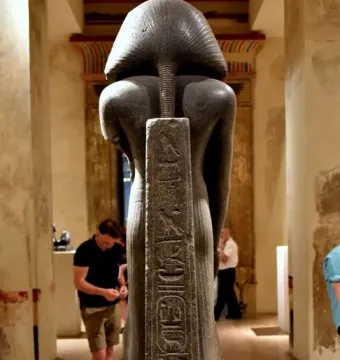
| Inscription on back pillar | The king's names and titles are on the back pillar |
| Post-usurpation treatment | The face was retouched; the entire statue was coated with plaster and painted |
Stylistic classification | |
| Statue type | Type showing a younger, ageless man in the fullness of physical prime rather than a mature face with clear signs of age |
Significance | |
| Art-historical significance | One of the most prominent pieces in the Egyptian Museum of Berlin and one of the most notable sculptures from Ancient Egypt |