
Girl with an Oar
Girl with an Oar is an archetypal example of Socialist Realism in Soviet outdoor architecture. Numerous gypsum alabaster versions by Ivan Shadr and Romuald Iodko were placed in Soviet parks of culture and recreation and in young pioneer camps. Today it is seen as a symbol of Soviet park sculpture, tied to the monumental propaganda of sport and the ideal of a healthy person in late 1920s–1930s Soviet art. Shadr’s first version was a nude figure that was criticized and destroyed. A second nude version also vanished, and another copy was made for Luhansk, where it was later destroyed during World War II. The best-known stereotype is Iodko’s swimsuit version. In 2011, a reconstructed nude version was reinstalled in Gorky Park.
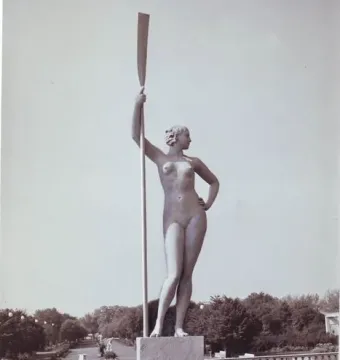
1936 © Главархив Москвы · CC BY 4.0
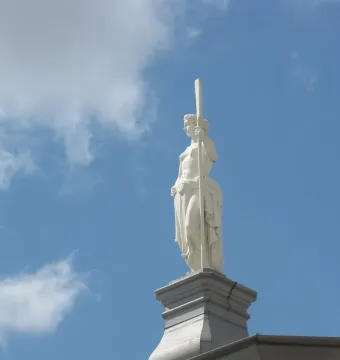
September 2011 © Adriadna · CC BY-SA 3.0
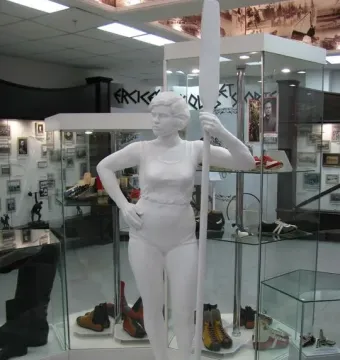
May 2013 © Владислав Фальшивомонетчик · CC BY 3.0
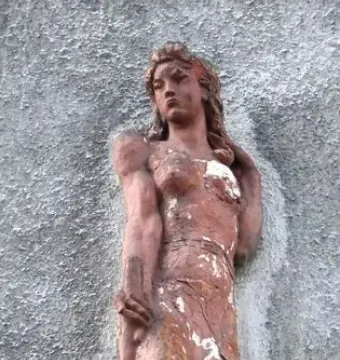
April 2009 © Pomeranian · CC BY-SA 4.0
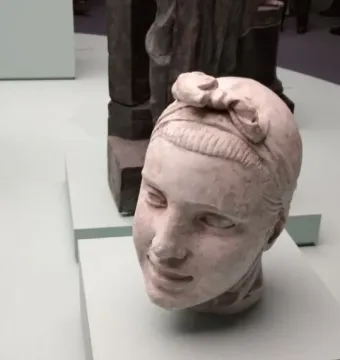
January 2026 © Andreykor · CC BY 4.0
Identification | |
| Title | Girl with an Oar |
| Type | Sculpture |
| Original title | Девушка с веслом |
| Translated title in Italian | La Ragazza col remo |
| Translated title in Spanish | Chica con un remo |
Historical context | |
| Style | Socialist Realism |
| Context | Soviet park sculpture; outdoor architecture of the Soviet Union |
| Period of popularity | Late 1920s–1930s |
| Historical significance | An archetypal example of Socialist Realism in Soviet outdoor architecture; one of the best-known sculptures of the Soviet period |
| Purpose | Main sculpture for Gorky Park in Moscow, conceived as a symbol of emancipation and equal rights for women and men in the USSR and as part of monumental sports propaganda |
| Commissioned by | Architect Aleksandr Vasilievich Vlasov |
| Supported by | Park administration headed by Betty Glan |
| Year work began | 1934 |
| Mass reproduction basis | Cheap plaster copies widely installed in Soviet parks and stadiums were based on Romuald Iodko's homonymous sculpture, not on Shadr's works |
Creator | |
| Sculptors | Ivan Shadr; Romuald Iodko |
Physical characteristics | |
| Model for first version | Vera Voloshina, a student at the Moscow Institute of Physical Education; another source names Nina Khomenkova |
| Earlier Iodko work pose | The woman leans on her left leg, with her right leg on a cubic support and the knee bent far forward; her right hand rests on the oar and her left hand touches her thigh |
| Iodko related work height | 2.5 meters |
| Second version model | Zoya Dmitrievna Bedrinskaya (Belorucheva), a gymnast |
| Second version height | 8 meters |
| Subject | A young nude female athlete holding an oar |
| Height | 12 meters including the bronze pedestal |
Materials | |
| Later material | Bronze |
| Original material | Plaster |
| Iodko related work material | Plaster |
| Second version material | Tinted concrete |
Appearance | |
| Head and hair | Head clearly outlined; hair tightly twisted into two "horns"; forehead and back of the head fully exposed |
| Second version changes | The hairstyle became freer, the figure less sexualized, the arm muscles were reduced, the breasts were enlarged, the proportions became more vertically elongated, and the silhouette slimmer and more romantic |
| Earlier Iodko work clothing | Shorts and a T-shirt |
| Antique reference | The form draws on ancient sculpture, with the oar functioning as a compositional accent comparable to a spear in classical statuary |
| Style features | Powerful plasticity of forms with dynamic twisting of the torso and head |
| Iodko related work appearance | A woman in a swimsuit holding the oar in her left hand |
Discovery and provenance | |
| Second version location | Center of the fountain in Gorky Park, Moscow, on a fluted column surrounded by water jets |
| Earlier Iodko work date | 1935 |
| Second version date | Summer 1936 |
| Smaller copy location | The Tretyakov Gallery |
| Earlier Iodko work location | Elektrik stadium, Cherkizovo district, Moscow |
| Reinstalled version location | Gorky Park, Moscow |
| First version location | Center of the fountain on the main avenue of Gorky Park, Moscow |
| Iodko related work date | 1936 |
| Iodko related work location | Park of the Dynamo water stadium |
| First version date | 1935 |
History and restoration | |
| Reinstalled version description | A reconstructed nude version |
| Reinstallation date | 2011 |
| Second version fate | Destroyed by a direct German bomb hit during World War II |
| Second version reception | Received more favorable opinions than the first version |
| First version fate | Removed after less than half a year; later relocated to Voroshilovgrad (now Luhansk), where it was eventually destroyed during World War II |
| First version reception | Criticized by the selection committee for excessive height and by Soviet authorities and the press as too erotic and vulgar |
Significance | |
| Later cultural meaning | Over time, the title became a generic term for similar Soviet park statues and the sculpture became associated with bad taste and vulgarity |
| Assessment of later copies | Most later copies and versions were considered of lower artistic quality, heavy, lacking femininity, overly athletic, expressionless, and formally conceived |
Other | |
| Model's condition during posing | Vera Voloshina felt embarrassed posing nude and insisted that Shadr's wife be present in the studio |
| Model's later fate | She fought during the war, was captured, and was hanged by the Germans |