
Monument to the Carta Magna and Four Regions of Argentina
The Monument to the Carta Magna and Four Regions of Argentina stands in Buenos Aires, at the intersection of Avenida del Libertador and Avenida General Sarmiento. It is popularly known as the Monument of the Spaniards because it was donated by the Spanish community in 1910 to commemorate the centenary of the May Revolution. It is therefore incorrect to call it simply “to the Spaniards,” as is sometimes done. The original author of the work was the Spanish sculptor Agustín Querol. Although the inauguration stone was placed in 1910, various setbacks delayed completion, and the monument was finally inaugurated in 1927.
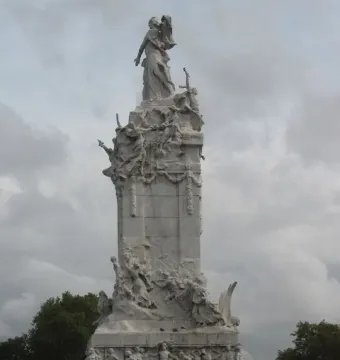
March 2008 © Thialfi · Public domain
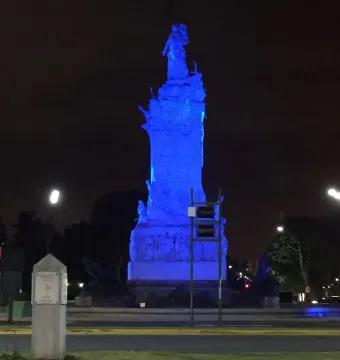
October 2015 © Buenos Aires Ciudad · CC BY 2.5 ar
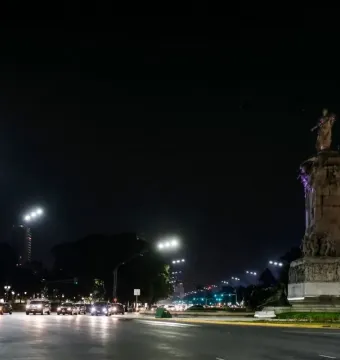
March 2020 © Buenos Aires Ciudad · CC BY 2.5 ar
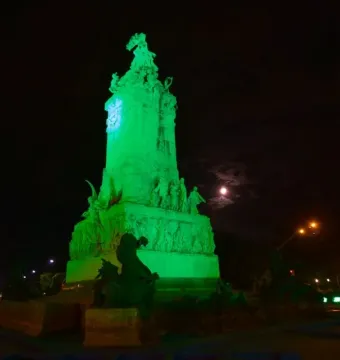
March 2016 © Gobierno de la Ciudad de Buenos Aires · CC BY 2.5 ar
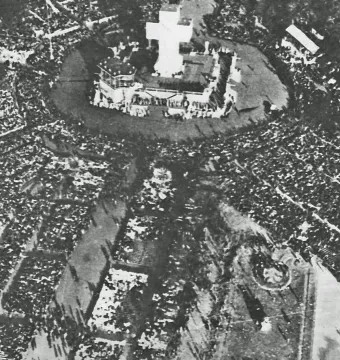
1934 © Unknown authorUnknown author · Public domain
Identification | |
| Title | Monument to the Carta Magna and Four Regions of Argentina |
| Common name | Monument of the Spaniards |
| Incorrect common name | "a los españoles" |
| Type | Monument |
Location and ownership | |
| Location | Avenida del Libertador and Avenida General Sarmiento, Palermo, Buenos Aires, Argentina |
| Site type | Landmark site |
| Current location | Buenos Aires, Argentina |
Discovery and provenance | |
| Donated by | The Spanish community in Argentina |
| Donation date | 1910 |
| Donation context | Centenary of the May Revolution of 1810 |
| Commemorative significance of donation | Marked the formal beginning of Argentina's independence from Spain |
| Funding | Financed by popular subscription and private donations |
Creator | |
| Successive creator's role | Folgueras continued the project until his death in 1911 |
| Original creator's role | Querol only made the sketches before his death in 1909 |
| Work completed by | Antonio Molinari |
| Work continued by | Cipriano Folgueras |
| Original designer | Agustín Querol Subirats, Spanish/Catalan sculptor and architect |
History and restoration | |
| 1934 attendance | More than one million people |
| Recovered object | A two-meter-high nymph recovered from the sea in 1991; the Buenos Aires City Legislature had not decided whether to accept it |
| Damage in 2023 | By around May 2023, various sculptures had been mutilated by bronze thieves |
| Further conservation work | Work continued on the base in 2022, sustained with private sponsorship |
| Restoration period | May to July 2019 |
| Lighting inauguration attendees | Mauricio Macri, Spanish Ambassador Rafael Estrella, and Diego Santilli |
| Lighting capability | They can produce combinations of 16.7 million colors |
| Lighting installation | 17 LED reflectors controlled by special software |
| Lighting installation date | 27 October 2011 |
| 1934 papal blessing | Pope Pius XI blessed the attendees via loudspeakers and a radio broadcast from Vatican City |
| Inauguration representatives | The Duke of Amalfi represented King Alfonso XIII of Spain and handed it over to President Marcelo T. de Alvear |
| 1934 temporary covering | A 35 m high cross was erected nearby |
| Inauguration delay cause | The surrounding sidewalk, the interior, and the lighting system were not finished |
| Inauguration date | 13 March 1927 |
| Completion date | 1927 |
| Replacement materials | Requested from Spain in 1917 and sent two years later; customs retained them, causing bureaucratic delays |
| Shipwreck loss | A large cargo of marble and bronze sculptures intended for the monument was lost |
| Storm damage | A marble figure's left arm was broken off and had to be reattached |
| Delay causes | Deaths of Agustín Querol Subirats (1909) and Cipriano Folgueras (1911); a strike by Italian workers in the Carrara quarries; a storm on 20 September 1914; sinking of the transatlantic liner Príncipe de Asturias on 6 March 1916 |
| Construction delays | The project suffered numerous delays |
| Foundation stone laid | 1910, during the presidency of José Figueroa Alcorta |
| 1934 event | Closing of the International Eucharistic Congress at the monument |
Physical characteristics | |
| Regional allegories | Bronze allegories of the Andes, the Río de la Plata, La Pampa, and El Chaco placed at the vertices of the base |
| Top feature | A symbolic statue of the Republic stands at the summit |
| Base decorations | Marble allegories of labor and work |
| Additional figures | Allegorical figures of Peace, Justice, Agriculture, and others surround the summit |
| Base | The pedestal rises in the middle of a pool |
Materials | |
| Materials | Carrara marble and bronze |
Iconography and meaning | |
| Frieze | High-relief sculptures symbolizing the union of Spain and America |
| Inscription | An engraved passage from the preamble of the Argentine National Constitution on the southeast face, plus four inscriptions proclaiming the brotherhood of Argentina and Spain, their people, their language, and their destiny |
| Inscription theme | Freedom for the country and for anyone in the world who wishes to make Argentina their home |
| Iconography | Allegories of the Andes, the River Plate, the Pampa, and the Chaco |
Significance | |
| Description | One of the most renowned monuments in the city |