
Monumento al Divino Salvador del Mundo
Monumento al Divino Salvador del Mundo is a landmark in San Salvador, El Salvador, located in Plaza El Salvador del Mundo. It features a statue of Jesus Christ standing on a globe representing planet Earth, set on a tall four-sided concrete pedestal. The monument serves as a symbol that identifies and represents El Salvador and Salvadorans throughout the world. Its pedestal was originally used to decorate the tomb of Manuel Enrique Araujo and was presented by his family in 1942 for the first National Eucharistic Congress in San Salvador. The statue was damaged in the 1986 San Salvador earthquake, then rebuilt and returned to place months later after the campaign “Lift up your soul Salvadoran.”
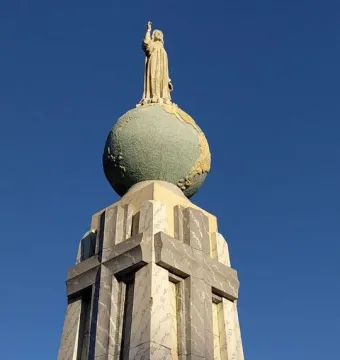
September 2021 © Falcon33grecia · CC BY-SA 4.0
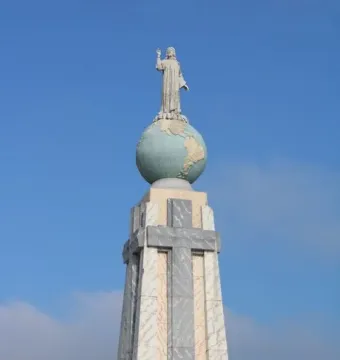
September 2021 © Lisseth Pérez · CC BY-SA 4.0
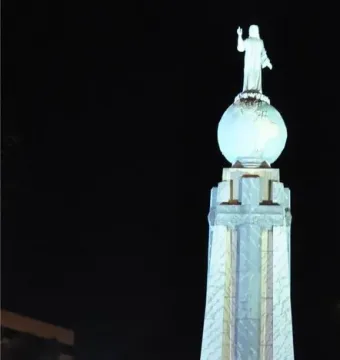
June 2011 © CRengifoN · CC BY-SA 4.0
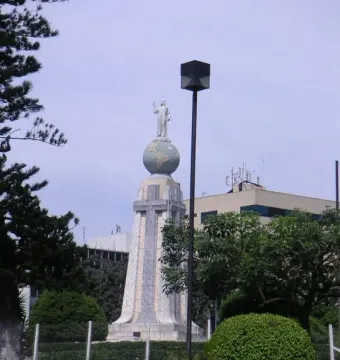
© Soman · CC BY 2.5
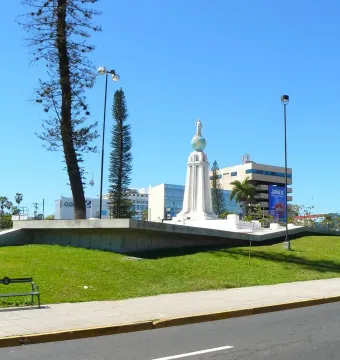
January 2013 © Erickssonr · CC BY-SA 3.0
Identification | |
| Name | Monumento al Divino Salvador del Mundo |
| Type | Monument; monumental sculpture; statue of Jesus Christ |
| Alternative names | Monumento al Divino; Monument to the Divine Savior of the World; Monument to Divino Salvador del Mundo; Monument to Jesus Christ, Redeemer of the World; Monumento al Salvador del Mundo; Salvador del Mundo |
Historical context | |
| Dedication | Dedicated to the Divine Savior of the World, the patron saint of El Salvador |
| Original purpose | Originally made to adorn the tomb of Dr. Manuel Enrique Araujo, President of El Salvador from 1911 to 1913, after his assassination in 1913 |
| Gift and transfer | Gifted by the Araujo family to Archbishop of San Salvador Luis Chávez y González in 1942 |
| Dedication occasion | The First National Eucharistic Congress in San Salvador and the centenary of the Diocese of San Salvador |
| Installation date | 26 November 1942 |
Creator | |
| Designer / architect | Carlos Varaona Villaseñor; José María Barahona Villaseñor; José María Villaseñor |
| Artist | Unknown artist |
Discovery and provenance | |
| Installed at current site | 1942 |
| Installed under supervision of | Architect José María Barahona Villaseñor |
| Installed by | Archbishop Luis Chávez y González |
| Made in | Italy |
| Former plaza name | Plaza Las Américas |
| Current location | Plaza Salvador del Mundo, San Salvador, El Salvador |
| Original location | The tomb of Manuel Enrique Araujo |
Physical characteristics | |
| Height | About 18 m |
| Statue height | 251 cm |
| Base | Tall quadrangular concrete pedestal |
| Composition | Jesus Christ standing on a globe representing planet Earth, mounted on a pedestal |
Materials | |
| Pedestal material | Concrete |
| Statue material | Carrara marble |
Appearance | |
| Decorative elements | Crosses on the pedestal; silhouettes of the continents on the globe |
Iconography and meaning | |
| Depicted figure | Jesus Christ |
| Subject | Christ, patron of the country |
| Symbolism | A symbol identifying and representing El Salvador and Salvadorans throughout the world; considered one of the country's most representative symbols and a national symbol of El Salvador |
Location and ownership | |
| Location | Plaza Salvador del Mundo, San Salvador, El Salvador |
| Plaza name change | The square was renamed from Plaza Las Américas to Plaza Salvador del Mundo |
| Associated plaza | Plaza Salvador del Mundo |
| Nearby monument | A statue in memory of Óscar Arnulfo Romero stands in front of the plaza |
| Currency and official use | Featured on the reverse of the 200 colón banknote, on some Salvadoran license plates until 2011, and on identity cards and passports |
History and restoration | |
| 2010 restoration team | Carmen Beatriz Castillo and Willson Alfaro; Grupo Roble for the municipality |
| 2023 renovation | The plaza was renovated from August to October 2023 by the Government of Nayib Bukele through the Ministry of Public Works to celebrate Miss Universe 2023; additions included a wider sidewalk, trees, a luminous musical fountain and lighting, and the Christ image was repainted |
| 2010 inauguration | The renovated plaza was inaugurated on 18 November 2010 |
| Restoration after earthquake | Rebuilt and put back in place months later as part of the campaign Levantemos el alma salvadoreña |
| 2010 restoration methods | Damaged elements were removed, the sculpture was cleaned, losses were filled with polyester resin mixed with marble dust, and the statue was repainted and given a protective coating |
| 2010 renovation | The plaza and monument were remodeled and restored from 7 June to 18 November 2010; the square was widened and the sidewalks, grandstands and flag areas were renewed |
| Damage | Severely damaged when it fell during the 1986 San Salvador earthquake |
Significance | |
| Status | Landmark in San Salvador and a central venue for public celebrations, festivities, and social and recreational events |
| Annual celebrations | Festivities in honor of the patron saint are held every year from 1 to 6 August, organized by the Committee for the Festivities at the San Salvador Mayor's Office and the Catholic Church |
| Parades | The Desfile del Correo and Desfile del Comercio start there on 1 and 3 August, respectively, and other float parades usually begin near the monument during the city's festivities |
| Christmas event | Annual Christmas tree celebration held there to put up the largest tree in El Salvador |
| Major events | The plaza has hosted important events including the 2015 canonization of Óscar Arnulfo Romero |
Other | |
| Status designation | Declared cultural heritage of El Salvador on 26 November 2012 |