
Memorial to the Engine Room Heroes of the Titanic
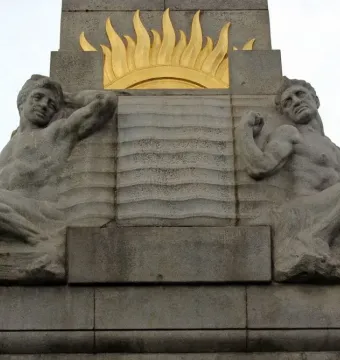
Memorial to the Engine Room Heroes of the Titanic is a granite monument on St. Nicholas Place at Pier Head in Liverpool, England. Designed by Sir William Goscombe John and built around 1916, it stands 14.6 metres tall. The memorial was created for the 244 engineers and other engine room workers who died in the Titanic disaster while keeping the ship powered for as long as possible. It later gained a broader dedication to all engine room fatalities who died in the line of duty during the First World War. The monument is listed Grade II* and shows visible shrapnel damage from bombs during the Second World War. It is noted as the first monument in the United Kingdom representing the working class.
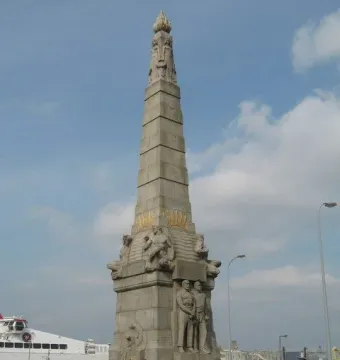
April 2008 © Sue Adair · CC BY-SA 2.0
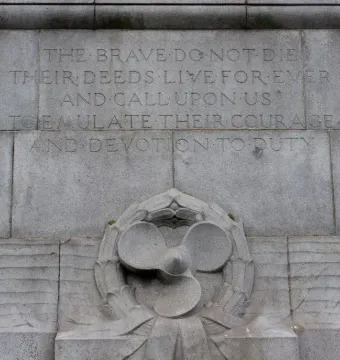
May 2018 © Rodhullandemu · CC BY-SA 4.0
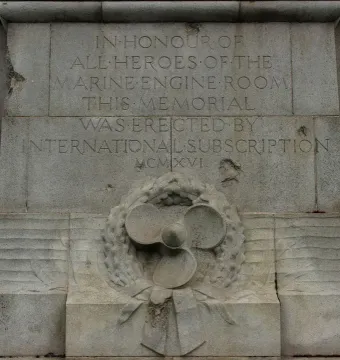
May 2018 © Rodhullandemu · CC BY-SA 4.0
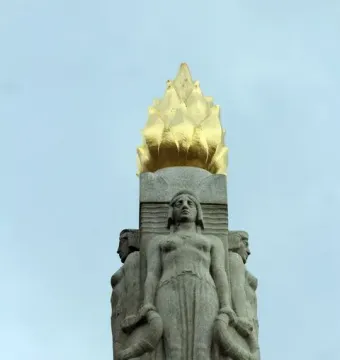
May 2018 © Rodhullandemu · CC BY-SA 4.0
May 2018 © Rodhullandemu · CC BY-SA 4.0
Identification | |
| Title | Memorial to the Engine Room Heroes of the Titanic |
| Original French name | Mémorial aux héros de salle des machines du Titanic |
| Type | memorial monument |
Historical context | |
| Associated ship | RMS Titanic |
| Historical context | Liverpool was strongly associated with the Titanic because the White Star Line was founded there in 1840 and the Titanic was registered there; the ship also bore the inscription "Titanic, Liverpool" |
| Titanic sinking date | 15 April 1912 |
| Associated company | White Star Line |
| Associated company founding place | Liverpool |
| Associated company founding date | 1840 |
Creator | |
| Designer | Sir William Goscombe John |
Discovery and provenance | |
| Funding | Construction was funded by international public subscription |
| Original dedication | Initially dedicated to the 244 engine-room workers who died in the Titanic disaster on 15 April 1912 |
| Later dedication | Later broadened to include all maritime engine-room fatalities occurring during the performance of duty in World War I |
| Reserved space on monument | Spaces were left on the monument to record the names of other engineers |
Physical characteristics | |
| Height | 14.6 metres |
| Form | Granite obelisk standing on a square chamfered pedestal |
Materials | |
| Pedestal sculptures | Life-size carved sculptures of stokers and engineers on the east and west sides of the pedestal |
| Material | granite |
| Bottom decoration | Carved representations of the four classical elements at each bottom corner |
| Top feature | gilded flame |
Appearance | |
| Style | Strikingly naturalistic |
| Depicted figures | Stokers and engineers |
Iconography and meaning | |
| Purpose | To honor the engine-room workers who stayed at their post to keep the ship's electricity and other vital needs working as long as possible |
| Theme | Working-class heroism |
| Subject | The Titanic disaster and its engine-room heroes |
Location and ownership | |
| Location | St. Nicholas Place, Pier Head, Liverpool, England |
| Grade listing | Grade II* listed |
History and restoration | |
| War damage | Shrapnel damage from World War II bombing is still visible on the monument |
Significance | |
| Notable significance | Believed to be the first monument in the United Kingdom representing the working class |
| Historical significance | At the time it was designed, the use of manual labourers and workers was uncommon in British public art and Goscombe John's inclusion of them was considered innovative |
| Influence | Had a considerable influence on the future design of war memorials |
| Assessment | Described by Historic England as one of the most artistically significant memorials to the Titanic disaster on either side of the Atlantic |
Other | |
| Related location | Another memorial to the Titanic's engine-room workers exists in Southampton, the ship's departure port for its maiden and final voyage |