
Simón Bolívar Equestrian Statue
The equestrian statue of Simón Bolívar is a bronze monument by Sally James Farnham, mounted on a black granite pedestal designed by Clarke and Rapuano. It was a gift from the Government of Venezuela to New York City, cast in 1919 and first installed on April 19, 1921. The sculpture honors Bolívar’s military leadership and Pan-American ideals. Originally placed on Summit Rock in Central Park, it was moved to its current location in 1951. The monument stands among other Latin American liberator statues, including those of José de San Martín and José Martí.
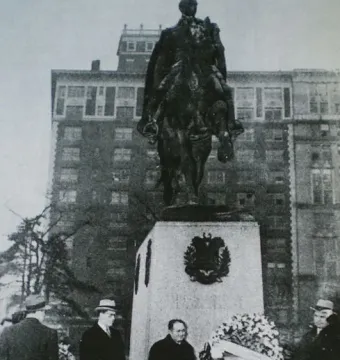
1944 © US Gov · Public domain
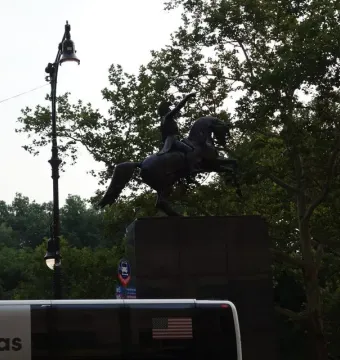
© Tdorante10 · CC BY-SA 4.0
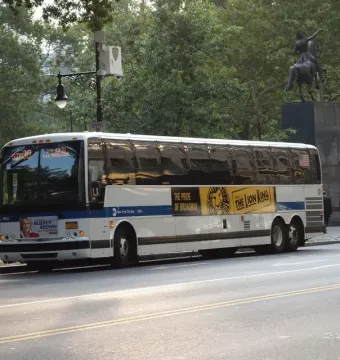
© Tdorante10 · CC BY-SA 4.0
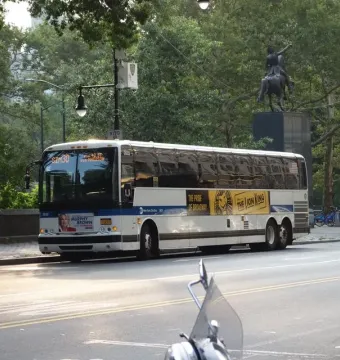
© Tdorante10 · CC BY-SA 4.0
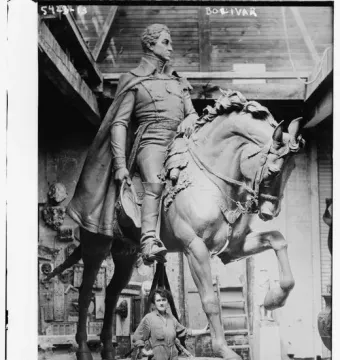
© Bain News Service, publisher · Public domain
Identification | |
| Title | Monument to Simón Bolívar |
| Type | Equestrian statue |
| Depicted person | Simón Bolívar |
| Alternative title | Simón Bolívar Monument |
Location and ownership | |
| Location | Central Park, Manhattan, New York City, United States |
| Nearby related monuments | Shares space with statues of other Latin American liberators, including José de San Martín and José Martí |
Creator | |
| Sculptor | Sally James Farnham |
Materials | |
| Sculpture material | Bronze |
| Pedestal material | Black granite |
| Pedestal designer | Clarke and Rapuano |
History and restoration | |
| Relocation date | 19 April 1951 |
| Conservation | Conserved by the Adopt-a-Monument Program in 1988 |
| Rededication date | 19 April 1951 |
| Dedication date | 19 April 1921 |
| Original bronze cast date | 1919 |
Discovery and provenance | |
| Gift from | Government of Venezuela |
| Gift recipient | City of New York |
| First Venezuelan gift of a Bolívar statue to New York | 1884 |
| Earlier proposal sculptor | Rafael de la Cova |
| Second proposal year | 1897 |
| Second proposal sculptor | Giovanni Turini |
| Competition announced | 1916 |
| Competition winner | Sally James Farnham |
Appearance | |
| Theme | Military leadership and Pan-American ideals of Bolívar |
Significance | |
| Historical significance | Symbol of the Pan-American ideal and of the historical link between Latin America and the United States |
Iconography and meaning | |
| Associated liberated countries | Venezuela, Colombia, Ecuador, Peru, Bolivia, and Panama |