
Fuente de las Tres Gracias
Fuente de las Tres Gracias, also known as the Fountain of the Three Nymphs, is a cast-iron fountain in Málaga, Spain. It is a work from Antoine Durenne’s catalogue, based on an original model installed in Saint-Jean Square in Melun, France. Acquired in 1879, it was first placed in the Plaza Mayor, later moved to Plaza de la Marina in 1901, and relocated again in 1914 to the roundabout in Plaza del General Torrijos. The fountain has three levels and two basins, with three classically inspired female figures dressed in tunics and holding agricultural tools, an oar, and a cornucopia as symbols of fertility and guardians of fresh waters.
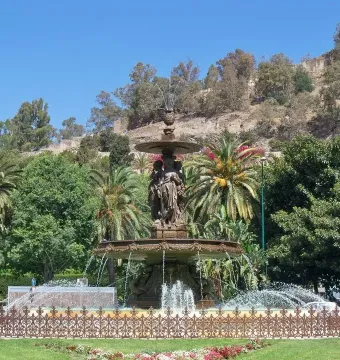
May 2023 © Daniel Capilla · CC BY-SA 4.0
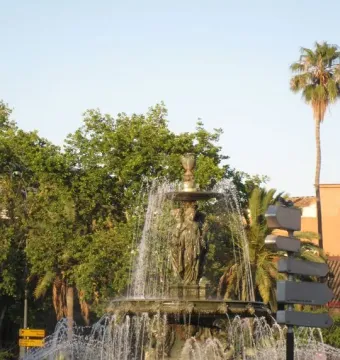
May 2009 © alf.melin · CC BY-SA 2.0
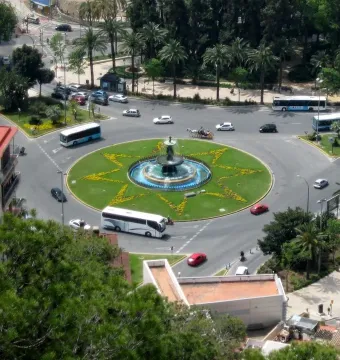
April 2008 © Olaf Tausch · CC BY 3.0
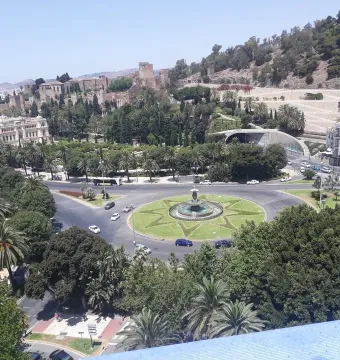
June 2019 © LoopLoop33 · CC0
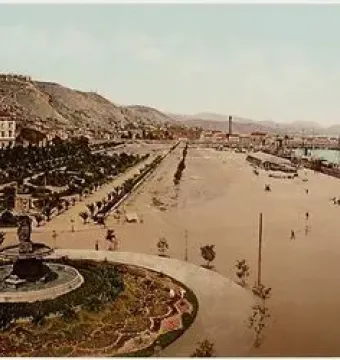
1880 © AnonymousUnknown author · Public domain
Identification | |
| Title | Fuente de las Tres Gracias |
| French title | La Fontaine des Trois Grâces |
| French alternative name | Fontaine des Trois Nymphes |
| Type | Fountain |
| Alternative name | Fuente de las Tres Ninfas |
Creator | |
| Sculptor | Jean-Baptiste Klagmann, French sculptor and goldsmith |
Discovery and provenance | |
| Foundry catalog attribution | Included in Antoine Durenne's catalogue |
| Original model location | Saint-Jean Square (Place Saint-Jean), Melun, France |
| Acquired for installation | 1879 |
Location and ownership | |
| Relocation in 1901 | Plaza de la Marina, Málaga |
| Relocation in 1914 | Glorieta de Plaza del General Torrijos, on Paseo del Parque, Málaga |
| Initial installation location | Plaza Mayor (now Plaza de la Constitución), Málaga |
| Current location | End of Paseo del Parque, Centro district, near La Malagueta neighborhood, Málaga, Spain |
Physical characteristics | |
| Structure | Three bodies and two basins |
| Pedestal shape | Triangular |
| Pedestal decoration | Seated children on swans and garlands |
| Figures | Three female classical-style figures |
Materials | |
| Material | Cast iron |
Appearance | |
| Clothing | Togas |
| Attributes held by the figures | Agricultural tools, an oar, and a cornucopia |
Iconography and meaning | |
| Interpretation | An allegory of fertility and protective nymphs of fresh waters |
Other | |
| Model for another fountain | Model for the Fuente de las Tres Gitanillas |
| Distance to modeled fountain | 1,500 meters |
| Comparison with Fuente de las Tres Gitanillas | Its figures wear Greco-Roman tunics rather than Andalusian folkloric clothing |