
Joan of Arc Equestrian Statue
The equestrian statue of Joan of Arc, also known as the Monument to Joan of Arc, was created by French sculptor Emmanuel Frémiet and inaugurated in 1874 on Place des Pyramides in Paris. It was commissioned by the French government after the country’s defeat in the Franco-Prussian War and symbolizes “reconquest.” The bronze figure was based on Aimée Girod, a young Lorraine peasant from Domrémy, and is mounted on a powerful workhorse. The pedestal was designed by architect Paul Abadie and the surrounding grille by Gabriel Davioud. Cast by Thiébaut Frères, the monument later became historically protected and remained an important public work in Paris.
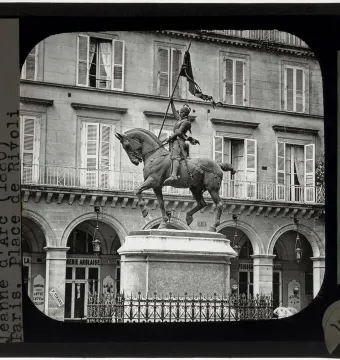
© Fremiet, Emmanuel (artist) · Public domain
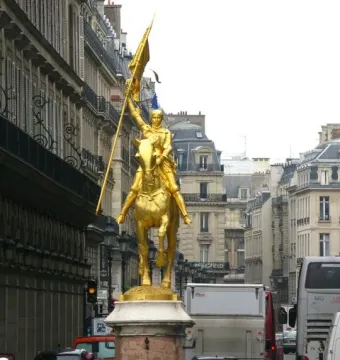
© pcs34560 · Public domain
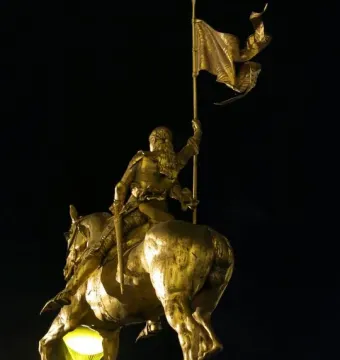
August 2024 © Tangopaso · Public domain
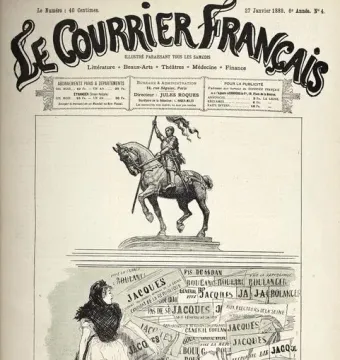
January 1889 © Heidbrinck · Public domain
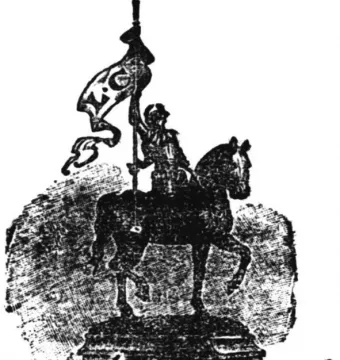
1902 © Unknown authorUnknown author · Public domain
Identification | |
| Title | Monument à Jeanne d'Arc |
| Alternative title | Equestrian statue of Joan of Arc |
| Type | equestrian statue |
| Subject | Joan of Arc |
| Alternative title | Jeanne d'Arc |
Creator | |
| Artist | Emmanuel Frémiet |
| Artist nationality | French |
| Pedestal designer | Paul Abadie |
| Protective grille designer | Gabriel Davioud |
Discovery and provenance | |
| Model's later fate | She later died, ironically, burned alive in the fire of her building, like Joan of Arc in 1431 |
| Model used by the sculptor | Aimée Girod (1856–1937), a young woman from Domrémy, Joan of Arc's village in Lorraine |
| Commissioned by | the French government |
Historical context | |
| Public commission status | the only public commission by the state among statues erected in Paris from 1870 to 1914; the others were funded by private initiatives |
| Historical context | part of the so-called Golden Age of statuary in Paris |
| Funding context | other statues from this era were funded by private subscriptions |
| Symbolism | "The reconquest" |
| Commission context | state commission following France's defeat in the 1870 Franco-Prussian War |
Physical characteristics | |
| Nancy version modification | the horse was reduced in size |
| Type of mount | powerful draft horse |
Materials | |
| Material | gilded bronze |
| Foundry | Thiébaut Frères foundry |
Location and ownership | |
| Location | the 1st arrondissement of Paris |
| Installed at | Place des Pyramides, Paris, at the opening of Rue des Pyramides |
| Current display | outdoor statue |
| Nancy version location | Place Lafayette, Nancy |
| Original location | Place des Pyramides, Paris, France |
History and restoration | |
| Historic protection status | listed as a historical monument since an unspecified date |
| Historic monument classification date | March 31, 1992 |
| Reception of modification | this caused a controversy and earned him criticism |
| Paris monument modification | in 1899, Frémiet replaced the Paris horse with the Nancy model |
| Inauguration year | 1874 |
| Nancy version funding | financed by the patron Osiris |
| Contemporary criticism | the horse's ample proportions were criticized, although they were considered realistic; the fragile young woman seemed to disappear atop it |
| Artist's reception | the reception was disappointing to the artist |
| Original setting | near where Joan of Arc was wounded during her failed attempt to take Paris |
| Installation date | installed on an unspecified date in 1874 |
| Other version | Frémiet made another version for the city of Nancy in 1889 |
Other | |
| Meeting place for | the annual Front National demonstration in honor of Joan of Arc; also Jean-Marie Le Pen and his supporters during a separate gathering organized since the 2010s |
| Depicted in a painting caption | Giuseppe De Nittis, Place des Pyramides (1876), Paris, Musée d'Orsay |
| Use in opera staging | used as set decoration in La traviata, directed by Simon Stone at the Opéra Garnier in 2019 |
| Depiction in film | target of a group of young terrorists in Nocturama (2016), with the statue shown ravaged by fire caused by an explosion in several scenes using digital visual effects |
| First organized demonstration | Union nationale appears to have been the first to organize a demonstration in front of the statue, in 1894 |
| Offerings date | 1907 and 1908 |
| Offerings placed at the statue | white rose bouquets and lilies |
| Associated groups | Action française; the small Rose-Blanche League of Achille Joinard |
| Political/traditional context of ceremony | reviving a tradition from the far-right leagues of the late 19th and early 20th centuries |
| Annual ceremony | the National Front holds an annual ceremony in her honour at the statue every May Day |
| Related historical context in caption | the building covered with scaffolding was the Pavillon de Marsan, then being reconstructed |