
Haserot Monument
Haserot Monument, also known as the Haserot Angel or the Weeping Angel, is a life-size bronze sculpture by Herman Matzen at Lake View Cemetery in Cleveland Heights, Ohio. It stands on a polished granite base and shows a seated angel with spread wings and its arms resting on an inverted torch, a symbol of life recently extinguished. The surname Haserot is inscribed on the base, linking the work to the tomb owner. The statue is especially famous for the dark marks on its face, caused by weathering and erosion of the bronze, which create the impression that it is weeping. Its greenish patina and haunting appearance have made it one of the cemetery’s most photographed monuments and the subject of legends and paranormal interest.
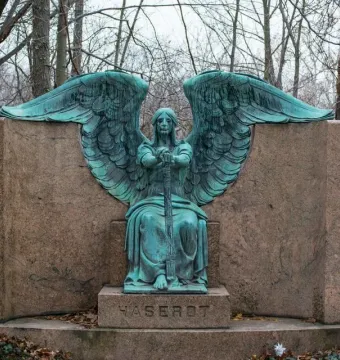
November 2014 © Tim Evanson · CC BY-SA 2.0
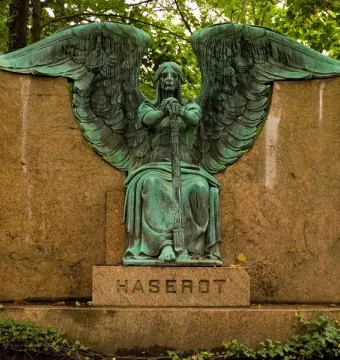
October 2012 © Ian MacQueen · CC BY-SA 3.0
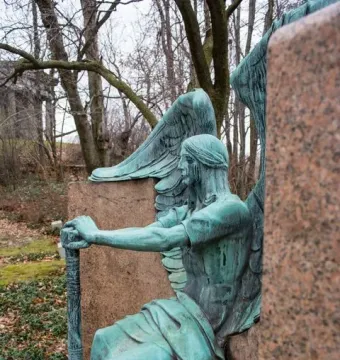
November 2014 © Tim Evanson · CC BY-SA 2.0
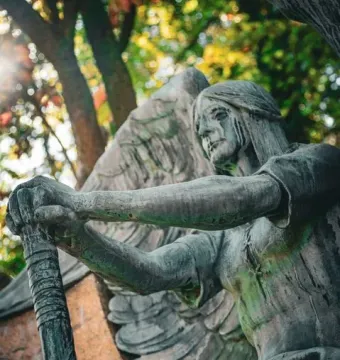
September 2025 © Cosmicvibesphotography · CC BY-SA 4.0
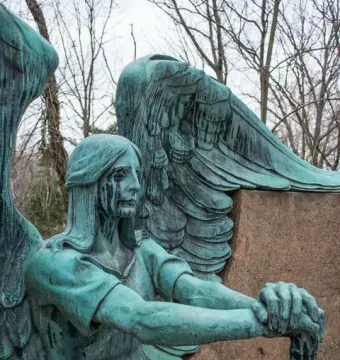
November 2014 © Tim Evanson · CC BY-SA 2.0
Identification | |
| Title | Haserot Monument |
| Alternative names | The Angel of Death Victorious; The Angel of Death; The Weeping Angel; Angel of Haserot |
| Type | Bronze sculpture; grave marker |
| Common name | Haserot Angel |
Historical context | |
| Creation date | 1923 |
| Installation date | 1924 |
Creator | |
| Artist | Herman Matzen |
| Sculptor description | Ohio-based sculptor from Denmark |
Discovery and provenance | |
| Patron other business interests | He invested in other businesses, including the national bank Coal & Iron |
| Model used in creation | A clay model served as a guide |
| Commissioner's later life | Francis lived more than twenty years after his wife's death and never remarried |
| Sarah's family background | Daughter of Henry McKinney, a judge in Cleveland |
| Patron government appointment | Appointed by President William McKinley to a post in Puerto Rico after the Cuban War |
| Patron background | Francis Henry Haserot was the son of German immigrants who arrived in Cleveland in the 1830s |
| Company trade goods | Mostly tea and coffee, plus pineapple from Hawaii and fruit from the Pacific coast |
| Patron business career | Owner of Northern Haserot, a mercantile company in Ohio with affiliates around the world |
| Patron childhood occupation | He started delivering newspapers at age seven |
| Commissioned for | His wife, Sarah, after her death in 1919 |
| Commissioned by | Francis Henry Haserot, president of the Haserot Company of Cleveland |
Physical characteristics | |
| Base | Polished granite |
| Gaze | Facing forward |
| Pose | Sitting with wings spread and arms resting on an overturned torch |
| Depicted figure | A seated angel |
| Size | Life-sized |
Materials | |
| Material | Bronze |
| Original material | Clay |
Iconography and meaning | |
| Depicts | An angel seated on a polished granite base holding an inverted torch |
| Symbolism of torch | Symbol of life just extinguished |
| Inscription | The surname "Haserot" is inscribed on the base, referring to the tomb owner |
Appearance | |
| Notable feature | Dark marks on the face create the illusion that the statue is crying |
| Surface color change | The sculpture has acquired a greenish tone |
| Cause of surface effect | Oxidation and weathering of the bronze over time, likely worsened by Rust Belt pollution and acid rain |
| Fame | The tear-like marks contributed to the statue's international fame |
Location and ownership | |
| Location | Lake View Cemetery, Cleveland Heights, Ohio, United States |
| Installation location | The cemetery |
Significance | |
| Reputation | World-renowned |
| Tourist significance | Has become a tourist destination |
| Photographic prominence | One of the most photographed monuments in the cemetery |
| Cultural reception | Subject of legends and study by psychics and ghost hunters |
| Later interpretation | In recent years it has become a haunted attraction |
| Interpreted meaning | Seen as a sign of Francis Haserot's grief over his wife's death |
| Reported phenomena | Tourists have reported strange paranormal phenomena |
Other | |
| Depicted on album cover | Featured on the cover of Will Haven's 2015 EP Open the Mind to Discomfort and Killer Be Killed's studio album Reluctant Hero |
| Cover selection note | The Reluctant Hero cover was selected after a declaration by Max Cavalera in an interview with Revolver |
| Interpretive/visual source context | At that time, Max Cavalera was looking for "black metal" images through National Geographic magazines |