
Triumph of the Candelaria
Triumph of the Candelaria, also called the Obelisk of the Candelaria, is one of the main sculptural monuments in Santa Cruz de Tenerife, in the Canary Islands, Spain. It stands in Plaza de la Candelaria. The monument is made of Carrara marble and was sculpted in Genoa by the Genoese sculptor Pasquale Bocciardo in 1768. It was erected in the square in December 1769 or shortly after, and was blessed by the bishop on 8 December 1770. Its base has been altered over time as the level of the square changed, but the monument remains about 11 meters high. The composition includes four marble statues representing the Guanche kings and an obelisk topped by the image of the Virgin of Candelaria.
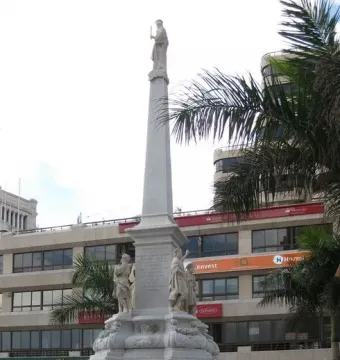
December 2010 © Sir James · CC BY-SA 3.0
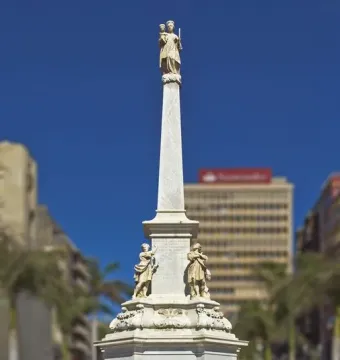
June 2012 © Koppchen · CC BY-SA 3.0
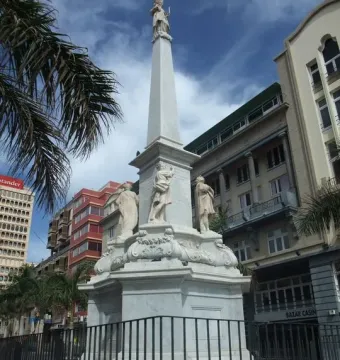
September 2010 © Maesi64 · CC0
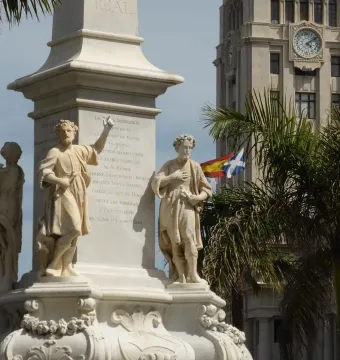
April 2014 © CARLOS TEIXIDOR CADENAS · CC BY-SA 3.0
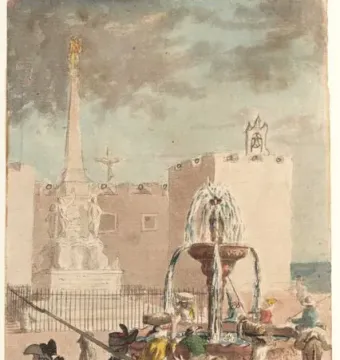
© Gabriel Bray · Public domain
Identification | |
| Title | Triunfo de la Candelaria |
| Alternative title | Obelisco de la Candelaria |
| Type | Sculptural monument |
Historical context | |
| Style | Neoclassical |
| Date carved | 1768 |
| Date erected | December 1769 or shortly after; certainly before 8 December 1770 |
| Date blessed | 8 December 1770 |
| Dedication | Our Lady of Candelaria (Virgin of Candelaria), patron saint of the Canary Islands |
Creator | |
| Sculptor | Pasquale Bocciardo |
| Sculptor origin | Genoese |
Discovery and provenance | |
| Place carved | Genoa, Italy |
| Donor | Captain Don Bartholomé Antonio Montañez, perpetual castellan of the royal seaside castle of Candelaria |
| Donation context | Donated as a complement to a marble cross previously given by Bartolomé Montañez to complete the ornamentation of Plaza de la Pila |
Location and ownership | |
| Inscription date | 1768; the inscription may be misread as 1778 because of a stylized character |
| Inscription references | Pope Clement XIII and King Charles III of Spain |
| Inscription content | The monument was erected as an act of Christian piety in memory of the apparition of Candelaria; it states that the image of Mary Most Holy was worshipped on the island before the preaching of the Gospel, that the conquerors acclaimed her as patron of Tenerife and the islanders as patroness of the Canary Islands, that the royal successors of Tenerife revered her hidden divinity, and that the work was donated and erected at the expense and devotion of Captain Don Bartholomé Antonio Montañez |
| Current location | Plaza de la Candelaria, Santa Cruz de Tenerife, Tenerife, Canary Islands, Spain |
| Former square name | Plaza de la Pila |
| Inscription count | Four inscriptions on the sides of the prism |
Physical characteristics | |
| Upper composition | Four marble statues of Guanche kings on the support, with the Virgin of Candelaria placed above a pyramidal pilaster supported by a prism |
| Base figures | Originally four marble putti riding dolphins at the corners of the base; badly deteriorated, mutilated, removed in 1928, and later disappeared |
| Base | Originally an octagonal support with floral volutes resting on a rectangular base; later altered when the square level changed in 1813 and again in 1928 |
| Height | About 11 meters |
Materials | |
| Main material | Carrara marble |
| Base figures material | Marble |
Appearance | |
| Virgin figure style | Gothic features |
Iconography and meaning | |
| Regional patronage | Associated with the special patronage of Tenerife and the general patronage of the Canary Islands |
| Depicted subject | The Virgin of Candelaria |
| Historical claim in inscription | The image was allegedly adored on the island by the Gentiles 104 years before the preaching of the Gospel |
| Religious significance | A Christian monument commemorating the apparition of Candelaria and devotion to the Virgin on the island |
| Base decoration meaning | The putti riding dolphins represented the four seasons |
| Iconographic meaning | The Guanche kings are shown submitting to the image of the Virgin of Candelaria, placed above an obelisk |
| Symbolism | Represents the apparition of the Virgin and the subsequent conversion of the Guanche menceyes |
History and restoration | |
| Early publications | The inscriptions were published by Bory de Saint Vincent in 1803, and the first plate was published by Sabin Berthelot in 1839 |
| Travel literature | Described or mentioned in many travel books from the 18th, 19th, and 20th centuries |
| Historical reception | For much of the 20th century, it was the first religious symbol or monument encountered by passengers arriving in Tenerife |
| Damage to base figures | The putti were mutilated by two English soldiers in 1825 and later removed in 1928 |
| Base modifications | The base was altered when the square level was changed in 1813 and again in 1928, adjusting the monument's overall height while keeping it near 11 meters |
Significance | |
| Artistic value | Described as an element of high artistic value |
| Cultural significance | Probably the most popular and important of the sculptures adorning the streets of Santa Cruz |
| Historical context | Seen as an important symbol of Santa Cruz |
| Urban context | At the time, the town's main square was described as poor, and the town had already become the capital of the Canary Islands |
Other | |
| Fiesta commemorated | Fiestas de Mayo |
| Current commemorative practice | In May, floral offerings are placed at the foot of the monument in commemoration of the Fiestas de Mayo |
| Fiesta significance | They celebrated the anniversary of the founding of Santa Cruz de Tenerife |