
Monumento a Franco
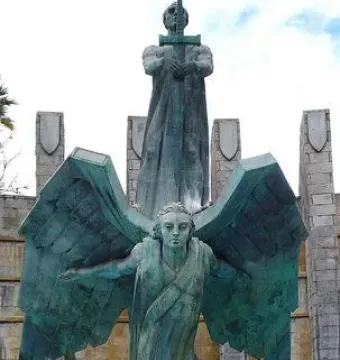
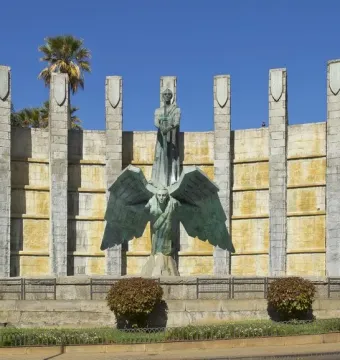
Monumento a Franco is a sculptural fountain in Santa Cruz de Tenerife, Canary Islands, Spain, located beside Fuerte de Almeyda at the junction of Rambla de Santa Cruz and Avenida de Anaga. Created by Juan de Ávalos, it was built with funds raised through a public subscription ordered by Civil Governor Pablos Abril and inaugurated on 17 March 1966. The monument was dedicated to the victory of Franco’s army in the Spanish Civil War and the subsequent regime. Over time it has been known by several names, including Monumento a la Victoria and Monumento del Ángel. It has also been the subject of debate over its Francoist symbolism and its possible removal under Spain’s Historical Memory Law.
May 2010 © Mataparda · CC BY 2.0
© Koppchen · CC BY-SA 3.0
October 2005 © Koppchen · CC BY 3.0
April 2014 © CARLOS TEIXIDOR CADENAS · CC BY-SA 3.0
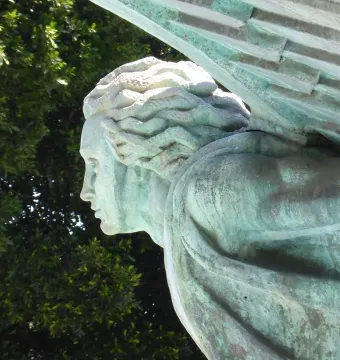
April 2014 © CARLOS TEIXIDOR CADENAS · CC BY-SA 3.0
Identification | |
| Primary title | Monumento a Franco |
| Type | Monument and sculptural fountain |
| Alternative names | Monumento a Su Excelencia el Jefe del Estado; Monumento a la Victoria; Monumento del Ángel; Monumento a Franco; Monumento al Ángel Caído; Monumento Conmemorativo a la Paz |
Location and ownership | |
| Location | Santa Cruz de Tenerife, Canary Islands, Spain |
| Site | Intersection of Rambla de Santa Cruz and Avenida de Anaga, adjacent to Fuerte de Almeyda |
Creator | |
| Artist | Juan de Ávalos |
Historical context | |
| Construction start | 1964 |
| Inauguration date | 17 March 1966 |
| Inauguration context | Inaugurated in commemoration of Franco's victory in the Spanish Civil War and the subsequent regime |
| Historical reference | Refers to the 1936 coup that led to the Spanish Civil War |
Discovery and provenance | |
| Current estimated value | €45 million, according to the Juan de Ávalos Foundation |
| Funding | Financed by a popular subscription of about 80,000 people, most donating between 1 and 5 pesetas, ordered by Civil Governor Pablos Abril |
| Construction cost | Approximately 8.1 million pesetas |
Physical characteristics | |
| Composition | Sculptural group |
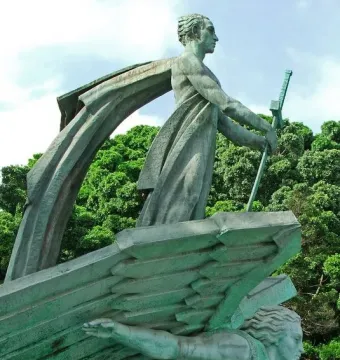
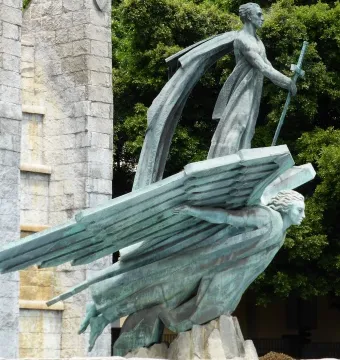
| Main figures | A winged angel and a male figure representing Francisco Franco |
| Pilaster decoration | Crowned with the coats of arms of the islands and the city |
| Water features | Illuminated nebulous water jets, perimeter jets, spillways, and a large waterfall at the back, creating a sea-like movement |
| Rear wall height | 14 meters |
| Setting | Placed in the center of an almost circular pond |
| Rear wall | A rear wall partially enclosing the monument, made of nine pilasters joined by eight stepped-slope sections |
| Pond diameter | Approximately 30 meters |
Iconography and meaning | |
| Stylistic comparison | The Franco figure resembles the Ángel de la Paz by Ávalos |
| Franco figure pose | Standing above the angel and holding a downward-pointing sword shaped like a Christian cross |
| Franco figure | A male figure, possibly Franco; the identification is disputed though contemporary newspapers supported it |
| Angel symbolism | The angel allegorizes the Dragon Rapide aircraft that brought Franco from the Canary Islands to mainland Africa to begin the 1936 coup |
Materials | |
| Base material | Modeled and assembled granite stone |
| Support structure | Iron armature |
| Sculpture material | Cast and patinated bronze |
History and restoration | |
| Vandalism | Covered with red paint and graffiti reading "anti-fascismo" in November 2016 |
| Condition | Poor maintenance condition |
| Legal status | Listed in the Canary Islands Government catalog of Francoist vestiges that should be removed from the streets of the Canary Islands |
| Removal campaign | There are ongoing efforts to remove the monument under the Historical Memory Law, alongside a campaign to preserve it for its artistic and cultural value |
| Name change controversy | In 2010 the Santa Cruz de Tenerife City Council renamed it Monumento al Ángel Caído, but this was later reversed after the 2011 municipal elections; the renaming drew criticism |
| Public interpretation | Popularly known as a monument to Franco or as the Angel Monument |
| Heritage recognition | Explicitly recognized in 2011 as having Francoist origin and symbolism |
Other | |
| Related work | Ángel de la Paz by Ávalos, made two years earlier in Cerro de las Aguzaderas, Valdepeñas (Ciudad Real); only the structure remains after a GRAPO terrorist attack in 1976 |
| Subject note | The sculpture has sometimes been confused regarding the motif it represents |