
Ad Astra
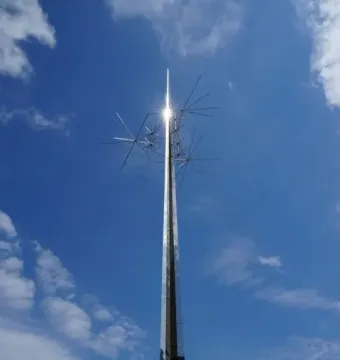
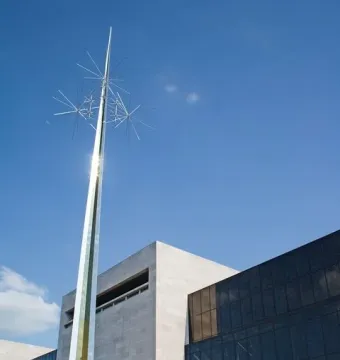
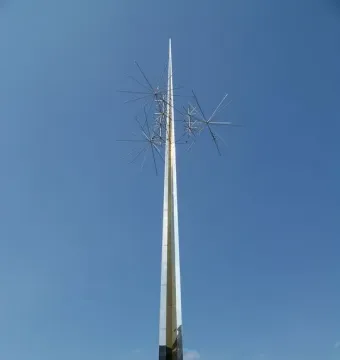
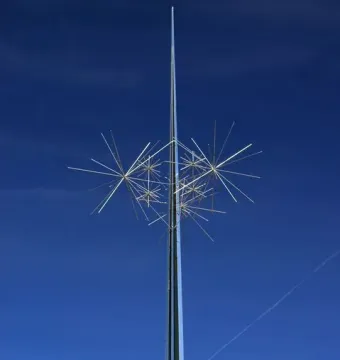
Ad Astra, meaning “toward the stars” in Latin, is a public artwork created in 1976 by an American artist. This abstract sculpture is made of polished stainless steel with a gold finish and has a height that is not specified in the source text. It is part of the collection of the National Air and Space Museum at the Smithsonian Institution in Washington. According to the source, Lippold believed that humanity’s conquest of space was inevitable, and the sculpture symbolizes that achievement. Ad Astra also appears in Shawn Levy’s 2009 film Night at the Museum 2.
© Herbert Sennett · CC BY-SA 4.0
May 2005 © David Bjorgen · CC BY-SA 3.0
© Lazzo · Public domain
© Jeff Kubina · CC BY-SA 2.0
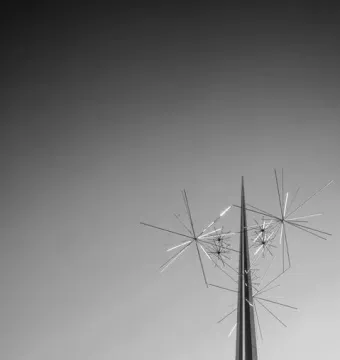
November 2014 © Los Paseos · CC BY-SA 2.0
Identification | |
| Title | Ad Astra |
| Type | public abstract sculpture |
Historical context | |
| Year created | 1976 |
Creator | |
| Artist | Richard Lippold |
| Artist nationality | American |
Materials | |
| Material | polished gilded stainless steel |
Physical characteristics | |
| Height | 30 meters (100 feet) |
| Color | gold |
| Form | a narrow three-planed shaft ending in a pointed tip, penetrating a triple star-like cluster near its apex |
Location and ownership | |
| Location | outside the Jefferson Drive entrance of the National Air and Space Museum, Washington, D.C. |
| Collection | National Air and Space Museum, Smithsonian Institution |
Appearance | |
| Style | abstract |
Iconography and meaning | |
| Name meaning | Latin for "to the stars" |
| Interpretation | Lippold believed that the characteristic art of his time dealt with the conquest of space, and that Ad Astra symbolized that idea |
Other | |
| Film appearance | Appears in the 2009 film Night at the Museum: Battle of the Smithsonian |