
Stravinsky Fountain
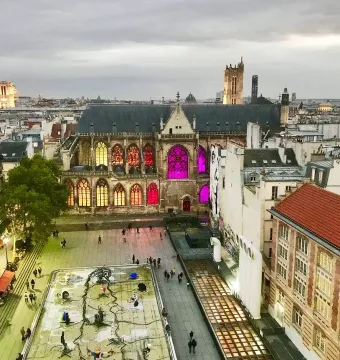
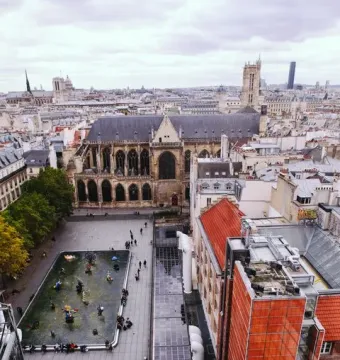
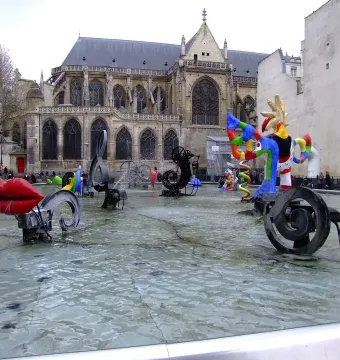
Stravinsky Fountain, also known as the Fountain of Automata, was created in 1983 by Jean Tinguely and Niki de Saint Phalle. It was commissioned as part of the budget for the construction of the Centre Pompidou and is a public work owned and maintained by the City of Paris. Located on Place Igor-Stravinsky near IRCAM, the fountain consists of sixteen sculptures honoring the compositions of Igor Stravinsky. The mechanized figures are made in resin or in combinations of resin and metal, and are animated by water jets. Some forms refer directly to works such as The Firebird, while others allude more indirectly to the composer.
October 2017 © Yann Caradec · CC BY-SA 2.0
September 2013 © Cristian Bortes · CC BY 2.0
March 2008 © AlfvanBeem · CC0
© Jorge Láscar · CC BY 2.0
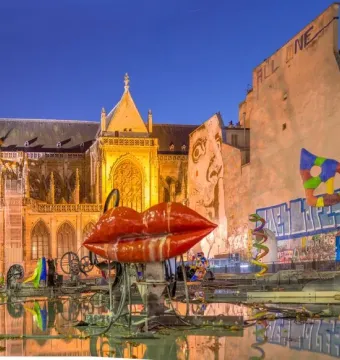
November 2018 · CC BY-SA 3.0
Identification | |
| Title | Stravinsky Fountain |
| Alternative names | Automata Fountain; Fountain of the Automatons; Tinguely Fountain; Fontaine Stravinsky; Fontaine des automates; Fontaine à Stravinsky; La Fontaine Stravinsky |
Historical context | |
| Date completed | 1983 |
Creator | |
| Artists | Jean Tinguely and Niki de Saint Phalle |
| Artists' nationalities | Jean Tinguely was Swiss; Niki de Saint Phalle was French-Swiss |
Discovery and provenance | |
| Funding | City of Paris: 2 million French francs; Jack Lang / Ministry of Culture: 2 million francs; Société Lyonnaise des eaux: 500,000 francs; Fondation Scaler: 150,000 francs; Swiss government also contributed |
| Support for realization | Claude Pompidou's support was crucial to the project |
| Financial agreement signed | 15 December 1982 |
| Commissioning conditions | Tinguely accepted only if Niki de Saint Phalle could work with him |
| Commission announcement | Announced in October 1981 by Jacques Chirac |
| Commissioning bodies | City of Paris, Ministry of Culture, and Centre Pompidou |
| Commissioning context | Public commission for the Centre national d'art et de culture Georges-Pompidou, funded through the percentage-for-art budget and a wider program of contemporary fountains in Paris |
Physical characteristics | |
| Type | Public fountain; composite kinetic sculpture |
| Number of sculptural elements | 16 |
| Basin size | About 580 m² |
| Dimensions | 17 m wide by 33 m long |
| Water depth | Very shallow; the basin water level was kept as low as possible |
| Installation | Rectangular water basin with sixteen separate movable, water-spouting sculptures distributed across it |
Materials | |
| Overall materials | Mostly resin with metal elements; also aluminum, stainless steel lining, plastics, fiberglass, polyester, and other lightweight materials |
| Jean Tinguely's components | Black mechanical components in aluminum and iron wheel mechanisms |
| Niki de Saint Phalle's components | Brightly colored figures in lightweight fiberglass and polyester; some were also described as resin or polystyrene |
Technique | |
| Installation method | The sculptures were placed in the basin rather than attached to its bottom |
| Design constraints | Built as lightly as possible because the basin covers rooms and offices below, including IRCAM |
| Motion and water action | Mechanized sculptures animated by water jets and moving water |
| Technical issues | The location caused technical problems, including concerns about water treatment and electrical safety for wading visitors |
Appearance | |
| Color and style | Black mechanical pieces contrasted with brightly colored figures; whimsical and playful in character |
| Overall impression | A lively, non-monumental fountain with charm, movement, and color |
Iconography and meaning | |
| Dedicated to | Igor Stravinsky |
| Subject | Inspired by Igor Stravinsky's music and works |
| Interpretation | Stravinsky is presented as a symbol of artistic eclecticism and internationalism |
| Referenced works | The Firebird; The Nightingale; Petrushka; Renard; The Musical Key of G; The Spiral; The Elephant; The Fox; The Serpent; The Frog; The Diagonal; Death; The Mermaid; Love; Life; The Heart; The Clown's Hat; Ragtime |
| Reference mode | Some sculptures allude to Stravinsky works, while others depict recognizable figures from them |
| Firebird note | The Firebird was described as a reduction of Niki de Saint Phalle's giant Sun God at the University of California, San Diego, made in the same year |
Location and ownership | |
| Ownership and maintenance | Owned and maintained by the City of Paris |
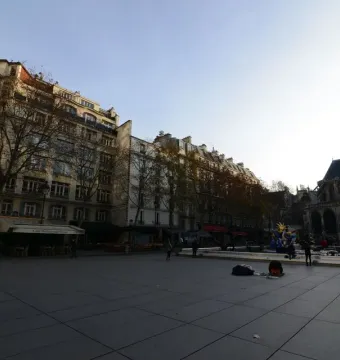
| Current location | Place Igor-Stravinsky (Stravinsky Square), next to the Centre Pompidou and near IRCAM, Paris, France |
| Associated buildings | Centre Pompidou; IRCAM; Church of Saint-Merri |
History and restoration | |
| Inauguration date | 19 June 1983 |
| Inauguration venue | Musée d’Art Moderne |
| Renovation | Renovation announced in early 2022 because the elements had not been turning for several years; reopened after about 18 months, with the renovated fountain back in operation from November 2023 |
| Renovation budget | €2 million |
| Later modification requests | In 1985 Saint Phalle requested changes to Rossignol, and about five years later she asked that Sirène be replaced by Nana; the substitution was not made because of cost |
Significance | |
| Historical context | Part of a 1978 Paris program to build seven contemporary sculptural fountains, intended to help reanimate the Les Halles area and among the first public fountains built in Paris since 1937 |
| Contextual intentions | Designed to enliven the square with magical water effects and create a visual transition between the colourful Centre Pompidou and the gray Gothic Saint-Merri church |
| Conceptual background | The design drew on Stravinsky's associations with dance, Russian folk tunes, fairy tales, jazz, and circus imagery |