
Greetingman
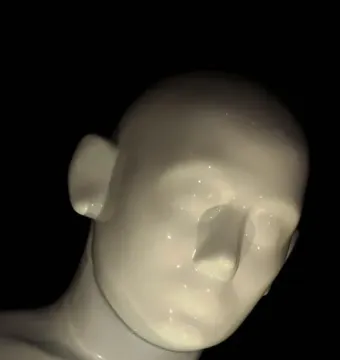
Greetingman is a modern sculpture project from South Korea by artist Yoo Young-ho. It depicts a 6-meter-tall nude man bowing in a typically Asian gesture of reverence. The figure was designed to represent all people rather than any one race or type, and it is painted light blue, a color the sculptor said suggests joy and light. A statue was inaugurated in Montevideo, Uruguay, in October 2012 as part of a planned series of installations in different places around the world. Another statue was later inaugurated on 16 March 2021 on Avenida República de Corea in northern Mérida, Yucatán, Mexico, to mark friendship ties between Korea and Mexico and the Korean diaspora in Yucatán.
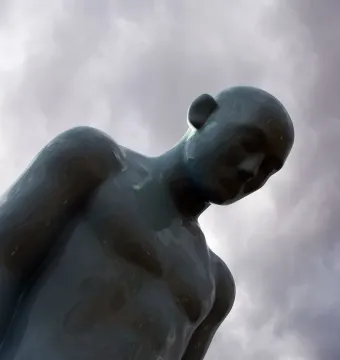
© Carlos Noble · CC BY-SA 3.0
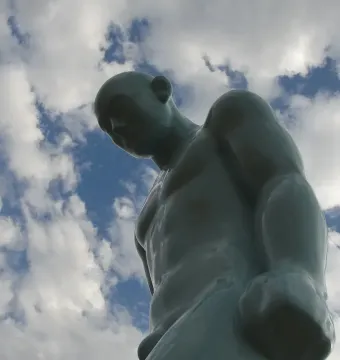
© Carlos Noble · CC BY-SA 3.0
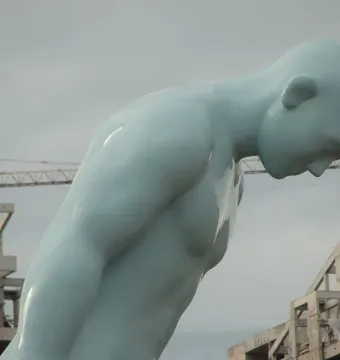
© Carlos Noble · CC BY-SA 3.0
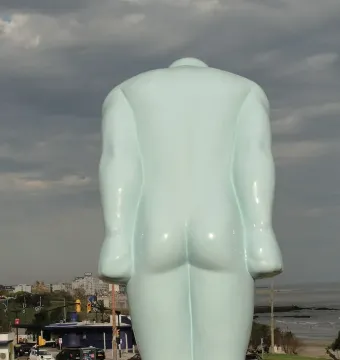
© Carlos Noble · CC BY-SA 3.0
© Beatrizackermann · CC BY-SA 3.0
Identification | |
| Title | Greetingman |
| Title meaning | Greeting Man |
| Type | South Korean modern sculpture project |
Creator | |
| Artist | Yoo Young-ho |
Historical context | |
| Purpose | A series of blue statues of a bowing man intended to symbolize South Korea's friendship with various countries around the world |
| Origin country | South Korea |
| Cultural context | A typically Asian gesture of greeting or reverence |
| Korean migration to Yucatán | 1,033 Koreans left Chemulpo for Salina Cruz, Oaxaca, then arrived at Progreso, Yucatán on 14 May 1905 and were taken to henequen plantations |
| Descendant population | Approximately 10,000 third- and fourth-generation descendants live there today |
Physical characteristics | |
| Height | 6 m |
| Figure depicted | A naked man |
| Pose | Bowing |
| Color | Blue |
Appearance | |
| Color symbolism | The blue signifies the absence of prejudice and is meant to evoke joy and light |
Iconography and meaning | |
| Figure interpretation | Made nude to represent all men, not any particular type or race |
| Meaning | Greeting as the first step of any relationship and the beginning of all communication |
Discovery and provenance | |
| Project cost | US$200,000 |
| Funding | Financed by the sale of 800 smaller-scale similar sculptures |
Location and ownership | |
| Third installation location | Panama City, Panama |
| Mérida installation date | 16 March 2021 |
| Mérida installation location | Avenida República de Corea, north of Mérida, Yucatán, Mexico |
| Third installation date | January 2016 |
| First installation location | Buceo neighborhood, Montevideo, Uruguay |
| Second installation date | October 2013 |
| Second installation location | Near the Korean Demilitarized Zone, Haean, Yanggu County, Gangwon, South Korea |
| Current status in Montevideo | The statue remains in the same place despite local disapproval |
| First installation rationale | Montevideo was chosen because it is antipodal to Korea, the project’s place of origin |
| First installation official | Ana Olivera, mayor of Montevideo |
| First installation date | October 2012 |
| Planned installation locations | The border between South Korea and North Korea, Vietnam, and the border between Israel and Palestine |
History and restoration | |
| Local reaction in Montevideo | Nearby residents initially resisted the installation because they had not been consulted |
Significance | |
| Third installation note | The second statue to be unveiled in Latin America |
| Mérida commemorative meaning | Commemorates Korea-Mexico friendship, the Korean migrant diaspora and its descendants in Yucatán, and the 60th anniversary of diplomatic relations between Korea and Mexico |