
La Nouvelle Liberté
La Nouvelle Liberté is a popular monument in Douala, Cameroon, located in the Deido area. Created by artist Joseph Sumégné, its installation began in July 1996 and was completed eleven years later. The work is made especially from a set of metal pieces and stands 12 meters tall. Its creation was initially controversial, as the artist was misunderstood. The monument was inaugurated in December 2007 by the government delegate of the urban community at the Douala Urban Hall. Donated by its creator to the city, it is now part of the municipal heritage and has become an emblem of Douala.
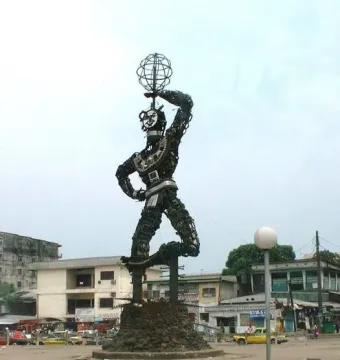
© Tatoute · CC BY-SA 3.0
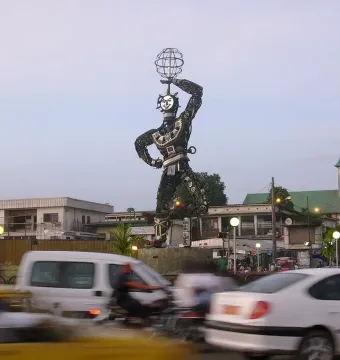
April 2009 © Christian Hanussek · CC BY-SA 3.0
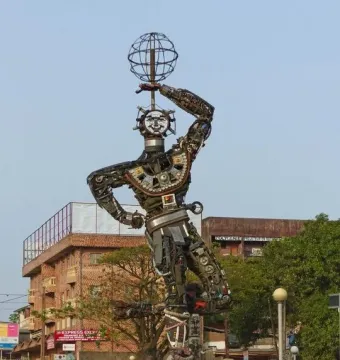
June 2018 © Djoumess21 · CC BY-SA 4.0
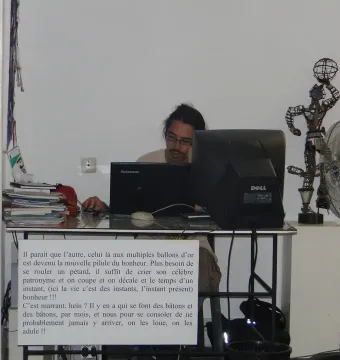
May 2011 © doual'art · CC BY-SA 3.0
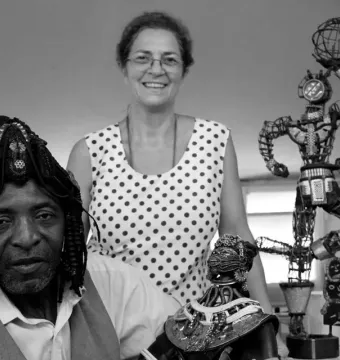
© Roberto Paci Dalò · CC BY-SA 3.0
Identification | |
| Title | La Nouvelle Liberté |
| Alternative names | Die neue Freiheit; Njo Njo de Deido |
| Type | Monumental sculpture |
Historical context | |
| Year created | 1996 |
| Year inaugurated | 2007 |
Creator | |
| Artist | Joseph-Francis Sumégné |
| Artist birth year | 1951 |
Discovery and provenance | |
| Sponsor | doual'art |
| Donated to | Municipality of Douala |
| Owner | Municipality of Douala |
| Donation status | Donated by the artist to the city of Douala; part of the municipal heritage |
Physical characteristics | |
| Height | 12 meters |
| Diameter | 5 meters |
| Mass | 8 tons |
Materials | |
| Material | Recycled iron and scrap metal |
Technique | |
| Construction | Assembly of reclaimed metal parts mounted on a metalwork framework |
Appearance | |
| Description | Majestic-looking |
Iconography and meaning | |
| Name origin | According to the artist, chosen in reference to, but also in distinction from, the Statue of Liberty in New York |
| Theme | Pays tribute to the city's contemporary culture, especially recycling, dismantling and reassembling objects, and citizens' ability to 'se débrouiller' in complex situations |
| Nickname meaning | 'The evil' or 'the monster' of Deido |
Location and ownership | |
| Location | Rond-Point Deïdo, Deido, Douala, Cameroon |
| Setting | Installed in the middle of one of the busiest roundabouts in Douala, considered the city's gateway and most important traffic junction |
| Road connections | Main boulevards lead to the city center via Akwa, to the eastern districts, and out of Douala via the Wouri Bridge and Bonabéri |
History and restoration | |
| Installation began | July 1996 |
| Installation completed | December 2007 |
| Official inauguration | December 2007, during SUD2007 / the Salon Urbain de Douala |
| Inaugurated by | Government Delegate of the urban community |
| Inauguration context | Officially inaugurated eleven years after production because of earlier controversies |
| Reception | Initially met with strong protests, controversy, attacks, and vandalism, especially over its aesthetics and the artist's origin from Cameroon's West Region, which was discussed in relation to ethnic tensions between indigenous and non-indigenous populations of Douala |
| Post-installation urban changes | After installation and donation to the municipality, Douala invested in urbanizing Rond-Point Deïdo, including removing informal markets, installing streetlights, improving roads, and maintaining the roundabout garden |
Significance | |
| Status | One of the most famous and emblematic artworks of Douala; a symbol and landmark of the city |