
Monument to the Tsar Liberator
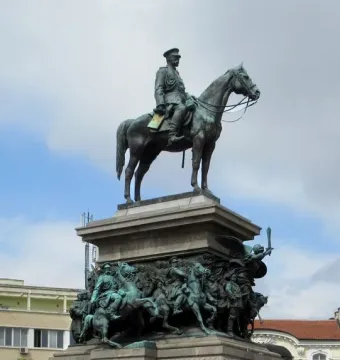
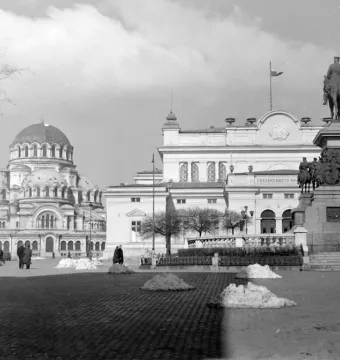
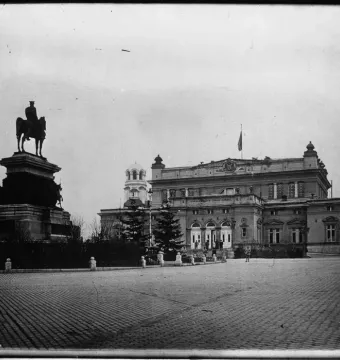
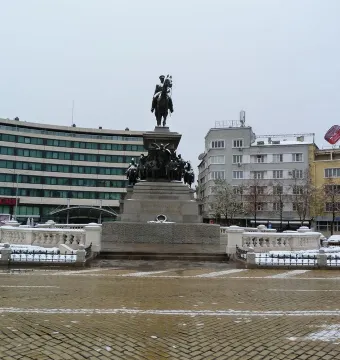
Monument to the Tsar Liberator is an equestrian monument in the center of Sofia, Bulgaria, dedicated to Russian Emperor Alexander II, who helped liberate Bulgaria in the Russo-Turkish War of 1877–1878. Designed by Italian sculptor Arnoldo Zocchi, it was begun in 1901, completed in 1903, and officially unveiled in 1907. The monument is made of polished granite and bronze and rises about 13 meters high. Its sculptural program includes figures of Russian generals, Bulgarian volunteers, soldiers carrying the goddess Nike, and reliefs showing key scenes from the liberation war. Heavily damaged during World War II, it was fully restored in 2012–2013 and reopened in March 2013.
© David Stanley · CC BY 2.0
1954 · CC BY-SA 3.0
© Agence de presse Meurisse. Agence photographique (commanditaire) · Public domain
October 2014 © Derzsi Elekes Andor · CC BY-SA 4.0
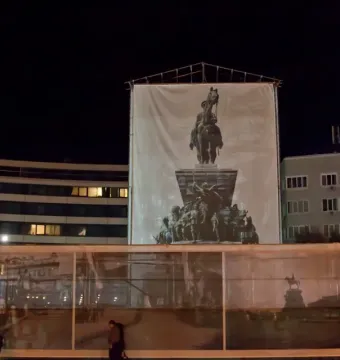
October 2012 © Bin im Garten · CC BY-SA 3.0
Identification | |
| Title | Monument to the Tsar Liberator |
| Alternative name | Monument to the Liberators |
| Type | Equestrian monument |
| Style | Neoclassical memorial |
| Original-language name | Паметник на Цар Освободител |
Historical context | |
| Foundation stone laid | 23 April 1901, St. George's Day |
| Dedication | Dedicated to Russian Emperor Alexander II |
| Commemorated event | The liberation of Bulgaria from Ottoman rule during the Russo-Turkish War of 1877–1878 |
| Historical context | Created in honour of Alexander II, who also liberated the Russian serfs and won the Russo-Turkish War of 1877–78 |
| Initiative for creation | Initiated in the 1890s by former Bulgarian volunteers from the 1877–1878 war |
| Funding | Built with funds from the Sofia municipality, Prince Ferdinand, and donations from the Bulgarian people |
Creator | |
| Artist | Arnoldo Zocchi |
| Architectural design | Nikola Lazarov participated in the monument's architectural design |
| Artist nationality | Italian |
Discovery and provenance | |
| Design competition | A competition for the best design of an equestrian statue of Alexander II was held at the end of the 19th century |
| Competition participation | 31 other artists from 12 countries competed; 90 artists from 15 countries showed interest, and about 120 crates of models were submitted |
| Competition jury meeting date | 20 September 1900 |
| Competition winner | Arnoldo Zocchi |
History and restoration | |
| Damage history | Severely damaged during World War II bombings |
| Restoration | Fully restored from 2012 to 2013; the equestrian statue was removed for repair |
| Construction completed | 15 September 1903 |
| Public opening and consecration | 30 August 1907 |
| Opening attendees | Prince Ferdinand I of Bulgaria, Grand Duke Vladimir Alexandrovich, Maria Pavlovna, Andrei Vladimirovich, Generals Kaulbars, Parensov, and Stoletov, and Arnoldo Zocchi |
| Re-unveiling | 3 March 2013, financed by the Russian charity foundation Pokolenie |
Location and ownership | |
| Location | Central Sofia, Bulgaria, on Tsar Osvoboditel Boulevard facing the National Assembly of Bulgaria; the InterContinental hotel is behind it |
Physical characteristics | |
| Structure | Pedestal, middle section with figures, and a massive Neo-Renaissance cornice topped by the equestrian statue |
| Monument height | About 13 meters |
| Main statue height | 4.5 meters |
Materials | |
| Construction material | Black polished granite from Vitosha |
| Main sculptural material | Bronze |
Appearance | |
| Main statue subject | Alexander II seated on a horse |
| Bronze wreath | A bronze wreath at the foot of the pedestal, donated by Romania in memory of Romanian soldiers and officers who died in the war for Bulgaria's liberation |
| Side sculptures | Figures of heroes of the liberation war, including Grand Duke Nicholas Nikolaevich, Count Ignatiev, General I.V. Gurko, and General M.D. Skobelev |
| Front façade sculpture | Russian soldier-heroes carrying the goddess Nike on their shoulders, with Bulgarian volunteers behind them |
| Lower side reliefs | The Battle of Stara Zagora, the signing of the Treaty of San Stefano, and the opening of the Constituent Assembly in Tarnovo |
| Front inscription | “To the Tsar Liberator, grateful Bulgaria” in Bulgarian, in gold letters |
| Figure of victory | Identified as Nike in Greek mythology and Victoria in Roman mythology |