
Schängel
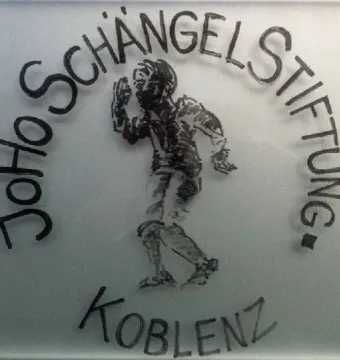
Schängel refers to a local nickname for boys born in Koblenz, now also used for girls, and to the city itself, which is often called the “Schängel-Stadt.” The Schängel Fountain in the Willi-Hörter-Platz, the town hall courtyard, was inaugurated on 15 June 1941. Its octagonal basin is made of basalt, and the fountain was designed in 1939 by the Mayen sculptor Carl Burger. It is dedicated to the Koblenz dialect poet Josef Cornelius, the creator of the Schängellied. The bronze figure became a landmark of the city, spraying a water jet every few minutes. The sculpture was modeled by eleven-year-old Rudolf Dany of Mayen and cast in Munich.
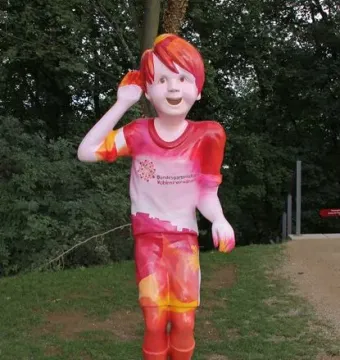
August 2011 © Holger Weinandt · CC BY-SA 3.0 de
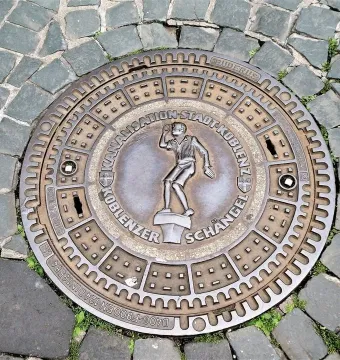
2018 © ingostrutz · CC BY-SA 3.0
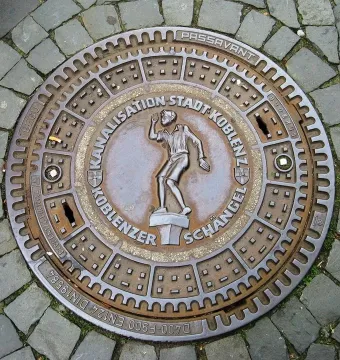
June 2009 © Wamito · Public domain
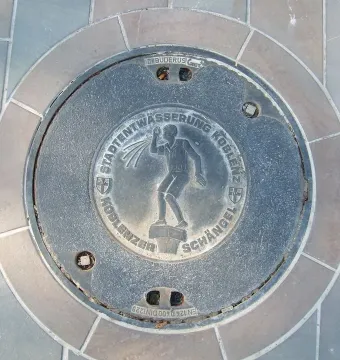
September 2010 © C. Löser · CC BY 3.0 de
© Rhemos · CC BY-SA 3.0
Identification | |
| Title | Schängel |
| Type | Fountain |
Location and ownership | |
| Cultural heritage status | Part of the UNESCO World Heritage site of the Upper Middle Rhine Valley since 2002 |
| Location | Rathaushof (town hall courtyard), Willi-Hörter-Platz, Koblenz, Germany |
Historical context | |
| Installed | 1941 |
| Inauguration date | 15 June 1941 |
| Dedicated to | Josef Cornelius (1849–1943), Koblenz dialect poet and creator of the Schängellied |
| Commemorates | The Koblenz Schängel and his pranks, and the joy of life of the citizens of Koblenz |
| Design date | 1939 |
Creator | |
| Designer | Carl Burger (sculptor from Mayen) |
| Casting location | Munich |
Discovery and provenance | |
| Origin of fountain project | Initiated by citizens of Koblenz, including carnivalist Jupp Flohr |
| Model for sculpture | Rudolf Dany from Mayen, age 11 at the time |
Cultural context | |
| Cultural context | Carnival-related; represents the Koblenz Schängel and the local playful, mischievous character associated with the term |
Materials | |
| Figure material | Bronze |
| Basin material | Basalt lava from the Eifel |
Physical characteristics | |
| Basin shape | Octagonal |
| Water feature | The bronze boy spits a jet of water several meters beyond the basin at intervals of about two to three minutes, so passers-by can be hit by water |
Appearance | |
| Decoration | Bas-reliefs depicting the pranks of little Schängel |
Iconography and meaning | |
| Song premiere | First performed at a session of the Großen in February 1914 at the Stadttheater Koblenz |
| Related city nickname | Koblenz is often called the Schängel City |
| Song composer | Carl Wilhelm Kraehmer (1874–1918) |
| Song lyricist | Josef Cornelius |
| Associated song | Dat Cowelenzer Schängelche / Dat Kowelenzer Schängelche |
| Etymological connection to Maastricht nickname | The Maastricht nickname also derives from Jean, which was very common there until recently |
| Similarity to other regional nickname | Comparable to Sjenge, the nickname for inhabitants of Maastricht |
| Original meaning of term | Originally probably referred to children of French fathers and German mothers; later became a term for people born in Koblenz |
| Affectionate diminutive form | Schängelche |
| Current usage | Anyone born in Koblenz may claim to be a Schängel |
| Current connotation | Honorific and favorable |
| Initial connotation | Pejorative, comparable to Bankert or bastard, meaning an illegitimate child |
| Later form | Schängel, a diminutive similar to Hänschen |
| Dialect form in Koblenz | Jean was difficult for people in Koblenz to pronounce, so it became Schang in the local dialect |
| Related name | Jean, the French equivalent of Hans or Johann |
| Subject of term | The term Schängel |
| Origin of term | Likely derived from the period 1794–1814, when Koblenz belonged to France |
Significance | |
| Song significance | Became a huge success and later the anthem of the people of Koblenz |
| Significance | Became a landmark of the city |