
Hattusa Green Stone
The Hattusa Green Stone is a roughly cubic block of nephrite standing among the remains of the Great Temple at Hattusa, the ancient Hittite capital in late Bronze Age Anatolia. It is now located on the hill above Boğazkale in Turkey’s Çorum Province, within the Hattusa World Heritage Site. The stone is a dark green mineral form of jade and appears to have been dressed into a cube. Its original purpose is unknown, though it may have had a religious function or may have served as the base of a statue. Local people call it a “wish stone,” and its mystery continues to attract many visitors.
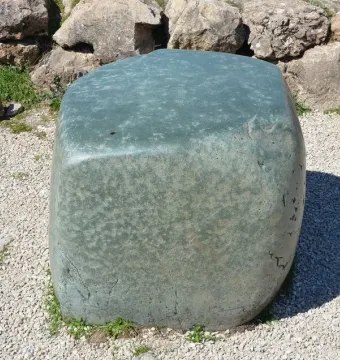
March 2016 © Carole Raddato · CC BY-SA 2.0
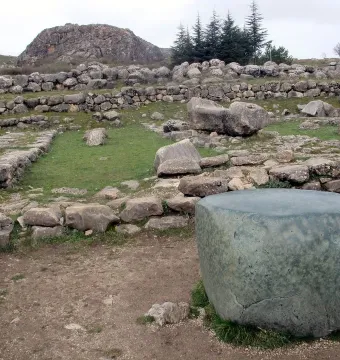
March 2013 © Murat Özsoy 1958 · CC BY-SA 4.0
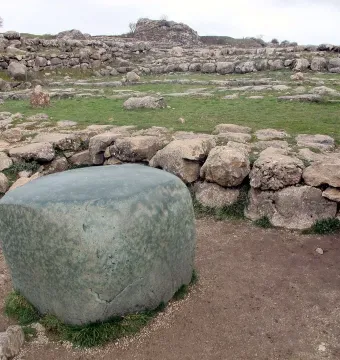
March 2013 © Murat Özsoy 1958 · CC BY-SA 4.0
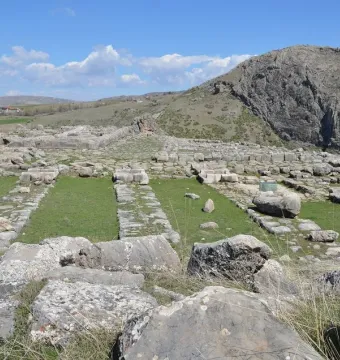
March 2016 © Carole Raddato · CC BY-SA 2.0
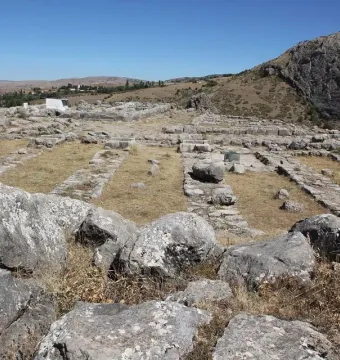
September 2022 © Ingeborg Simon · CC BY-SA 3.0
Identification | |
| Title | Hattusa Green Stone |
| Object type | stone object |
| Alternative name | the green stone of Hattusa |
Historical context | |
| Historical context | Hattusa was the capital of the Hittites at the end of the Bronze Age |
Creator | |
| Associated scholar | Andreas Schachner, director of archaeology at the site |
Discovery and provenance | |
| Location found | the Great Temple (Temple 1) at Hattusa, in a small room at the southern end of the street leading from the gateway |
| Site | Hattusa archaeological site |
| Original position | likely not its original position, as suggested by comparison with the door sills |
| Uniqueness | the only stone of its kind found at Hattusa |
| Historical users | believed to have been used by the Hittites and the civilizations that succeeded them |
Physical characteristics | |
| Size | about unspecified side length per side |
| Weight | about unspecified weight |
| Color | green |
| Shape | roughly cubic block |
Materials | |
| Material | nephrite |
| Material description | a dark green mineral, a common form of jade in the region |
Iconography and meaning | |
| Possible function | possibly a religious object or the base of a statue, but its purpose is unknown |
| Local name | called a "wish stone" by local inhabitants |
| Reputation | has a magical reputation |
Location and ownership | |
| Current location | still in the temple at Hattusa, open to the weather, below ground level, on the hill above Boğazkale in Çorum Province, Turkey |
| Associated temple | the Great Temple (Temple 1), believed to have been dedicated to the Sun-goddess of Arinna and the Storm-god Tarḫunna |
| Temple dedication basis | the importance of these deities to the Hittites and the surviving stone bases of statues |
| Site status | Hattusa is a World Heritage Site |
History and restoration | |
| Current scholarly view | Andreas Schachner said in 2019 that why it was brought to the temple and what it was used for there remained to be discovered |
Other | |
| Current function | tourist attraction |
| Tourism note | its mystery and magical reputation draw many tourists from Turkey and other countries |