
Endymion Sleeping
Endymion Sleeping is a sculpture by Antonio Canova made between 1819 and 1822 and preserved in the Devonshire collection at Chatsworth House. The plaster model is kept in the Gipsoteca canoviana in Possagno. Commissioned in May 1819 by William Cavendish, 6th Duke of Devonshire, without a specified subject, it was one of Canova’s last works. The marble was finished in September 1822 and reached London the following summer, shortly after news of the artist’s death. The figure shows the sleeping shepherd naked on a clamide, one arm raised above his head, holding two darts while a dog rests at his feet.
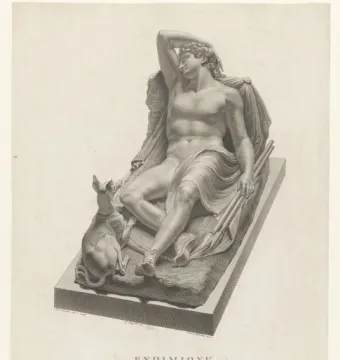
© Rijksmuseum · CC0
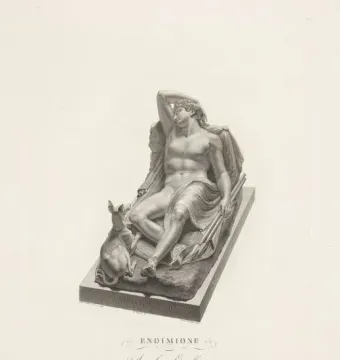
© Rijksmuseum · CC0
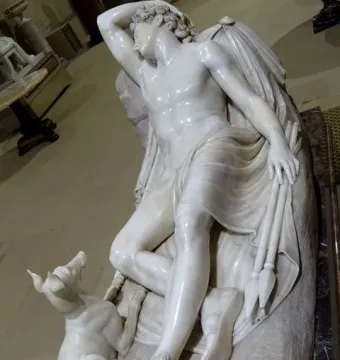
June 2016 © Daderot · Public domain
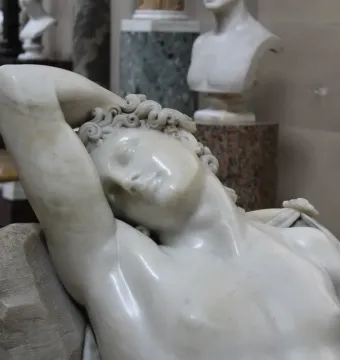
July 2014 © Mum's taxi · CC BY-SA 4.0
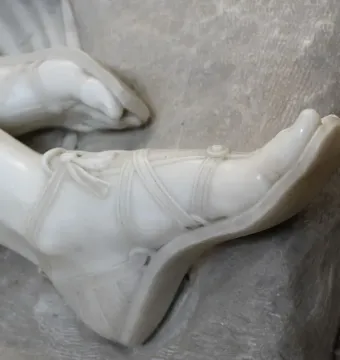
July 2014 © Mum's taxi · CC BY-SA 4.0
Identification | |
| Title | Endimión durmiente |
| Type | Sculpture |
Historical context | |
| Date made | 1819–1822 |
Creator | |
| Artist | Antonio Canova |
Discovery and provenance | |
| Commissioned by | William Cavendish, 6th Duke of Devonshire |
| Date commissioned | May 1819 |
| Commission details | Commissioned without specifying the subject |
| Completion date | September 1822 |
| Arrival in London | Summer 1823, preceded by news of the artist's death |
| Relation to artist's career | One of the artist's last works |
| Current location | Devonshire Collection, Chatsworth House |
| Plaster model location | Gipsoteca Canoviana, Possagno |
| Material versions | Marble sculpture; plaster model (gesso) also exists |
Physical characteristics | |
| Attributes | Delicately holds two darts and is accompanied by a small dog lying at his feet |
| Depicted state | Sleeping |
| Pose | Nude, reclining in sleep with the right arm raised above the head, lying on a chlamys and a gray rock |
| Subject | Endymion, the shepherd |
Materials | |
| Material | Marble |
| Model material | Plaster (gesso) |
Appearance | |
| Surface treatment | Polished body surface |
| Color contrast | White body contrasted with gray rock |
Iconography and meaning | |
| Iconographic suggestion | The two darts suggest hunting |
| Classical source comparison | Quatremère de Quincy noted similarities in pose to the river Ilissus on the west pediment of the Parthenon |
| Classical source study | Canova had seen the Parthenon sculpture in London in 1815 and had a plaster cast brought to Rome |
| Related works | Sleeping Nymph sketches; Reclining Magdalene; geniuses of the tombs of Clement XIII and Maria Cristina of Austria |
| Patron's taste | The subject was likely chosen with the duke's tastes in mind; he had shown great admiration for the geniuses of the tombs of Clement XIII and Maria Cristina of Austria |
Significance | |
| Reception | The sculpture enjoyed notable success |
| Reason for success | The polished white body contrasts with the rough gray rock |