
Polish Cavalry Monument
The Polish Cavalry Monument, also known as the Millennium of Polish Cavalry Monument, is located in Warsaw near Jazdy Polskiej Roundabout at the edge of Pole Mokotowskie. The monument was conceived in 1978, with an organizing committee formed in 1981 and a cornerstone laid in 1983. Mieczysław Naruszewicz’s winning design was cast in 1987 in Warsaw. The bronze sculpture shows two galloping horsemen: a Piast-era armored warrior with a spear and a uhlan with a sabre, symbolizing the beginning and end of Polish mounted formations. It was unveiled on 3 May 1994 and later turned in November 2018 to face the roundabout and the Politechnika metro station.
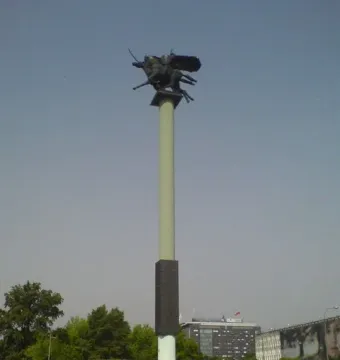
May 2007 © Kocio · CC BY-SA 3.0
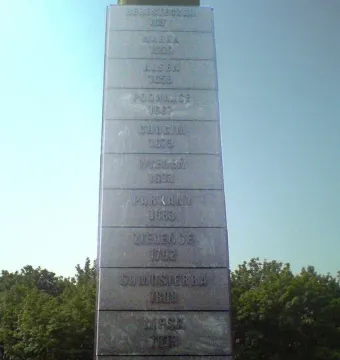
May 2007 © Kocio · CC BY-SA 3.0
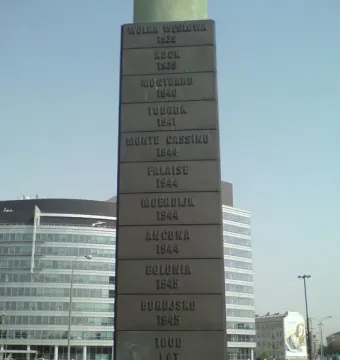
May 2007 © Kocio · CC BY-SA 3.0
May 2015 © Muri · CC BY-SA 4.0
May 2015 © Muri · CC BY-SA 4.0
Identification | |
| Title | Polish Cavalry Monument |
| Original title | Pomnik Tysiąclecia Jazdy Polskiej |
| Type | Monument |
| Subject | The Polish horse cavalry, including cavalry in general |
Location and ownership | |
| Location | Warsaw, Poland |
| Specific location | by Jazdy Polskiej Roundabout, on the edge of Pole Mokotowskie, in the Śródmieście district |
| Casting location | Brąz Dekoracyjny cooperative in Warsaw |
Historical context | |
| Initiative to build | 1978 |
| Organizing committee formed | 1981 |
| Intended original location | On the escarpment of Łazienkowska Route at the exit of Jazdów Street in Warsaw |
| Cornerstone laid | 1983 |
| Design competition | 1984, 13 entries |
| Cast | 1987 |
| Unveiled | 3 May 1994 |
Creator | |
| Model for the figures | Colonel Zbigniew Starak, participant in the charge at the Battle of Schoenfeld, described as the last cavalry charge and mounted battle fought by the Polish cavalry |
| Designer | Mieczysław Naruszewicz, sculptor and designer |
| Plaque designer | Sculptor Marek Moderau |
History and restoration | |
| Rotation planned for | Fourth quarter of 2018 |
| Rotation direction | From south to northeast, a 135-degree turn |
| Rotation purpose | To turn it toward the roundabout and Politechnika metro station |
| Rotation initiative launched | 2016 |
| Inscription corrections | Battle-name and date errors were corrected after 11 years, including Obertyn, Orsza, and Beresteczko |
| Rotation completed | 20–21 November 2018 |
| Location changed due to | Unstable geological conditions |
Physical characteristics | |
| Plaque content | A list of 43 of the most important battles in the history of the Polish cavalry |
| Pedestal decoration | Four cast brass plaques on the lower part of the column shaft |
| Orientation | Set too high on its column and facing away from pedestrians and traffic |
Appearance | |
| Depicted figures | Two riders galloping on horseback: a Piast knight armed with a lance, sword, and shield, and a uhlan soldier with a sabre in his outstretched hand |
Iconography and meaning | |
| Symbolism | The two riders symbolize the beginning and end of Polish horse cavalry |
Materials | |
| Plaque material | Brass, made from artillery shell casings supplied by the army |