
Venus de Lloret
Venus de Lloret, also known as Dona marinera, is a statue in Lloret de Mar, Catalonia, by the artist Ernest Maragall Noble. It was designed in 1966 and is part of the Inventari del Patrimoni Arquitectònic de Catalunya. The work pays tribute to the women of the seafaring era, especially those who supported their homes and families while many men went to seek their fortune across the Atlantic. Its popular name comes from a local legend that says anyone who touches its right foot while looking at the horizon can have a wish granted.
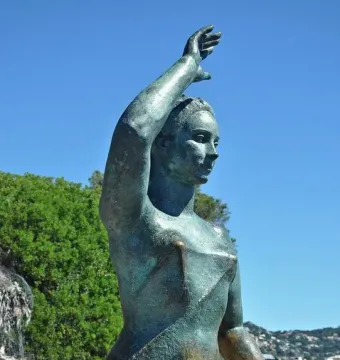
June 2016 © Alberto-g-rovi · CC BY-SA 4.0
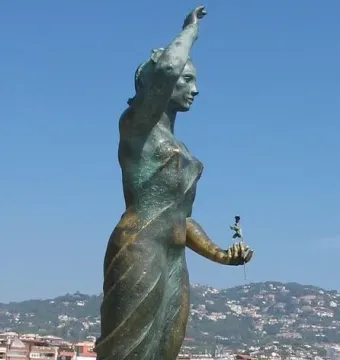
· Public domain
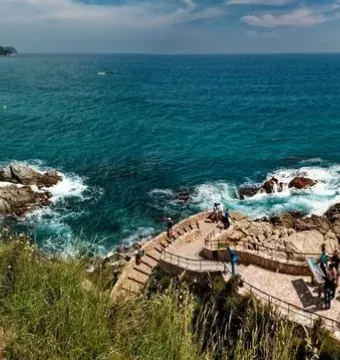
May 2011 © Txllxt TxllxT · CC BY-SA 4.0
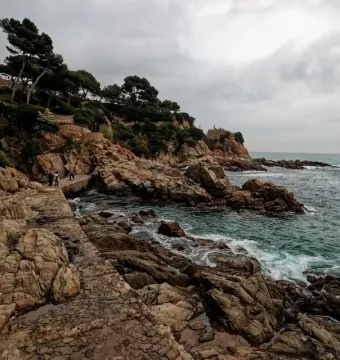
May 2011 © Txllxt TxllxT · CC BY-SA 4.0
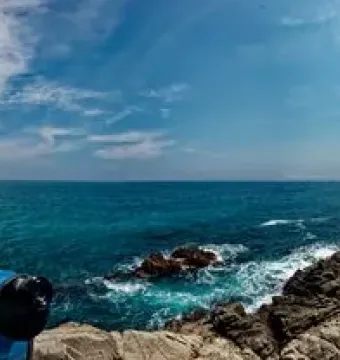
May 2011 © Txllxt TxllxT · CC BY-SA 4.0
Identification | |
| Title | Venus de Lloret |
| Type | Statue |
| Alternative names | Dona marinera; La mujer del pescador (Fisherman's Wife); Die Venus von Lloret |
Creator | |
| Artist | Ernest Maragall i Noble |
| Artist's life dates | 1903–1991 |
| Artist's family | Son of the poet Joan Maragall |
| Artist's training | Disciple of Pablo Gargallo |
| Artist's later residence | Settled in Venezuela in 1937 after spending time in Italy |
| Artist's professional activity in Venezuela | Participated in the design of national monuments commissioned by official order |
| Artist's teaching role | Professor of modeling at the School of Plastic Arts of Caracas |
| Artist's style | His work is characterized by robust and static monuments |
Historical context | |
| Purpose | Created to remember the effort and sacrifice of the families that lived from fishing; created in memory of the victims and hardships of seafaring families |
| Commemorative meaning | A tribute to the women of the maritime era, who often supported the home and family while many men went to seek fortune across the Atlantic |
| Associated legend | According to a local legend, anyone who looks at the horizon like the statue while touching its right foot at the same time will have their wishes fulfilled |
| Inspiration | Inspired by the Lloret scholar Esteve Fàbregas i Barri |
| Date unveiled | 1966 |
| Commissioned or suggested by | Esteve Fàbregas i Barri, a scholar from Lloret |
Discovery and provenance | |
| Location association | Lloret |
Physical characteristics | |
| Attire | Tight, fine dress close to the body |
| Breasts | Firm or taut |
| Barefoot | Yes |
| Gesture | Right hand raised, as if greeting or saying farewell to someone; as if trying to communicate with someone or something coming from the sea |
| Pose | Facing the sea |
| Figure depicted | Female figure |
| Height | 2.40 meters including the pedestal |
Materials | |
| Main material | Bronze |
| Base material | Rounded granite block |
Location and ownership | |
| Current location | Southern part of Platja Gran, Lloret de Mar, Catalonia, Spain |
| Setting | A small cobbled square surrounded by benches |
| Access | Reachable by a cobbled path that runs along the coast to the Castle of Sant Joan of Lloret |
| Surroundings | A place where pedestrians can rest and enjoy the sea view |
| Heritage status | Protected as part of the architectural heritage of Catalonia; listed as a monument under heritage protection law |
| Cultural inventory | Included in the Inventory of the Architectural Heritage of Catalonia |