
Bust of King Charles I
Bust of King Charles I is a sculptural bust by the Italian artist Gian Lorenzo Bernini, made for Charles I of England. The king commissioned the work for himself and sent Bernini a triple portrait painted by Anthony van Dyck as the basis for the sculpture. Although Bernini never traveled to London or met Charles face to face, the bust was considered a success in its time. According to one historian, it helped establish visual conventions for centuries and became a model of secular absolutist portraiture. Charles rewarded Bernini with jewelry worth more than 4,000 Roman scudi. Plans for a bust of Queen Henrietta Maria were stopped by the outbreak of the English Civil War. The original portrait is now lost, probably destroyed in the Whitehall Palace fire of 1698.
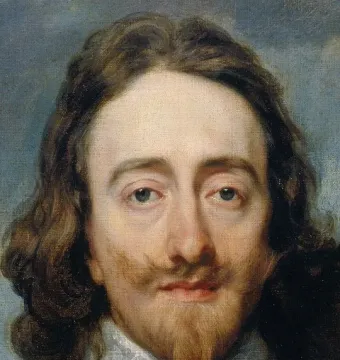
© Details on Google Art Project · Public domain
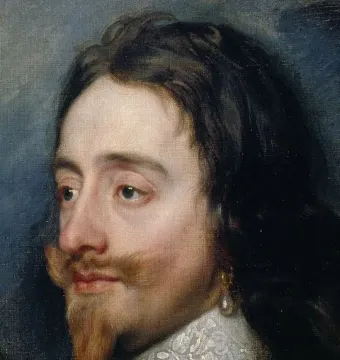
© Details on Google Art Project · Public domain
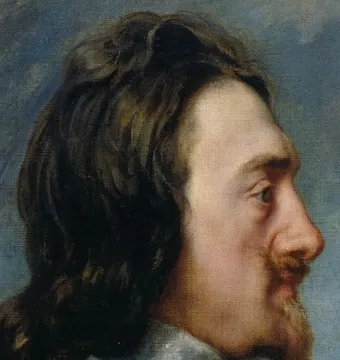
© Details on Google Art Project · Public domain
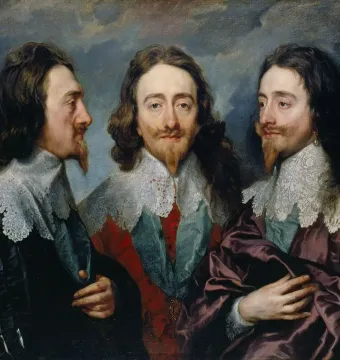
© Details on Google Art Project · Public domain
Identification | |
| Title | Bust of King Charles I |
| Original title | El Busto del Rey Carlos I; O Busto do Rei Carlos I |
| Type | Portrait bust |
Creator | |
| Artist | Gian Lorenzo Bernini |
| Artist nationality | Italian |
Historical context | |
| Related historical figure | Oliver Cromwell, who defeated Charles I in the English Civil War |
| Later mistaken attribution | In the 19th and early 20th centuries, some believed Bernini also made a bust of Oliver Cromwell; this attribution was refuted in 1922 |
| Reason the related work was abandoned | The outbreak of the English Civil War |
| Planned related work | A companion bust of Henrietta Maria was planned |
| Historical interpretation | According to one historian, it set the visual conventions for centuries and became the official portrait of secular absolutism |
| Subject's status at the time | King of England |
| Patron | Henrietta Maria, Queen of England |
| Subject | King Charles I of England |
| Commissioned by | Charles I of England |
Creation | |
| Artist's relationship to sitter | Bernini did not travel to London and did not know Charles I personally |
| Reward to artist | Jewelry and a diamond ring worth over 4,000 Roman scudi, said to be more than 60 times the average yearly salary of a worker in Rome |
| Model used | A specially made triple portrait painting of Charles I by Anthony van Dyck |
| Completion reception | Considered a success at the time of creation; admired for its workmanship and likeness to the king |
Discovery and provenance | |
| Status | Lost; very likely destroyed in the fire at Whitehall Palace in 1698 |
| Copies | Numerous copies exist, including engravings and bronze sculptures |
| Later history | Sold at the end of the English Civil War, recovered for the Royal Collection at the Restoration, then destroyed |
| Destruction date | January 1698 |
| Destruction event | Fire at Whitehall Palace |
| Motivation for sending | Sent by Pope Urban VIII in the hope of encouraging reconciliation between the Roman Catholic Church and the Church of England |
| Presented to | Henrietta Maria in 1637 |
Other | |
| Letter from the subject to the artist | Charles I wrote to Bernini that the artist's name was "exalted above those of all men of talent who have exercised your profession." |
| Categories | Bernini busts; 17th-century sculptures; Works from the 1630s |