
Milo of Croton
Milo of Croton is a marble group made by Pierre Puget between 1671 and 1682 in Toulon, on commission from Jean-Baptiste Colbert for the Château de Versailles. It depicts the death of the athlete Milo of Croton, who, according to the source text, was devoured by a lion after his hand became trapped in the split of a tree stump. The work was created during Puget’s Toulon period, when he was also responsible for sculptures for Louis XIV’s fleet. It was carved from one of two unused marble blocks in the arsenal, and it is now preserved in Paris at the Louvre.
January 2011 © Okki · CC BY-SA 3.0
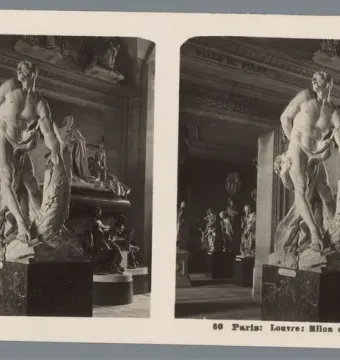
1904 © Rijksmuseum · CC0
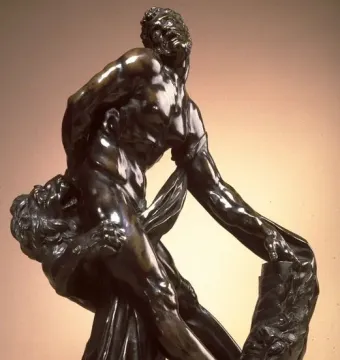
© Pierre Puget · Public domain
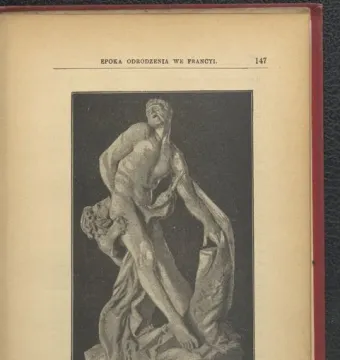
© Elie Jean Pécaut · Public domain
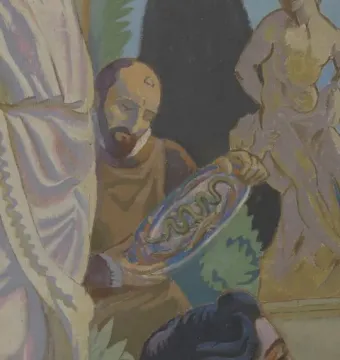
© Denis, Maurice (Granville, 25–11–1870 - Saint-Germain-en-Laye, 13–11–1943), peintre · CC0
Identification | |
| Title | Milo of Croton |
| Original title | Le Milon de Crotone |
| Alternative title | Milon de Crotone; El Milón de Crotona |
| Type | Marble group sculpture |
Creator | |
| Artist | Pierre Puget |
Historical context | |
| Creation period | 1671–1682, during Puget's Toulon period |
| Commission | Commissioned by Jean-Baptiste Colbert to create sculptures for the ships of Louis XIV's fleet under construction in Toulon |
| Authorization for materials | Colbert allowed Puget to use two or three unused marble blocks in the arsenal for two compositions of his own choosing, with no constraints on subject or dimensions |
| Historical context of authorization | Colbert's approval was exceptional in a period when artistic creation was largely controlled by royal power, the academy, or guilds |
Discovery and provenance | |
| Material source | Two or three unused marble blocks in the arsenal where Puget worked |
Materials | |
| Material | Marble |
| Material significance | Marble was considered a very precious material at the time |
Appearance | |
| Stylistic influence | Strongly influenced by the Laocoön, while substantially reinterpreting the ancient model |
| Texture treatment | Notable handling of drapery and other textures |
| Composition | Built along strong diagonals, with the wrestler's legs forming one diagonal and the tree trunk and drapery responding to it |
| Animal depicted | Lion |
| Depicted moment | Milo is shown at the moment a lion sinks its claws and teeth into his leg, with his hand trapped in the split of a tree stump |
| Subject | The death of Milo of Croton, a Greek athlete and Olympic champion |
Iconography and meaning | |
| Legendary reference | The legend says a wolf devoured Milo with his hand pinned to an olive tree trunk; Puget replaced the wolf with a lion |
| Symbolism | Symbol of hubris, the vanity of human effort, and the inevitability of fate |
| Cup on the ground | The athlete's cup from the Olympic Games symbolizes fleeting glory in the face of death |
Location and ownership | |
| Replica in Crotone | A replica is installed in front of the sports hall in Crotone, the PalaMilone |
| Replica in São Paulo | A replica is located in the Higienópolis neighborhood of São Paulo, Brazil |
| Later location | Paris museum in 1819 |
| Current location | Louvre Museum, Paris |
| Placed in Versailles gardens | 19 July 1683 |
| Initial display location | The gardens of the Palace of Versailles |
| Original intended location | The Palace of Versailles |
| PalaMilone name origin | Named after Milo of Croton |
History and restoration | |
| Related work | Alexander and Diogenes |
| Related work date | 1671–1691 |
| Related work location | Louvre Museum, Paris |
Significance | |
| Artistic importance | One of Puget's two most important works |
| Influence and reception | Highly influential, especially among artists of the Académie royale de peinture et de sculpture |
| Academic use | Some artists chose this subject for their academy admission or reception piece, including Étienne Maurice Falconet |
| Replicas | Many replicas were made |