
Bust of the Saviour
Bust of the Saviour, also known as Salvator mundi, is the last sculpture by the Baroque artist Gian Lorenzo Bernini. It was made in Rome in 1679, when Bernini was eighty years old, and left in his will to his friend and patron, Queen Christina of Sweden. After passing to the Odescalchi family, its traces were lost in inventories at the end of the century. The work was long considered lost, but since 1972 several attribution proposals have sparked debate. Most critics, with the important exception of Tomaso Montanari, now accept the Bernini original in the bust preserved in the Basilica of San Sebastian Outside the Walls, which had remained hidden from scholarly attention until the early 2000s.
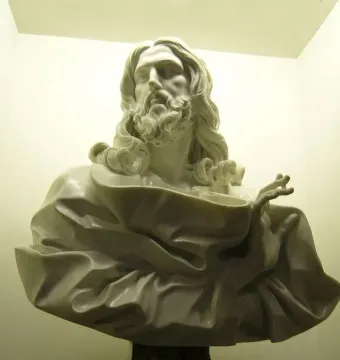
December 2006 © Raymac · CC BY-SA 3.0
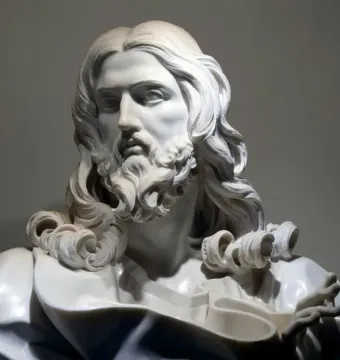
February 2015 © Livioandronico2013 · CC BY-SA 4.0
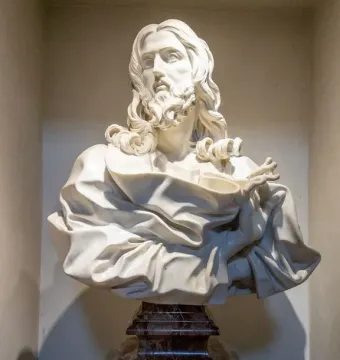
November 2022 © Kent Wang · CC BY-SA 2.0
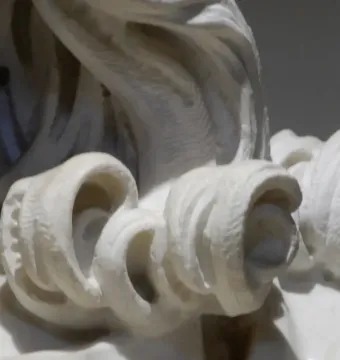
October 2019 © MM · CC BY-SA 4.0
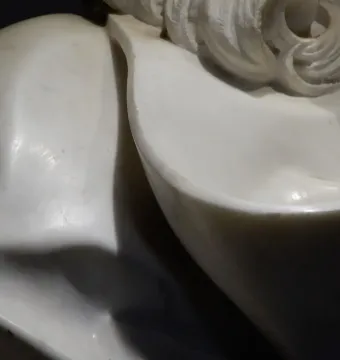
October 2019 © MM · CC BY-SA 4.0
Identification | |
| Title | Bust of the Saviour |
| Subject | Jesus Christ as the Savior |
| Alternative title | Salvator mundi |
| Type | Bust |
| Original title | Il busto del Salvatore |
Creator | |
| Artist | Gian Lorenzo Bernini |
| Style | Baroque |
| Date of creation | 1679 |
| Artist age at creation | about 80 years old |
| Status in Bernini's oeuvre | Bernini's last sculpture made by his own hand |
| Bernini's assessment | He called it his "divine image" and his "favorite," and said he devoted all the efforts of his Christian piety and of art itself to it; later he felt it lacked "vitality and tenderness and the other good qualities of his work" because of his advanced age |
| Contemporary reception | Contemporaries considered it an extraordinary work and a worthy testament to the artist's exceptional career |
| Place of creation | Rome |
Discovery and provenance | |
| Copy commissioned by | Pierre Cureau de la Chambre, Bernini's friend and aspiring biographer and abbot of Saint-Barthélemy |
| Later provenance hypotheses | A 2001 photo in an exhibition catalog led Francesco Petrucci to identify the bust in the Basilica of San Sebastiano fuori le mura; the sculpture was in the sacristy of the Albani Chapel before 1960, and a 19th-century inventory of the Palazzo Albani mentions a bust of the Savior on a jasper base |
| Copy fate | Saint-Barthélemy was destroyed during the French Revolution, and all trace of the copy was lost |
| Copy location | Placed in the church of Saint-Barthélemy after Bernini's death |
| Rediscovery | Considered lost for a long time and rediscovered in 2001 by Francesco Petrucci |
| Early documented sighting | Nicodemus Tessin the Younger saw it in Rome during his stay in 1687-1688, in the palace inhabited by Queen Christina of Sweden |
| Attribution dispute | Since 1972 several attribution proposals have been debated; most critics recognize the preserved bust in the Basilica of San Sebastiano fuori le mura as Bernini's original, while Tomaso Montanari disputes this and favors the Chrysler Museum version in Norfolk, USA |
| Loss of trace | Its traces were lost by the end of the 18th century, after a 1713 inventory of the Palazzo Odescalchi |
| Later ownership | Passed to Pope Innocent XI and then to the Odescalchi family |
| Bequest | Left by Bernini in his testament to Queen Christina of Sweden, his friend and patron |
Physical characteristics | |
| Dimensions | 103 cm; larger than life-size, described in sources as a "half figure larger than life" and colossal |
| Right hand position | Slightly raised, as if blessing |
Materials | |
| Material | Marble |
| Base material | Sicilian jasper |
| Preparatory drawing | "Study for the Bust of the Saviour" by Bernini, preserved at the Istituto nazionale per la grafica in Rome, Fondo Corsini |
Location and ownership | |
| Current location | Basilica of San Sebastiano fuori le mura, Rome |
| Former location | The palace of Queen Christina of Sweden in Rome; later the sacristy of the Albani Chapel in the Palazzo Albani; then the sacristy of the family funerary chapel in San Sebastiano fuori le mura before being moved to the adjoining convent |
| Exhibition history | Displayed in the departures hall of Terminal 1 at Rome Fiumicino Airport from 12 April to 31 August 2023 |
Iconography and meaning | |
| Depiction | Christ blessing as Salvator Mundi |
Significance | |
| Scholarly importance | The sculpture remained outside scholars' attention until the early 2000s and has been central to debates over Bernini attribution and identification |