
Meroë Head
Meroë Head, also known as the Head of Augustus from Meroë, is a slightly larger-than-life bronze head representing the Roman emperor Octavian Augustus. It was found in 1910 among the ruins of ancient Meroë, the former capital of the Kingdom of Kush in present-day Sudan. The head had been deliberately buried beneath the staircase of a temple and was well preserved by the region’s warm, dry climate. Excavated by British archaeologist John Garstang in December 1910, it was later sent to London and entered the British Museum collection in 1911. The object is admired for its striking appearance and balanced proportions.
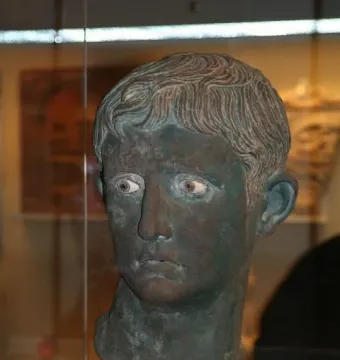
© Unknown artistUnknown artist · CC BY-SA 3.0
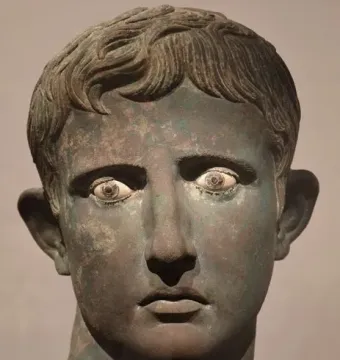
© Carole Raddato · CC BY-SA 2.0
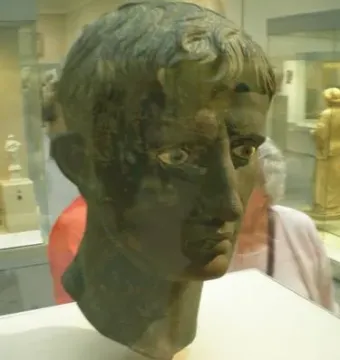
© Unknown artistUnknown artist · CC BY 2.5
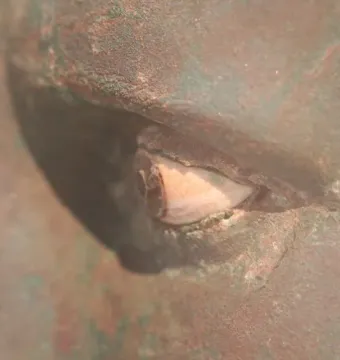
September 2007 © Nic McPhee · CC BY-SA 2.0
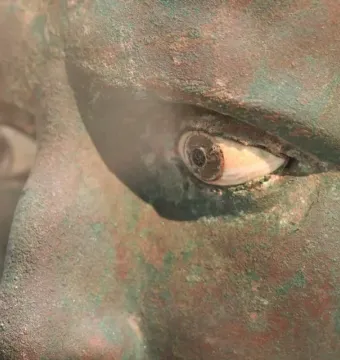
September 2007 © Nic McPhee · CC BY-SA 2.0
Identification | |
| Title | Meroë Head |
| Type | bronze portrait head from a larger statue |
| Subject | Augustus, first Roman emperor |
| Alternative name | Head of Augustus of Meroë |
Physical characteristics | |
| Size | heroic size, slightly larger than life-size |
Materials | |
| Material | bronze |
Appearance | |
| Appearance | long admired for its striking appearance and perfect proportions |
Discovery and provenance | |
| Historical removal | Looted from Roman Egypt in 24 BC, probably by the forces of Queen Amanirenas of Kush |
| Excavation supporters | Sudan Excavation Committee, with members including the National Museum of Scotland, the Ny Carlsberg Glyptotek, and the Royal Museums of Fine Arts of Belgium; major patrons included Henry Solomon Wellcome and Baron von Bissingen |
| Acquisition by museum | Donated to the British Museum by the Sudan Excavation Committee in 1911, with support from the National Art Collections Fund |
| Current location | British Museum, London |
| Subsequent deposition | Taken to Meroë and buried under a temple staircase, apparently to symbolically discredit Augustus or mark Meroitic victory |
| Burial history | Deliberately buried about 1,900 years earlier beneath a temple stairway or threshold |
| Condition at discovery | Well preserved, likely because it had been buried in hot, dry conditions |
| Discovery context | Found during John Garstang's excavation of the lost city of Meroë, near mound M292 just outside the doorway of a chamber under what had been a temple staircase, about 2.5 metres below the surface |
| Discovery location | Meroë, ancient Nubian capital of the Kingdom of Kush, present-day Sudan |
| Discovery date | December 1910 |
Creator | |
| Excavator | John Garstang |
Historical context | |
| Historical background | Associated with the Kushite invasion of Lower Egypt in 24 BC, when many statues of Augustus were looted while Roman forces were away fighting in the Arabian campaign |
| Roman recovery attempt | Petronius later invaded Kushite territory and recovered many statues, but did not reach the Kushite capital |
Iconography and meaning | |
| Identification history | Initially misidentified by Garstang as Germanicus; Franz Studniczka and British Museum curators identified it as Augustus, comparing it with the Augustus of Prima Porta |
| Interpretation | Interpreted as a portrait of Augustus and as an emblem of Meroitic and Kushite victory over him |
| Associated function | The temple area has been interpreted as a commemorative or victory shrine and possibly a pilgrimage center |
| Evidence for interpretation | Graffiti and faded wall paintings, reconstructed from watercolour drawings by Shliephack, suggest a ritual setting in which visitors symbolically trod on Augustus's buried head |
Location and ownership | |
| Associated site | Temple M292 at Meroë |
| Associated structure | Buried beneath a monumental staircase leading to a podium or victory altar, near a temple of Amun/Ammon and other large buildings possibly palaces |
Other | |
| Alternative theories | A gift from Gallus or a head from a statue at Qasr Ibrim have been proposed, but both are considered unlikely or disproved |