
Mano del Desierto
Mano del Desierto is a sculpture located 75 km south of Antofagasta, Chile, beside Route 5 Panamericana. Created by Chilean sculptor Mario Irarrázabal, it was built in reinforced concrete and stands 11 meters tall. The work was inaugurated on 28 March 1992, with construction funded by the Corporación Pro Antofagasta, which also handles its maintenance and cleaning. Because it is often covered in graffiti, it requires regular upkeep. The sculpture invites personal interpretation: some see it as the city bidding farewell to travelers, while others read it as a memorial to victims of injustice and torture during the military dictatorship of 1973–1990. It is also a tourist stop for those traveling along the Pan-American Highway.
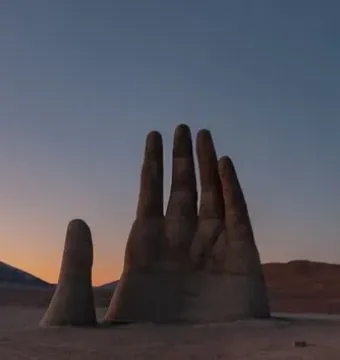
September 2018 © Nicolas Valdes Ortega · CC BY-SA 4.0
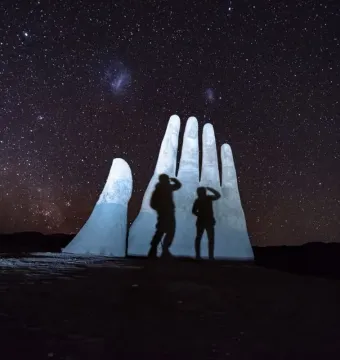
September 2018 © VonFer · CC BY 4.0
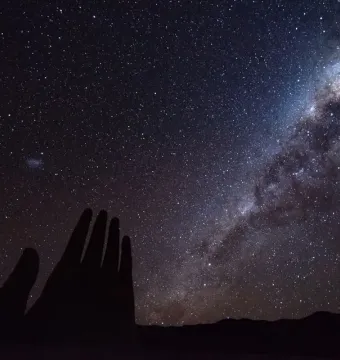
September 2018 © VonFer · CC BY 4.0
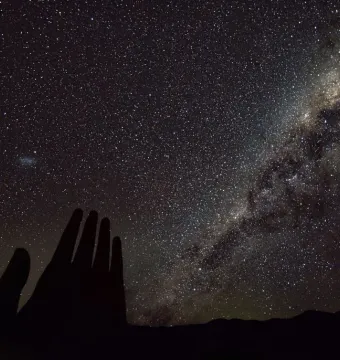
September 2018 © Nicolás Valdés Ortega · CC BY-SA 4.0

September 2018 © VonFer · CC BY 4.0
Identification | |
| Title | Mano del Desierto |
| Alternative names | Hand of the Desert; A Mão do Deserto; Рука́ пусте́лі |
| Type | Large-scale sculpture |
| Original title | La Mano del desierto |
Historical context | |
| Year created | 1992 |
| Inauguration date | 28 March 1992 |
Creator | |
| Artist | Mario Irarrázabal |
| Artist nationality | Chilean |
Discovery and provenance | |
| Funding | Financed by Corporación Pro Antofagasta |
| Caretaker organization | Association for Antofagasta |
Physical characteristics | |
| Depicted form | A left human hand emerging from the ground by about three-quarters |
| Height | 11 m |
Materials | |
| Material | Reinforced concrete on a steel frame |
Location and ownership | |
| Elevation | About 1,100 m above sea level |
| Location | Atacama Desert near Antofagasta, Antofagasta Region, Chile, beside Route 5 (Pan-American Highway) |
| Distance from highway | About 400–450 m from Route 5 |
| Distance from Antofagasta | About 75 km south of the city |
Appearance | |
| Visibility | Visible from a long distance from the road |
Iconography and meaning | |
| Meaning | Interpretations include human injustice, loneliness, grief and torment; a farewell to the traveler; victims of injustice and torture during the 1973–1990 military dictatorship; and a warning against environmental wrongdoing |
| Large size symbolism | Emphasizes human vulnerability and helplessness |
Other | |
| Touristic significance | Tourist attraction and stop for travelers on Route 5; popular filming location featured in commercials and music videos |
| Access | Reached from Antofagasta via Route 28 to Route 5 at La Negra, then south on Route 5 and a dirt road toward the sculpture |
| Nearby reference point | Ciudad Empresarial La Negra |
| Road marker location | Between highway kilometer markers 1309 and 1310 |
| Related works by the same artist | Similar sculptures in Playa Brava in Punta del Este, Juan Carlos I Park in Madrid, Puerto Natales, and Venice |
History and restoration | |
| Condition | Often covered with graffiti |
| Maintenance | Regularly cleaned by authorities and by Association for Antofagasta; a cleanup was organized in 2013 for World Tourism Day with 20 volunteers |