
Alebrije
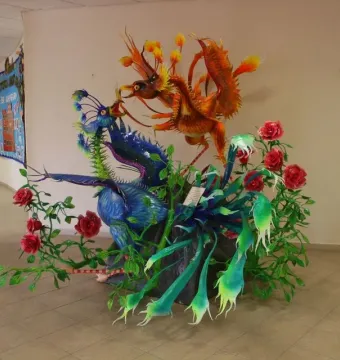
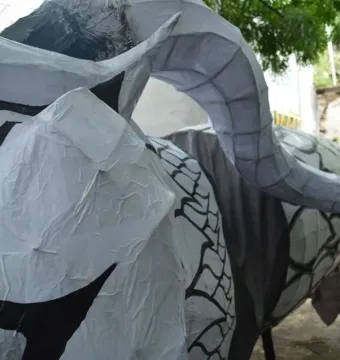
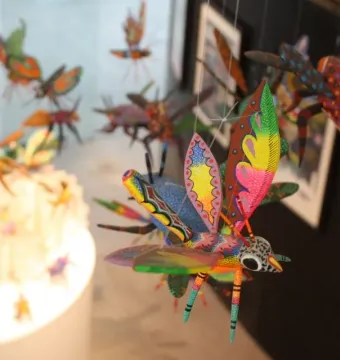
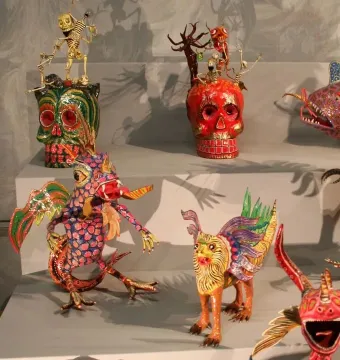
An alebrije is a brightly colored Mexican folk-art sculpture depicting fantastic, mythical creatures. The first alebrijes, and the use of the term, are credited to Pedro Linares, who became seriously ill in the 1930s and dreamed of strange hybrid animals shouting the word “alebrijes.” After recovering, he recreated the creatures in cardboard and papier-mâché. His work later drew attention in Mexico and beyond, and in the 1980s an outreach workshop helped introduce Oaxaca artisans to papier-mâché sculpture. In Oaxaca, the craft was adapted to local copal wood, a version developed by Manuel Jiménez and later expanded to towns such as San Martín Tilcajete and La Unión Tejalapan.
October 2016 © MasterWolf35 · CC BY-SA 4.0
September 2016 © AlejandroLinaresGarcia · CC BY-SA 4.0
April 2013 © David Cabrera · CC BY-SA 4.0
April 2008 © Rvalette · CC BY-SA 4.0
September 2019 © Emiliano Eslava · CC BY-SA 4.0
Identification | |
| Title | alebrije |
| Subject matter | Fantastic creatures and hybrid animals |
| Type | Mexican folk-art sculpture / craft figure |
Historical context | |
| Origin | Mexico City, Mexico |
| Date of origin | 1936 |
Creator | |
| Originator | Pedro Linares López |
| Originator occupation | Cartonero artist specializing in piñatas, Judas figures, carnival masks, and papier-mâché figures |
| Creation context | Linares began making the figures after a severe fever illness and hallucinations or a dream |
| Inspiration | A fever dream or hallucination in which he saw a strange forest or mountain setting with trees, rocks, clouds, and transforming animals |
| Dream creatures | A donkey with butterfly wings, a rooster with bull horns, and a lion with an eagle head |
| Name in the dream | "alebrijes" or "alebrije!" shouted by voices or the creatures |
Discovery and provenance | |
| Popularity | The tradition became more widely known after a 1975 documentary by Judith Bronowski/Bronowski |
| Awards | Pedro Linares received Mexico's National Prize for Arts and Sciences in 1990 for his work and for preserving popular traditions |
| First production | Mexico City |
| Recognition | A gallery owner in Cuernavaca noticed the works and introduced them to Diego Rivera and Frida Kahlo, who commissioned more |
| First clients | Pyrotechnic masters |
Physical characteristics | |
| Appearance | Brightly colored, strange figures with wings, horns, tails, fangs, and protruding eyes |
| Form | Imaginary beings composed of features from several animals, including real and fantastical animals |
Materials | |
| Original materials | Cardboard and papier-mâché |
| Later materials | Wood, especially copal wood, in the Oaxacan variant |
Technique | |
| Original technique | Cartonería: layered paper and engrudo over a frame to form three-dimensional figures |
| Later technique | Wood carving of alebrijes, developed in Oaxaca |
Appearance | |
| Stylistic variation | No two alebrijes are exactly alike |
Iconography and meaning | |
| Symbolic role | Some are believed to frighten away evil spirits and protect the home |
| Interpretation | Often associated with spirit guides, guardian angels, or benevolent demons |
Location and ownership | |
| Current production areas | Various regions of Mexico, especially Oaxaca |
| Main Oaxaca towns | Arrazola, San Martín Tilcajete, and La Unión Tejalapan |
| Museums and displays | Alebrijes made for Diego Rivera and Frida Kahlo are displayed in the Anahuacalli Museum in Mexico City |
History and restoration | |
| Family tradition | Linares's descendants continue making alebrijes and other cardboard and papier-mâché figures |
| Related artisans | Manuel Jiménez, Jacobo Ángeles/Angeles, Martín Sandiego, Julia Fuentes, Miguel Sandiego, and Susana Buyo are associated with the tradition |
| Related art form | Judas figures made by Linares are still burned in Mexico during Holy Week as purification rituals |
| Conservation efforts | Reforestation and management of wild copal trees have had limited success |
| Environmental impact | Alebrije production has contributed to depletion of native copal trees and has harmed indigenous incense producers |
| Regional development | The Oaxacan wood-carved version spread from Arrazola to other towns and became an important source of income, especially in San Martín Tilcajete |
Significance | |
| Cultural status | A flourishing Mexican folk-art tradition that has gained international recognition |
| Exhibitions and festivals | Shown in exhibitions, festivals, contemporary media, and annual Mexico City parades |
Other | |
| Alternative origin story | One version says José Antonio Gómez Rosas asked Linares to make an alebrije, possibly using his own drawings or by adding bat wings and a tail to a Judas figure |
| Copyright and naming | Pedro Linares's original designs are in the public domain; the Linares family seeks to control the name 'alebrijes' and distinguish works not made by them or not from Mexico City |
| Documentary and publicity | Judith Bronowski's workshop and documentary helped spread knowledge of alebrijes in the United States and abroad |
| Annual parade | The Monumental Alebrijes Parade, or Night of the Alebrijes, has been held by the Museo de Arte Popular since 2007, running from the Zócalo to the Angel of Independence and featuring judged displays on Paseo de la Reforma |
| Parade features | Large alebrijes made of wood, cardboard, paper, wire, and other materials, accompanied by Mexican music |
| Parade themes | 2010 parade themes related to the bicentennial of Mexican independence and the centenary of the Mexican Revolution |
| International example | A three-meter-high alebrije shown at the Bogotá international book fair attracted attention alongside 150 smaller Mexican craft pieces |
| Stylistic influences | Pre-Hispanic, European, Chinese, and Gothic supernatural imagery have been cited as influences |