
Legendary Tachanka
Legendary Tachanka is a monument in Kakhovka, Kherson Oblast, Ukraine, created to mark the 50th anniversary of the Great October Socialist Revolution. It is dedicated to the battles on the Kakhovka bridgehead during the Russian Civil War and is also known as the Monument to the Tachanka, a horse-drawn machine-gun cart widely used by the Red Army cavalry. The monument was designed by sculptors L. Rodionov, Yu. Lokhovinin, and L. Mikhailyonok, together with architect E. Poltoratsky, after a cast-iron model was made in 1956. The bronze monument, weighing more than 60 tons, was assembled in Kakhovka and unveiled on 27 October 1967.
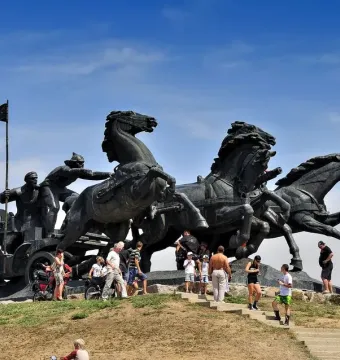
August 2012 © Дзюбак Володимир · CC BY-SA 4.0
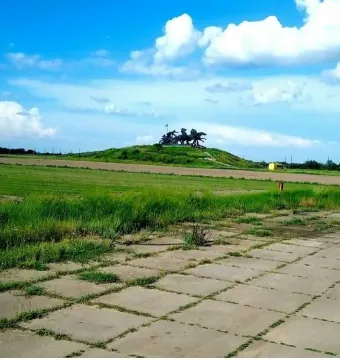
May 2019 © Katia Kram · CC BY-SA 4.0
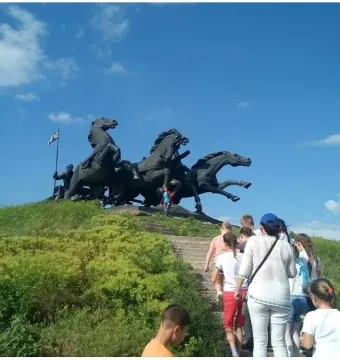
May 2019 © Katia Kram · CC BY-SA 4.0
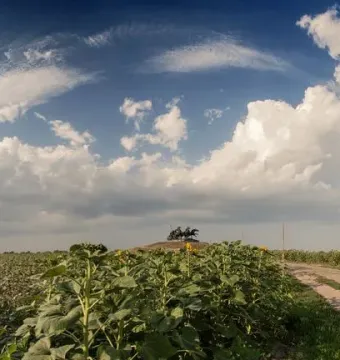
June 2013 © Дзюбак Володимир · CC BY-SA 4.0
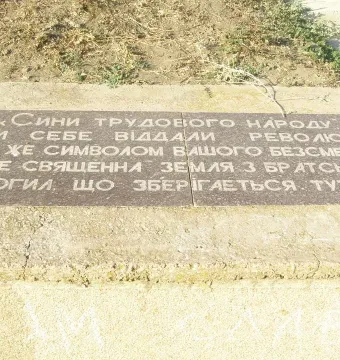
August 2012 © Lair69 · CC BY-SA 3.0
Identification | |
| Title | Legendary Tachanka |
| Type | Monument |
| Alternative names | Tachanka Monument; original Ukrainian title: Легендарна тачанка; original German title: Legendäre Tatschanka |
Historical context | |
| Commemorates | The battles at the Kakhovka bridgehead in 1920 and the Red Army’s victory over Wrangel’s forces in the Crimean campaign |
| Dedicated to | The 50th anniversary of the Great October Socialist Revolution |
| Historical reference | Refers to the tachanka, a horse-drawn machine-gun cart used by the Red Army during the Russian Civil War, especially in the battles near Kakhovka |
Creator | |
| Sculptors | L. Rodionov, J. Lokhovinin, and L. Mikhaylonok |
| Architect | E. Poltatsky (Poltoratsky) |
| Consultant | S. M. Budyonny |
Discovery and provenance | |
| Transport to Kakhovka | July–August 1967, delivered from Leningrad to Kakhovka in disassembled, numbered parts on trucks |
| Erected | 27 October 1967 |
| Prototype | A cast-iron model made in 1956, exhibited in the museum of Kakhovka, served as the prototype for the monument |
| Workshop | Leningrad plant "Monument-Sculpture" |
| Created in | Leningrad |
| Concept origin | Mid-1950s |
Physical characteristics | |
| Height | 8 m |
| Length | 18 m |
| Width | 9 m |
| Weight | 120 tonnes total; 78 tonnes bronze; 42 tonnes supporting structures and cast-iron plates |
| Base and mound | Mounted on a granite block pedestal and an artificially raised, turfed earthen mound 10 m high, 85 m long, and 75 m wide |
Materials | |
| Material | Bronze with steel supporting structures and cast-iron plates |
Appearance | |
| Depicts | A combat tachanka drawn by four horses with a three-person Red Army crew and a machine gun in combat readiness |
| Commander | A commander in a cap and overcoat standing upright, holding a flag in his right hand and the front seat with his left hand |
| Machine gunner | A Red Army soldier in a Budenovka standing at the rear, holding a rifle and looking forward |
| Machine gun position | Placed on the rear seat, facing backward |
| Wheel treatment | The wheels are rendered as if spinning rapidly, with spokes not visible |
| Artistic style | Realistic depiction of the vehicle racing across the steppe |
| Driver | A Red Army soldier in a Budenovka leaning forward and holding the reins |
Iconography and meaning | |
| Inscription | "Sons of the laboring people, you gave yourselves to the revolution! Let the sacred earth from the brotherly graves preserved here be the symbol of your immortality" |
| Niche contents | Ampoules containing sacred earth from Moscow, Kyiv, Sevastopol, Odesa, Leningrad, Volgograd, and the Hero Fortress of Brest |
Location and ownership | |
| Associated military unit | 51st Rifle Division of the Red Army |
| Location | Kakhovka, Kherson Oblast, Ukraine |
| Site | On an artificial mound in the steppe near the former command post of Vasily Blyukher and a memorial stone to him |
History and restoration | |
| Historic designation | Declared a monument of local historical significance in 1983 |
| Damage history | Repeatedly vandalized; some metal structural parts were cut out; it tilted, rusted, and deteriorated after the collapse of the USSR when conservation funding stopped |
| Restoration | Partially restored in 2006, when conservation funds became available again |
Significance | |
| Historical interpretation | Associated with the Soviet/Bolshevik victory over Wrangel’s forces and the Crimean campaign |
| Decommunization status | Considered for removal under Ukraine’s decommunization law; in 2020 the Ukrainian Institute of National Memory reportedly requested a decision on its fate as a symbol of communism |
| Proposed alternative use | Proposed site of a museum of monumental propaganda / totalitarian monumental sculpture for decommunized monuments |
| Local government response | Kakhovka city leadership rejected the museum proposal and did not decide the monument’s дальнейшая fate |