
Fallen Astronaut
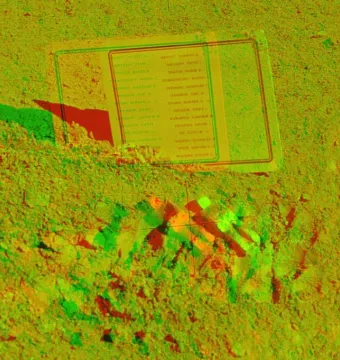
Fallen Astronaut is an aluminum sculpture by Belgian artist Paul Van Hoeydonck. It depicts a stylized astronaut in a spacesuit and was created to commemorate astronauts and cosmonauts who died in the advancement of space exploration. The sculpture was commissioned and placed on the Moon by the Apollo 15 crew at Hadley Rille on August 2, 1971, alongside a plaque listing 14 names of those who had died up to that time. It lies on the ground among several footprints. The memorial remained secret until after the mission, and later led to controversy when Van Hoeydonck attempted to sell copies of the figure.
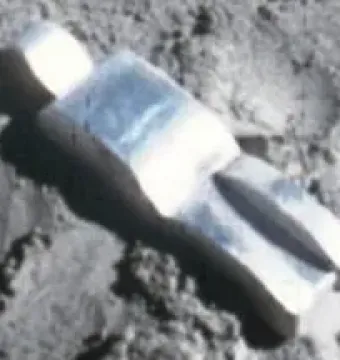
August 1971 © NASA · Public domain
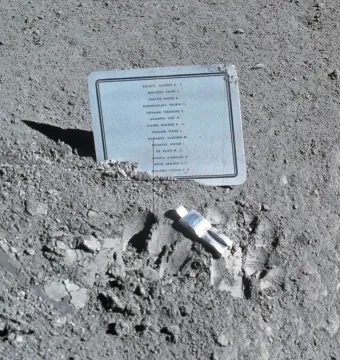
August 1971 © NASA · Public domain
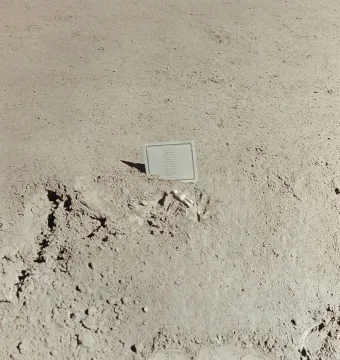
© NASA · Public domain
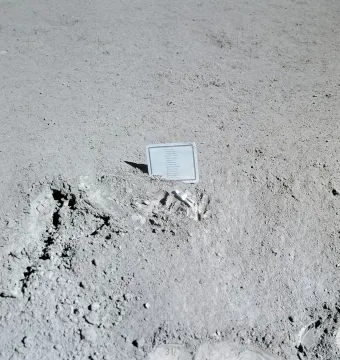
August 1971 © NASA · Public domain
1971 © NASA · Public domain
Identification | |
| Title | Fallen Astronaut |
| Type | Sculpture / statuette / miniature sculpture |
| Original-language titles | El astronauta caído; Poległy astronauta; «Павший астронавт»; «Полеглий астронавт» |
Creator | |
| Artist | Paul Van Hoeydonck |
| Nationality | Belgian |
| Profession | Artist and engraver |
| Year created | 1971 |
Historical context | |
| Artist’s interpretation of purpose | Van Hoeydonck said he understood it more as an image of all humanity and said he did not know it would become a memorial for fallen space travelers |
| Purpose | To commemorate astronauts and cosmonauts who died in the advancement of space exploration |
| Commissioning context | Commissioned after a meeting with David Scott, with the understanding that the sculptor would create a small statuette for Scott to leave on the Moon on the next flight |
| Commissioned by | David Scott of Apollo 15 |
Physical characteristics | |
| Height | 8.5 cm |
| Depicted figure | A stylized astronaut in a spacesuit |
| Pose | Lying on its back / face up |
| Design requirements | Lightweight and robust; able to withstand extreme lunar temperature changes; not identifiable as male or female or as any specific ethnicity |
Materials | |
| Material | Aluminum |
Location and ownership | |
| Plaque names | Eight astronauts and six cosmonauts; names were listed alphabetically |
| Plaque inscription details | The plaque was made by David Scott and commemorated U.S. and Soviet astronauts/cosmonauts who died in missions, during training, or in active service; two additional Soviet names were later noted as having been kept secret until the 1980s |
| Placement location | The Moon, at the Apollo 15 landing site in the Hadley–Apennine / Hadley Rille region, on the southeastern edge of Mare Imbrium |
| Associated plaque | A commemorative plaque was placed nearby, listing 14 names of astronauts and cosmonauts who had died up to that time |
| Placement date | 1 August 1971 |
| Placed by | The Apollo 15 crew; specifically David Scott and James Irwin are named in the sources |
History and restoration | |
| Public disclosure | The Apollo 15 crew kept the memorial secret until after the mission and disclosed it at a post-mission press conference |
| Replica | The National Air and Space Museum requested a replica, which was transferred in April 1972; a replica is now on display with a copy of the plaque |
| Commercial controversy | Van Hoeydonck attempted to sell up to 950 copies of the figure, but abandoned the plan under NASA pressure; he later said in 2007 that he had made 935 copies and had sold only one |
| Anonymity agreement | According to Scott, the artist's name was to remain unpublished to avoid commercialization of the U.S. space program; Van Hoeydonck disputed this |
| Later dispute | Van Hoeydonck claimed a different understanding of the agreement with the astronauts and said he did not choose or approve the title |
| Later statement by Scott | In a 2021 Memorandum for the Record, Scott stated that the figurine left on the Moon was designed and fabricated by NASA personnel, based on bathroom stick-figure symbols |
Significance | |
| Claimed distinction | Described by Walter Cronkite as the first artistic installation on the Moon |
| Uniqueness claims | Sources describe it as the only work of art known with certainty to be on the Moon / on extraterrestrial soil, though some note that other objects may be argued to have remained there for reasons other than art |
| Historical significance | One of the earliest examples of art taken into space |
Other | |
| Related uncertain claim | Moon Museum is said to have been smuggled to the Moon, but there is no proof |