
Monument to Salavat Yulaev
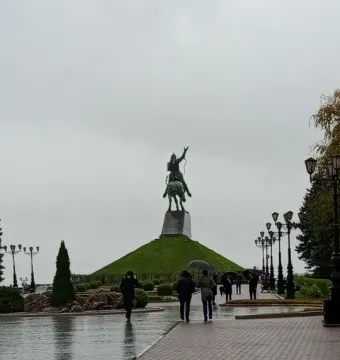
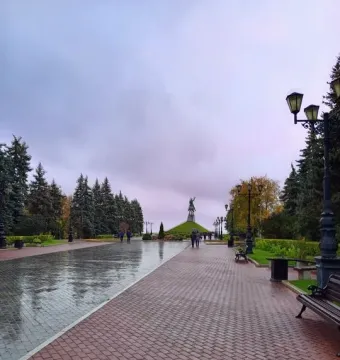
Monument to Salavat Yulaev is a monument to the Bashkir national hero Salawat Yulayev, located in Ufa, the capital of Bashkortostan in European Russia. Created by Soslanbek Tavasiev, it was unveiled on 17 November 1967 and became a hallmark of the city and a symbol of the republic, appearing in the coat of arms of Bashkortostan. The sculpture shows Salawat at the moment he leads the army to help Pugachev to Orenburg in 1774. Weighing 40 tons and standing 9.8 meters high, it is notable for resting on only three support points. The monument was dismantled for restoration in 2025 and is planned to be reinstalled in 2027.
October 2023 © Viktorysya · CC BY-SA 4.0
October 2023 © Viktorysya · CC BY-SA 4.0
2019 © Банк России · Public domain
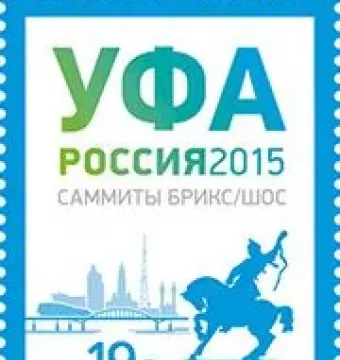
July 2015 © Stamp issuing authority - MARKA Publishing & Trading Centre. Printer - Association GOZNAK of the Ministry of Finance of the Russian Federation · Public domain
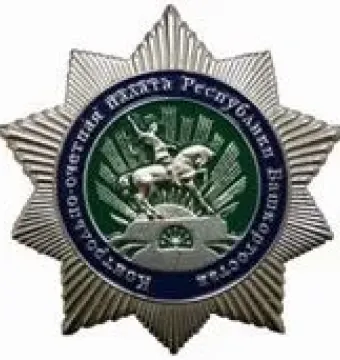
December 2019 © BikmaevMR · CC BY-SA 4.0
Identification | |
| Title | Monument to Salavat Yulaev |
| Type | equestrian monument |
Iconography and meaning | |
| Depicted subject | Salavat Yulaev, the Bashkir national hero |
| Depiction | Salavat Yulaev riding a horse with a raised hand, interpreted as calling people to join Pugachev's campaign to Orenburg in 1774 |
Historical context | |
| Conception context | Tavasiev first heard about Salavat Yulaev in July 1941 while evacuated from Moscow to Bashkiria during the German invasion of the Soviet Union |
| Inspiration | At a local market, he heard an emotional speech saying the country needed heroes like Salavat |
Creator | |
| Sculptor | Soslanbek Dafaevich Tavasiev |
| Sculptor's role | Soviet sculptor-monumentalist; People's Artist of North Ossetia; artist of North Ossetia and Bashkortostan |
Discovery and provenance | |
| Work period | Tavasiev worked on the monument for about 20 years after World War II; the plaster model was completed by 1963 |
| Model | Life-size plaster model |
| Model location | Installed in the foyer of the Bashkir State Opera and Ballet Theatre in Ufa; later described as having been in a deserted church in Akhtyrka during work |
| Model approval | Discussed by specialists in Moscow and officially approved by the board of the USSR Ministry of Culture |
| Casting location | Leningrad plant 'Monumentsculpture' (Monument-Sculpture) |
| Casting time | one and a half months |
| Planning of site | The very center of Ufa was initially proposed, but Tavasiev insisted on the high cliff above the Belaya River near the city center |
Physical characteristics | |
| Support points | 3 |
| Total height with pedestal | 14 m |
| Weight | 40 tons |
| Height | 9.8 m |
Materials | |
| Statue material | bronzed cast iron |
| Structural support | steel frame |
| Pedestal material | reinforced concrete clad with granite slabs |
Technique | |
| Internal construction | The steel frame runs through the supporting legs, the hollow body of the horse, and the rider figure, and is anchored in the reinforced-concrete pedestal |
Appearance | |
| Composition | An equestrian statue of a horseman on a mountain |
| Accessories | Whip in the right hand; saber on the left side |
| Setting | The area around the monument is paved with colored slabs, landscaped, and surrounded by an openwork metal railing |
Location and ownership | |
| Location | High bank of the Belaya River, near the city center of Ufa, Republic of Bashkortostan, Russia |
| Location detail | On the edge of a cliff above the Belaya River |
History and restoration | |
| Unveiled | 17 November 1967 |
| Restoration | Dismantled in October 2025 for restoration in a specialized workshop in Ufa; work was announced in June 2025 due to damage to the bronzed cladding, wear of the internal frame, cracks, and the need to repair the granite pedestal; planned phases run from September 2025 through September 2027, with reinstallation expected in October 2027 |
| Award | USSR State Prize (1970) awarded to Soslanbek Dafaevich Tavasiev for the monument |
Significance | |
| Significance | One of the main symbols of Ufa; a calling card and national treasure of Bashkortostan; the largest equestrian monument in Russia |
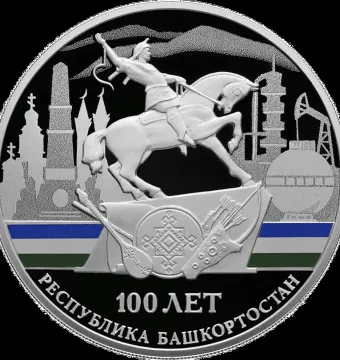
| Heraldic use | The monument is depicted on the coat of arms of Bashkortostan |