
Le Miroir
Le Miroir is a sculpture group in the round by French artist Joseph Carlier, made in 1897. It is preserved in the Museum of Cambrai in the Nord department of France. The work shows two female nude figures: a standing woman in white marble holding a bronze mirror and comb, and a crouching servant in bronze with an onyx-draped waist. The round bronze base is sculpted with serpents, and its mosaic-covered top supports two bronze caskets. The sculpture has been identified in different ways, and is now understood as a representation of Chrysis from Pierre Louÿs’s novel Aphrodite, with the bronze figure probably representing her Indian slave, Djala.
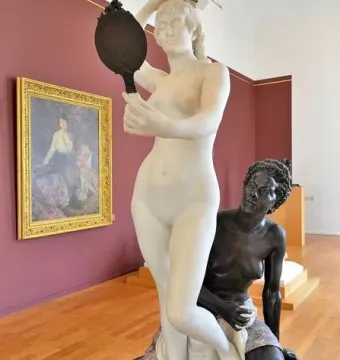
© Patrick · CC BY-SA 2.0
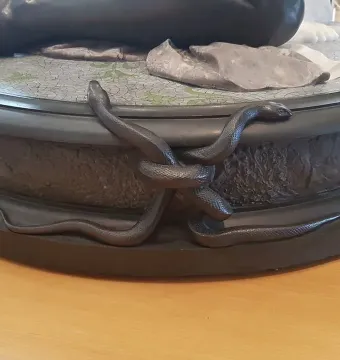
March 2019 © Chatsam · CC BY-SA 3.0
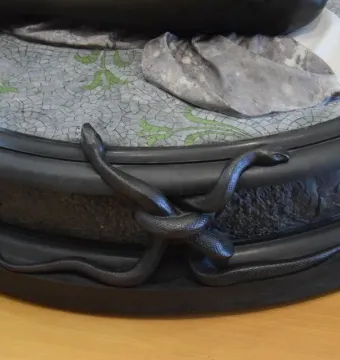
March 2019 © Chatsam · CC BY-SA 3.0
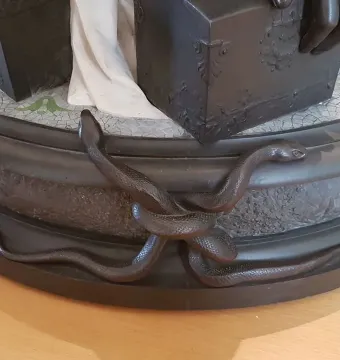
March 2019 © Chatsam · CC BY-SA 3.0
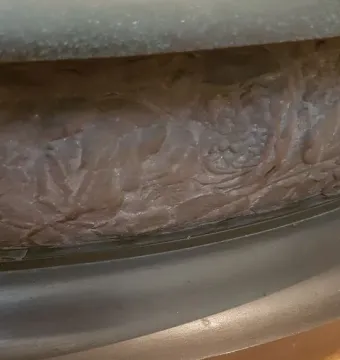
March 2019 © Chatsam · CC BY-SA 3.0
Identification | |
| Title | Le Miroir |
| Type | Group sculpture |
| Form | Sculpture in the round |
| Translated title | Lo specchio |
Creator | |
| Artist | Émile-Joseph Carlier |
| Artist nationality | French |
| Date created | 1897 |
Historical context | |
| Historical period | Second Empire |
Discovery and provenance | |
| Exhibited at | Universal Exposition in Paris, 1900; Exhibition of the Friends of the Arts of Cambrai, 1928 |
| Acquired with | a state subsidy |
| Acquisition date | 1898 |
| Awards | Honour medal at the Salon of 1897; gold medal at the 1900 Universal Exposition |
| First exhibition | Salon of the French Artists at the Palais des Champs-Élysées, 1897 |
| Early identification | A letter by Mme de Séré refers to a woman in the sculpture, but the fragment is incomplete |
Physical characteristics | |
| Dimensions | 2.34 m high, 1.12 m wide |
| Composition | Two female figures: a standing nude woman and a crouching servant |
| Base | Round bronze base decorated with pairs of intertwined serpents; top covered with mosaics; two bronze caskets on top |
Materials | |
| Materials | White marble, bronze, onyx, red marble, and mosaic |
| Material distribution | White marble for Chryseis; bronze for the mirror, comb, caskets, servant figure, and base; onyx for the servant's waist drapery; mosaic for the base top and floor |
Technique | |
| Technique | Polychrome sculpture; polymaterial construction |
Appearance | |
| Servant figure | Dark-skinned crouching servant behind Chryseis, holding a towel and preparing to dry her mistress's feet; described by a contemporary critic as 'an Abyssinian of bronze' and wearing only a garment covering her legs |
| Chryseis figure | Standing nude, left foot resting on a box decorated with vegetal motifs, smiling while combing her hair and looking into a mirror |
Iconography and meaning | |
| Subject | Chrysis from Pierre Louÿs's Aphrodite |
| Narrative source | Aphrodite (Aphrodite: mœurs antiques) by Pierre Louÿs |
| Narrative interpretation | Recreates the episode in which Chryseis asks Démétrios to steal a mirror, a comb, and a pearl necklace |
| Chrysis's fate in the novel | She later pays for it with her life |
| Servant identity | Probably Djala, Chrysis's Indian slave in the novel |
| Models | Madame Jean de Séré for Chryseis; Nadaud des Ilets, the Antilles-born maid of Carlier's wife, for the servant |
Location and ownership | |
| Plaster version location | Museum of Fine Arts of Arras |
| Current location of original parts | Original marble torso in the storage rooms of the Museum of Fine Arts of Cambrai; original head and body in the storage rooms of the museum of Cambrai |
| Preservation status | Conserved in the museum collection |
| Current location | Museum of Fine Arts of Cambrai, Nord, France |
History and restoration | |
| Damage | The sculpture broke during the return trip from the 1900 Universal Exposition in Paris |
| Initial post-damage location | Deposited at the museum of Arras |
| Restoration cost | 14,000 francs |
Significance | |
| Description | One of Carlier's last imposing works; received a triumphant reception and was described as a masterpiece of feminine grace |
| Artist's material knowledge | Demonstrates mastery of different materials and media |
| Artist's experience with onyx | Carlier discovered the use of onyx during a stay in Algeria |
Other | |
| View | Rear view |
| Detail shown | Serpents and box |