
Salem, Negro of Sudan
Salem, Negro of Sudan is a 1897 bronze and marble sculpture by the French sculptor Paul Loiseau-Rousseau, preserved in the Picardy Museum in Amiens. The bust reflects the late-19th-century fashion for anthropological representations, at a time when European powers were colonizing Africa. Loiseau-Rousseau had exhibited at the Salon since 1881 and received a scholarship in 1892 that allowed him to travel in Africa and create several works depicting Africans. Shown at the Salon, the bust was purchased by Baron de Rothschild and offered to the Picardy Museum. It also formed part of the wider colonial context of Amiens, where a 1906 international exhibition included a human zoo called the “Senegalese village.”
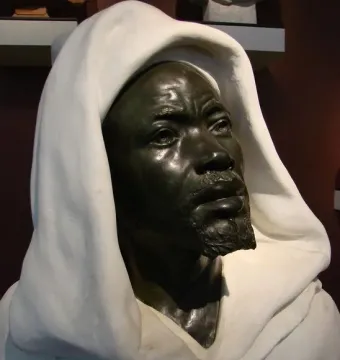
© Vassil · Public domain
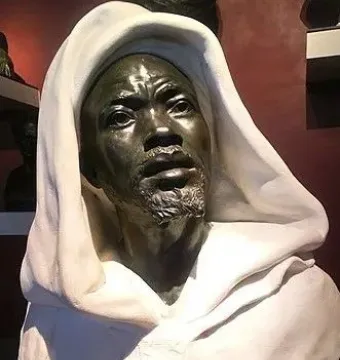
April 2022 © Bycro · CC BY-SA 4.0
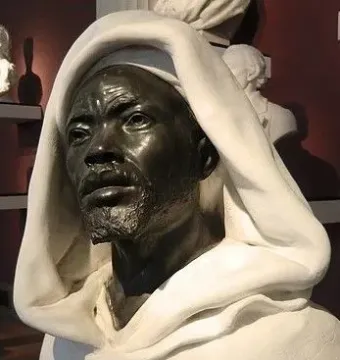
April 2022 © Bycro · CC BY-SA 4.0
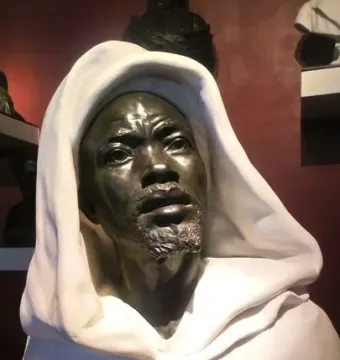
July 2020 © Bycro · CC BY-SA 4.0
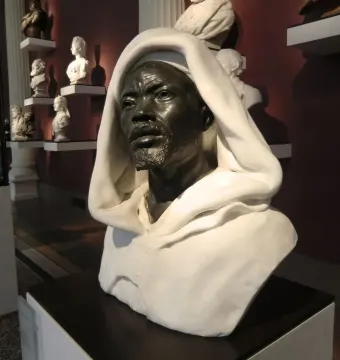
August 2010 © René Hourdry · CC BY-SA 4.0
Identification | |
| Title | Salem, nègre du Soudan |
| Type | Bust |
| Translated title | Salem, negro of Sudan |
Historical context | |
| Local historical context | In 1906, an international exhibition was held in Amiens, including a human zoo called "The Senegalese Village" inaugurated on 14 May 1906 and described as very successful |
| Date | 1897 |
| Context | Created in the context of the colonization of Africa by European powers at the end of the 19th century |
| Artist grant | Received a grant in 1892 to travel to Africa and create works representing Africans |
Creator | |
| Artist | Paul Loiseau-Rousseau |
| Artist nationality | French |
Materials | |
| Materials | Bronze and marble |
Physical characteristics | |
| Subject | Salem, a Black man from Sudan |
| Anatomical detail | Great anatomical precision |
| Material contrast | White marble clothing contrasts with the dark bronze figure |
Iconography and meaning | |
| Theme | Anthropological representation |
History and restoration | |
| Exhibited at the Salon | Yes, from 1881; successful at the Salon of 1897 |
Discovery and provenance | |
| Acquired by | Baron de Rothschild |
| Given to | Musée de Picardie, Amiens |
| Current location | Musée de Picardie, Amiens |
Location and ownership | |
| Preservation status | Conserved at the Musée de Picardie |
Significance | |
| Interpretation | Helped popularize the idea of colonization |