
Hombre Río, Córdoba, Spain
Hombre Río was a floating sculpture in the Spanish city of Córdoba, created by sculptors Rafael Cornejo and Francisco Marcos. They carved a reclining man from white cork and placed it in the Guadalquivir River on 18 April 2006, anchoring it to the riverbed to stop it drifting. The work attracted strong public interest and some controversy between local and regional authorities, as well as the Guadalquivir River Basin Authority. After a week, it broke free and came to rest near the Molino de Martos, and the artists later removed it. On 8 January 2007, a reconstruction of the sculpture, now made of polyester, was anchored near Miraflores Bridge for permanent display, but it was swept away by floodwaters on 22 November 2007 and later rescued by firefighters.
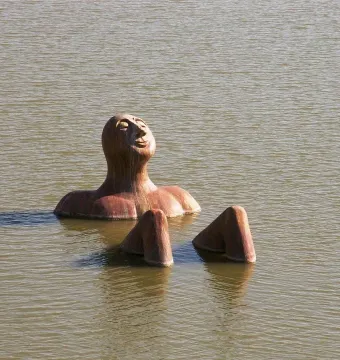
October 2007 © Pedro · CC BY 2.0
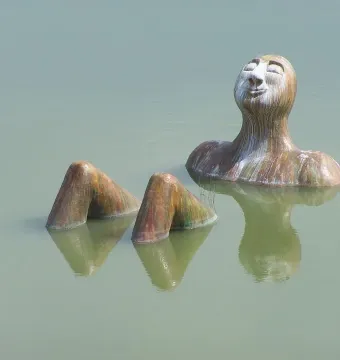
April 2007 © Floflo · CC BY-SA 3.0
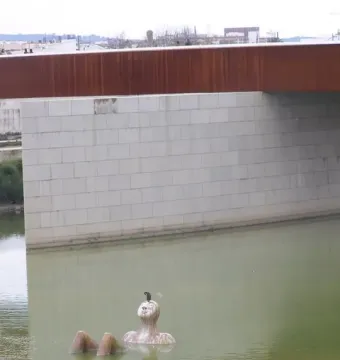
April 2007 © Toni Castillo Quero · CC BY 2.0
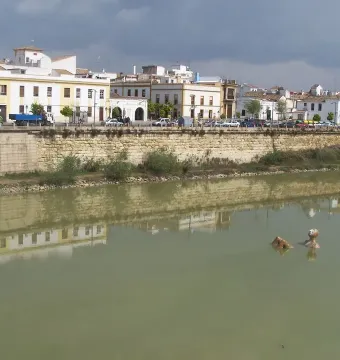
April 2007 © Floflo · CC BY-SA 3.0
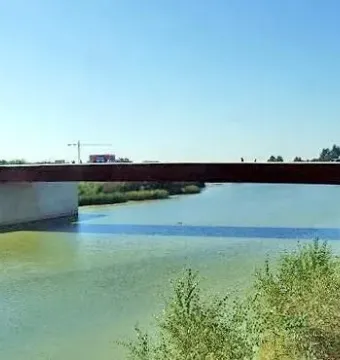
© Justojosemm · CC BY-SA 4.0
Identification | |
| Title | Hombre Río |
| Type | Floating sculpture |
Historical context | |
| Location | Guadalquivir River, Córdoba, Spain |
Creator | |
| Artists | Rafael Cornejo and Francisco Marcos |
Discovery and provenance | |
| Commissioning authority | The city council of Córdoba |
Physical characteristics | |
| Subject | A reclining man floating peacefully on the surface of the river |
| Dimensions | 1.7 m high and 2.5 m wide |
Materials | |
| Original material | White cork |
| Reconstruction material | Hardened polyester resin and fiberglass |
| Material note | A material commonly used in boat construction |
Technique | |
| Anchoring | Anchored to the riverbed by a 2-ton weight and a 12-meter chain |
| Unseen part | The submerged part is not sculpted |
| Construction | Composed of three parts: the torso and two legs, joined by a metal structure |
Appearance | |
| Dynamic conception | Designed to move and rotate with wind and river currents |
Iconography and meaning | |
| Purpose | Installed as a tribute to the relationship between Córdoba and the Guadalquivir River |
| Name meaning | "River Man" in English; the name refers to its long history with humans |
Location and ownership | |
| Installation date | 18 April 2006 |
| Reconstruction date | 8 January 2007 |
| Reconstruction location | Near Miraflores Bridge |
| Reconstruction approval | Approved by the Guadalquivir River Basin Authority (CHG) |
History and restoration | |
| Initial removal | About one week after installation, it broke free from its moorings, became stranded next to Molino de Martos, and was removed by the sculptors after ten days |
| Reconstruction purpose | Installed permanently for exhibition |
| Reconstruction fate | On 22 November 2007 it broke free again due to a rise in river flow after rains, drifted until it ran aground, and was rescued by firefighters |
| Current status | No longer exists |
Significance | |
| Public reaction | It aroused great interest among people in Córdoba and caused controversy between local and regional administrations and the Guadalquivir River Basin Authority (CHG) |