
Inukshuk
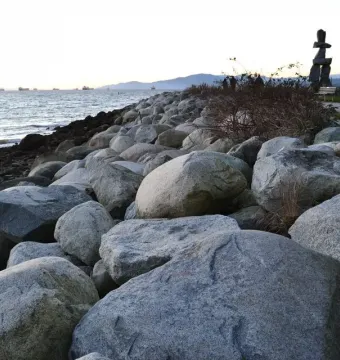
Inukshuk is a stone figure created by Alvin Kanak on the shore of English Bay in Vancouver, British Columbia. Built from gray granite, it was originally commissioned by the government of the Northwest Territories for Expo 86 and later gifted to the people of Vancouver. In 1987, it was moved to its present site and designated a landmark of local significance. A memorial plaque in front of the sculpture explains its role as a traditional Inuit navigational symbol that now represents hospitality and friendliness. The sculpture also became the conceptual prototype for the 2010 Winter Olympics emblem, which led to debate among contemporary Inuit and Indigenous peoples in British Columbia.
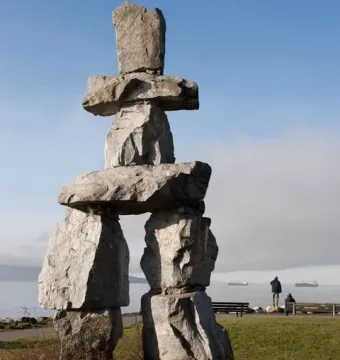
December 2009 © Hubert Figuière · CC BY-SA 2.0
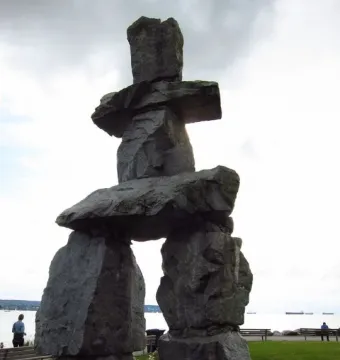
July 2011 © Egaowakaii · CC BY 3.0
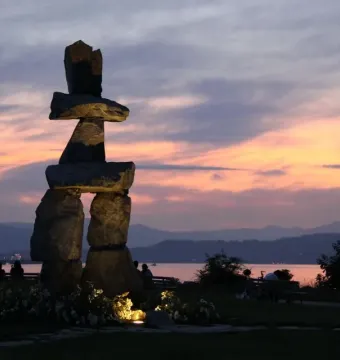
July 2009 © Christina Chan · CC BY 2.0
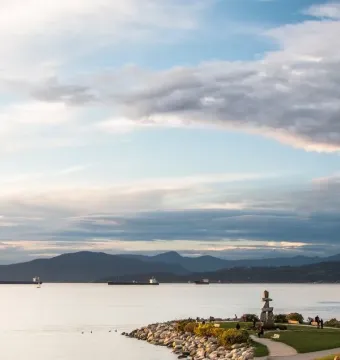
© Robbie Vize · CC BY 3.0
February 2013 © Teles · CC BY-SA 3.0
Identification | |
| Title | Inukshuk |
| Alternative title | Inukshuk Kanak (Інуксук Канака) |
| Type | Outdoor inuksuk |
Creator | |
| Logo designer | Elena Rivera MacGregor |
| Artist origin on plaque | Alvin Kanak of Rankin Inlet |
| Artist | Alvin Kanak |
Physical characteristics | |
| Weight | Approximately 31,500 kilograms |
| Height | 6 metres |
Materials | |
| Material | Grey granite |
Historical context | |
| Created for | EXPO 86 |
| Commissioned by | Government of the Northwest Territories |
| Commissioned for | Its pavilion at Expo 86 |
Discovery and provenance | |
| Gifted to | City of Vancouver |
| Gift recipient | The residents of Vancouver |
| Transported to current site | 1987 |
| Sponsored by | Coast Hotels & Resorts through the Vancouver Legacies program |
Location and ownership | |
| Location | English Bay, Vancouver, British Columbia, Canada |
| Original site | Expo 86 pavilion |
History and restoration | |
| Protected status | Local monument status |
| Installed in current location | 1987 |
Appearance | |
| Base inscription | Tablet recording that it was constructed in grey granite, commissioned by the Government of the Northwest Territories for Expo 86, and later given to the City of Vancouver |
| Plaque location | Near the work |
Iconography and meaning | |
| Symbolic meaning | Embodiment of hospitality and friendliness; traditionally used as a landmark and navigational aid |
| Cultural significance | An ancient symbol of Inuit culture |
| Style/basis | Inunnguaq |
Significance | |
| Olympic association | Believed to have inspired the logo of the 2010 Winter Olympics |
| Reception of Olympic use | Controversial among Inuit and First Nations in British Columbia |
| Interpretation | Friendship and welcoming the world are meanings of both the sculpture and the 2010 Winter Olympics emblem |