
Tyler Davidson Fountain
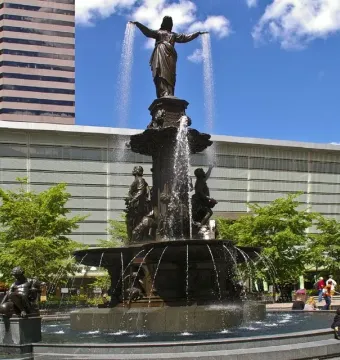
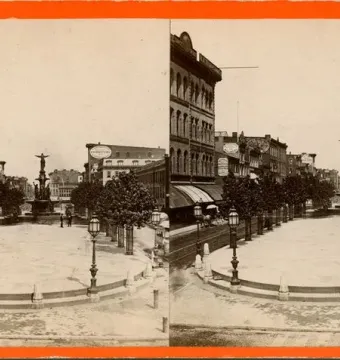
Tyler Davidson Fountain, also known as The Genius of Water, is a statue and fountain in Cincinnati, Ohio. Dedicated in 1871, it is the centerpiece of Fountain Square in the downtown area and is regarded as the city’s symbol and one of its most visited attractions. The fountain stands at the corner of 5th and Vine Streets, surrounded by stores, hotels, restaurants, and offices. For more than 130 years, it was located in the center of 5th Street in Fountain Square’s original layout. After renovations in 2006, it was temporarily removed and later reinstalled in a wider space near the north end of the reconfigured square, closer to the Fifth Third Bank Building and away from street traffic.
© Niagara66 · CC BY-SA 4.0
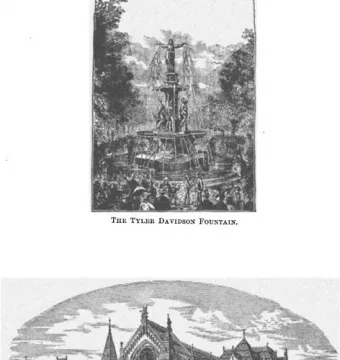
1891 © Internet Archive Book Images · No restrictions
April 2010 © Svenska litteratursällskapet i Finland · No restrictions
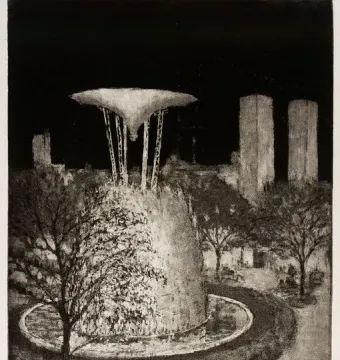
1934 © Edward Timothy Hurley · Public domain
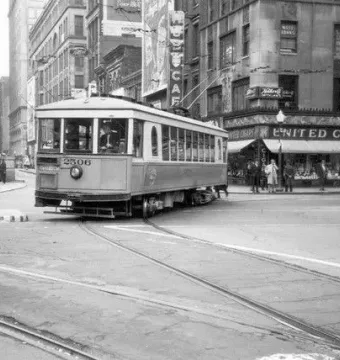
© Metro Bus · CC BY 2.0
Identification | |
| Title | Tyler Davidson Fountain |
| Type | Monumental fountain; drinking fountain |
| Alternative names | The Genius of Water; Probasco Fountain; Tyler-Davidson-Fontaine |
Historical context | |
| Commissioned by | Henry Probasco |
| Purpose | A drinking water fountain intended as a memorial to Tyler Davidson and to symbolize the blessing of water |
| Memorialized person | Tyler Davidson, Probasco's brother-in-law and business partner |
| Commission impetus | Probasco decided to donate a drinking water fountain after being annoyed by drunk people in downtown Cincinnati and after an intoxicated man said that there was no water in the city, only schnapps and beer |
| Design origin | Based on old fountain plans developed in the 1840s by Ferdinand von Miller and August von Kreling at the Royal Bronze Foundry of Bavaria |
| Original concept inspiration | A Marian depiction in France in which Mary held her arms raised and light rays issued from her hands, later intended to be replaced by water jets |
Creator | |
| Artist | August von Kreling |
| Foundry | Royal Bronze Foundry of Bavaria in Munich |
| Founder/manufacturer | Ferdinand von Miller |
| Additional sculptors/designers | Ferdinand von Miller the Younger and Fritz von Miller |
Discovery and provenance | |
| Quarantine | The ship was initially placed under quarantine because five passengers had died of cholera during the crossing |
| Model locations | The bronze model stood for a long time on Probasco's estate and is now in the Cincinnati Museum of Art; a photograph of the plaster model is in the Cultural History Museum of Osnabrück |
| Models | A bronze model was delivered to Probasco in summer 1867 before the final contract; a plaster model also existed but is now lost |
| Transport | The figures and granite stones were shipped from Germany to America on the steamship Westphalia; Ferdinand von Miller the Younger and a worker accompanied the transport crates |
| Arrival in New York | 6 September 1871 |
| Design and casting location | Munich, Germany |
| Patron/donor | Henry Probasco |
Physical characteristics | |
| Height | 13 meters |
| Central figure | The Genius of Water, a female figure in heroic size, 9 feet high and weighing about 2 tons |
| Central figure action | Water sprays from her palms through hundreds of jets pierced in her outstretched fingers |
| Decorative program | 13 figures and four bas-reliefs |
| Pedestal | Square pedestal with a central shaft spread at the top with interlaced vines and foliage |
| Base material | Green granite base |
Materials | |
| Main materials | Bronze and granite |
| Bronze source | The bronze was made from melted Danish cannons purchased from the Danish government |
| Granite source | Granite stones were shipped from Germany to America |
Technique | |
| Water pressure | Water from a higher reservoir was used to obtain enough pressure, with a rise of about 40 feet |
| Water flow | Water falls into the upper basins and then into a granite-lined basin; the fountain flows at about 500 gallons per minute (about 1,900 liters per minute) |
| Fabrication | Cast in separate sections at the foundry and assembled in Cincinnati |
| Construction details | The bronze figures were cast in Munich; the granite base and stones were shipped separately from Germany |
Appearance | |
| Inscription | "To the People of Cincinnati" appears on the base |
| Figural groups | Four outer figures with animals represent the pleasures of water; four male figures below the central figure represent the benefits of water for all life |
| Bas-reliefs | Steam: workers in iron using a trip hammer powered by an engine; water-power: peasants carrying corn to a watermill; navigation: a steamboat leaving the shore with numbers waving farewell; fisheries: groups of fishermen and children |
| Additional drinking figures | Four figures at the basin rim function as drinking fountains: a nude boy riding a dolphin, a nude boy playing with ducks, a nude boy struggling with a snake, and a nude boy on the back of a turtle |
| Symbolism | Water as a blessing and as a source of value for humanity, industry, and the joys of life |
| Directional symbolism | The fountain originally faced east toward Europe, reflecting the origin of much of Cincinnati's population |
Location and ownership | |
| Associated city significance | Regarded as a symbol of Cincinnati, one of the area's most-visited attractions, and one of the landmarks of Cincinnati |
| Setting | Surrounded by stores, hotels, restaurants, and offices |
| Original location | Center of 5th Street, immediately west of Walnut Street, on the Esplanade of Fifth Street between Vine Street and Walnut Street in Cincinnati |
| Current orientation | Faces south because it is on the edge of the square |
| Site | Centerpiece of Fountain Square, at the corner of 5th and Vine Streets |
| Current location | Fountain Square, downtown Cincinnati, Ohio, United States |
History and restoration | |
| Renovation cost | Approximately $42 million, including a $4 million contribution from the city |
| Unveiling incident | Temporary seating rows partly collapsed under spectators on the morning of the dedication and caused several injuries |
| Unveiling details | The fountain was originally planned to be covered with cloth and two huge American flags, but the flags were removed from the program; draping the cloth was difficult without scaffolding |
| Structural repair | An internal supporting framework of steel and concrete was installed after bronze damage was discovered during the 1970 relocation; further damage was caused by corrosion of the steel and cold-related damage to the cement |
| Restoration | Restored in 1999-2000 |
| Reopening date | October 14, 2006 |
| Dedication attendance | About 20,000 people |
| Temporary display location | Cincinnati Art Museum |
| Reinstallation location | Relocated to a much wider space near the north end of the reconfigured square, closer to the Fifth Third Bank Building and away from street traffic |
| Relocation history | The fountain was moved in 1970, temporarily removed during Fountain Square renovations in 2005-2006, and has been rotated and moved several times during its history |
| First renovation | 1969, for the centennial celebration |
| Original orientation | Originally faced east toward Europe |
| Dedication date | 6 October 1871 |
Significance | |
| Historic description | A 1901 description called it the greatest artistic ornament of Cincinnati and credited it with contributing to the development of lower Cincinnati |
Other | |
| Associated uses | Backdrop for movie nights, game shows, and the winter ice rink in Cincinnati |
| Media appearances | Featured in the opening credits of WKRP in Cincinnati at its former location and visible in the opening narration montage of Ghost Adventures |
| Seasonal operation | Turned off for the winter months and turned on again in time for the first home game of the Cincinnati Reds |