
Clock Tower
The Clock Tower is a free-standing clock tower in the centre of Brighton, part of the English city of Brighton and Hove. Built in 1888 to commemorate the Golden Jubilee of Queen Victoria, it became a distinctive landmark in the popular seaside resort. The structure included innovative structural features, and the city’s residents retain a nostalgic affection for it, despite divided opinion about its architectural merit. English Heritage has listed the Clock Tower at Grade II for its architectural and historical importance.
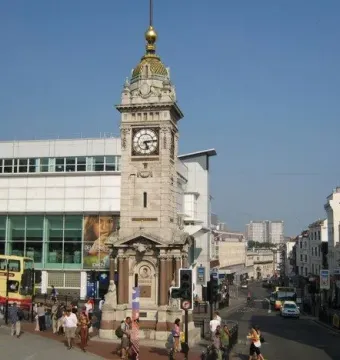
June 2008 © Nigel Cox · CC BY-SA 2.0
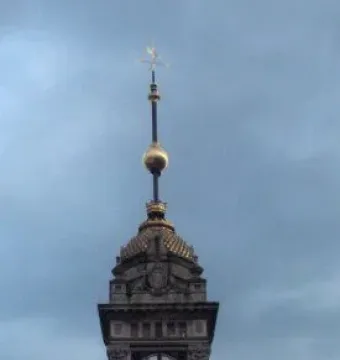
January 2013 © Sussexonian · CC BY-SA 3.0
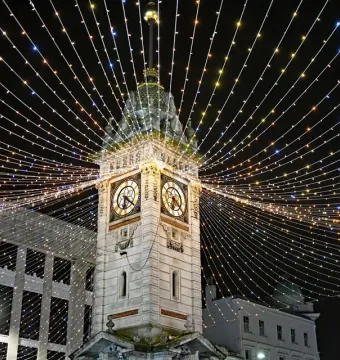
© Images George Rex · CC BY-SA 4.0
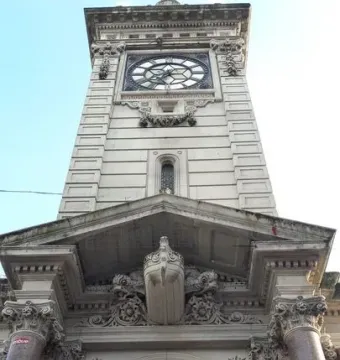
July 2017 © AG3873 · CC BY-SA 4.0
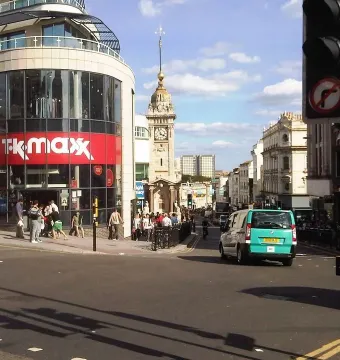
August 2012 © AchilleT · CC BY-SA 3.0
Identification | |
| Title | Clock Tower |
| Type | free-standing clock tower |
| Alternative name | Jubilee Clock Tower |
Historical context | |
| Date built | 1888 |
| Commemorated event | Queen Victoria's Golden Jubilee |
| Historical context | Built during a period when many towns erected Jubilee clock towers for Queen Victoria's Golden Jubilee |
| Related tradition | One of several Jubilee clocks built in towns and cities across the United Kingdom and the Commonwealth |
Creator | |
| Associated engineer | Magnus Volk, a British engineer from the Brighton area |
| Time ball designer | Magnus Volk |
| Competition for design | Chosen through a town-organized architectural competition won by John Johnson |
| Commissioned by | James Willing, a local advertising contractor and entrepreneur |
| Architect | John Johnson, a London architect |
Discovery and provenance | |
| Donation | £2,000 |
| Foundation stone laid | 20 January 1888, on James Willing's 70th birthday |
| Construction site history | The site had a small waiting shelter by 1880; a replacement-building competition in 1881 was won by Henry Branch and Thomas Simpson, but their plans were never executed and the site remained vacant until 1888 |
| Opening | Opened soon after 1888 |
Physical characteristics | |
| Clock faces | Four |
| Base shape | Square |
| Height | 75 feet |
| Clock face diameter | 5 feet |
| Mast height above the tower | 4.9 m (16 feet) |
Materials | |
| Base material | Pink granite |
| Column material | Pink granite |
| Main structure material | Portland stone |
| Dome roof covering | Copper-scaled roof |
Technique | |
| Columns style | Corinthian |
Appearance | |
| Former use | Public toilets once stood under the structure |
| Clock dial inscription | JAMES WILLING and 1887 |
| Weather vane | Weather vane topped with James Willing's initials |
| Frieze | Frieze formed by enclosed balusters |
| Time ball | Hydraulically operated copper sphere on a 90-foot mast, rising and falling every hour |
| Dome | Topped by a dome with a copper fish-scale roof |
| Cornice | Ornate cornice with small turrets at each corner |
| Ship motif | A protuberance designed to resemble the gunwale of a ship |
| Upper wall treatment | Rusticated stone walls decorated with pilasters and narrow round-headed recesses |
| Arched recesses | Each side has an arched recess containing a mosaic medallion portrait of a member of the Royal Family |
| Directional inscriptions | Inscribed with TO THE STATION, TO KEMP TOWN, TO THE SEA, and TO HOVE, clockwise from north |
| Decorative details | Elaborately carved scrollwork below the pediments |
| Structural arrangement | Tapering Corinthian columns rise part way up each side to pediments with open bases |
| Style | Classical with Baroque touches; Pevsner also saw Gothic elements in the upper section |
| Corner statues | Carved stone statues of female figures at the corners of the base |
Location and ownership | |
| Listing date | 26 August 1999 |
| Grade II meaning | Building of special interest |
| Listing reason | Architectural and historical importance |
| Heritage listing | Grade II listed by English Heritage |
| Landmark status | Major landmark in Brighton and Hove |
| Setting | Centre of Brighton; focal point of the commercial heart of the city |
| Location | Junction of North Street, Western Road, West Street, and Queen's Road, Brighton, East Sussex, England, United Kingdom |
History and restoration | |
| Time ball operation | Based on electrical signals transmitted from the Royal Observatory, Greenwich |
| Time ball fate | Disabled after a few years because of complaints about the noise it caused |
| Public sentiment | Residents retain a nostalgic affection for it |
| Demolition sentiment | It has faced occasional vociferous demands for destruction and several threats of demolition |
| Survival reason | Its survival has been helped by local affection and the difficulty and expense of demolition or removal |
Significance | |
| Critical opinion | Opinion is sharply divided: some describe it as idiosyncratic, showy, charmingly ugly, or a giant salt-cellar, while others praise it as extremely charming, delightful, or supremely confident and showy |
| Cultural significance | It was a focal point of anti-Victorian sentiment in Brighton in the late 19th and early 20th centuries |
| Comparative function | Fulfilled a similar function to the Albert Memorial in London's Kensington Gardens as a site of local and national demonstrations |
| Current significance | Considered one of Brighton's most emblematic monuments |
| Impact | Its impact has been affected by intrusive street furniture |