
Monument aux morts de Capoulet-et-Junac
The Monument aux morts de Capoulet-et-Junac is a war memorial in Capoulet-et-Junac, in the Ariège department of France, created by Antoine Bourdelle. Installed in 1936, it was commissioned at the initiative of the town’s mayor, Paul Voivenel. The monument is based on three figures first exhibited in 1899 as La Guerre, les figures hurlantes, representing fear, suffering, and death. They were originally made for the Monument aux Morts de Montauban of 1870, but were not used there and later gained an independent existence. In 1935, Voivenel requested permission from Bourdelle’s widow to reproduce the work for his town’s memorial. The bronze was cast by the Rudier foundry.
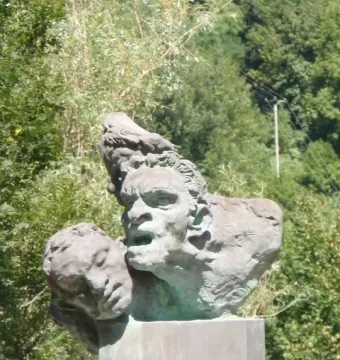
1900 © Langladure · CC BY-SA 3.0
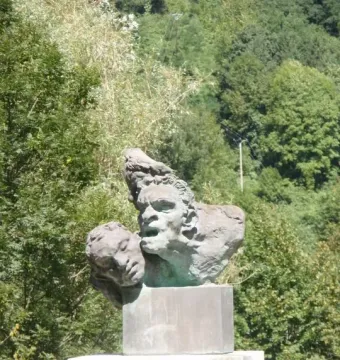
1900 © Langladure · CC BY-SA 3.0
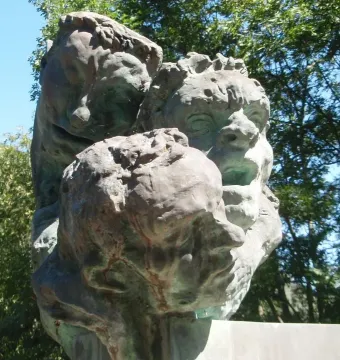
1900 © Langladure · CC BY-SA 3.0
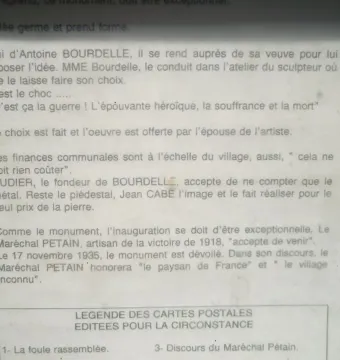
1900 © Langladure · CC BY-SA 3.0
Identification | |
| Title | Monument aux morts de Capoulet-et-Junac |
| English name | War Memorial of Capoulet-et-Junac |
| Type | war memorial sculpture |
| Subject | war memorial |
Historical context | |
| Related original work | La Guerre, les figures hurlantes (The War, the Screaming Figures) |
| First exhibited | 1899 |
| Created for | Project for the Monument aux Morts de Montauban de 1870, 1894–1902 |
| Original intended location | Montauban monument |
| Later status | Not used in the Montauban monument; later had an independent existence |
Creator | |
| Artist | Antoine Bourdelle |
| Founder | Rudier |
Discovery and provenance | |
| Purpose of reproduction | To create the war memorial in Capoulet-et-Junac |
| Commission request date | 1935 |
| Permission requested from | Antoine Bourdelle's widow |
| Commissioned by | Paul Voivenel, mayor of Capoulet-et-Junac |
Physical characteristics | |
| Material | Bronze |
Location and ownership | |
| Location | Capoulet-et-Junac, Ariège, France |
History and restoration | |
| Installation date | 1936 |
| Inaugurated by | Philippe Pétain |
| Inauguration date | Unspecified |
| Inauguration speech | The 'Paysan' speech |
| Pétain's connection to Paul Voivenel | Pétain had known Paul Voivenel at General Headquarters of Joseph Joffre during World War I |
Iconography and meaning | |
| Depicted themes | Fear, suffering, and death |
Significance | |
| Historical significance of speech | The 'Paysan' speech foreshadowed Pétain's 1941 speech at Pau |
Other | |
| Related source | With the 67th D.R., Volume IV, p. 152 |