
Güzel İstanbul
Güzel İstanbul is a public concrete sculpture by Gürdal Duyar, depicting a nude female figure and located in Yıldız Park, Istanbul, Turkey. Commissioned in 1973, it was one of twenty works installed in Istanbul as part of a municipal initiative marking the 50th anniversary of Turkey. The sculpture symbolized the city through its female form, and its pedestal included figurative elements referring to local history. Originally placed in Karaköy Square, it became the subject of controversy in the Turkish press and among conservative politicians, who called it obscene and demanded its removal. After intense public debate, it was taken down on 18 March 1974 and later moved to Yıldız Park, where it remains on an improvised pedestal.
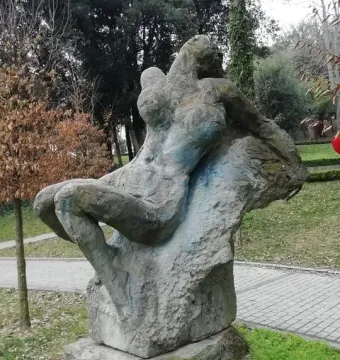
February 2020 © Mirada · CC0
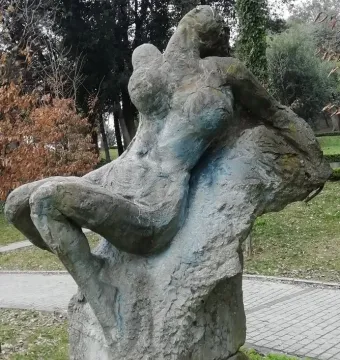
February 2020 © Mirada · CC0
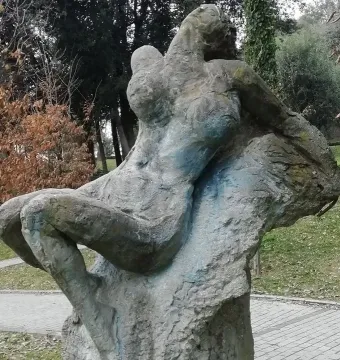
February 2020 © Mirada · Public domain
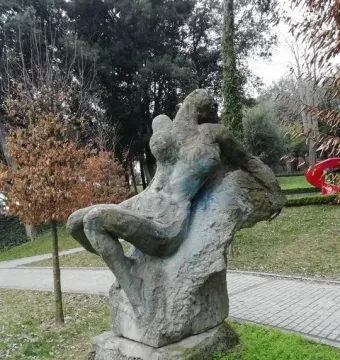
February 2020 © Mirada · Public domain
Identification | |
| Title | Güzel İstanbul |
| Alternative title | Ah Güzel İstanbul |
| English translation of title | Beautiful Istanbul |
| Type | Public sculpture |
Historical context | |
| Commissioned | 1972 |
| Commissioning body | The Board for the Celebration of the 50th Anniversary of the Republic |
| Commissioning initiative | A municipal initiative to celebrate the 50th anniversary of the Republic of Turkey |
| Original commission | 50 sculptures were originally commissioned from 50 artists, later reduced to 20 because of insufficient funding |
| Intended installation context | Public spaces in Istanbul, including parks, squares, and roadsides |
| Submission deadline | 20 August 1973 |
Creator | |
| Artist | Gürdal Duyar |
| Selection committee | Şadi Çalık, Mustafa Aslıer, and Hüseyin Gezer |
| Selection criteria | Artists had to live in Istanbul and either have won a state prize or have an established reputation in the arts |
Discovery and provenance | |
| After removal location | A sand mound near the municipal construction aggregate site in Kumkapı |
| Removed from | Karaköy Square |
| Relocation date | 2 May 1974 |
| Installation date | 10 March 1974 |
| Proposed location | Karaköy Square |
| Original location | Karaköy Square, Istanbul, near the northern end of the Galata Bridge |
| Current location | Yıldız Park, Istanbul, Turkey |
Physical characteristics | |
| Height | 4.8 meters when first installed |
| Weight/material amount | 7,000 kilograms |
| Condition after removal | Significantly damaged and abandoned |
| Hands | Shackled with a chain not visible from the front |
| Pose | Leaning slightly backward with the arms intertwined behind the body and the head raised toward the sky |
| Subject | A nude female figure representing Istanbul |
Materials | |
| Material | Concrete |
| Base material | Concrete |
Technique | |
| Technique | Poured and molded concrete |
Appearance | |
| Base decoration | Reliefs depicting pomegranates, figs, honeysuckle, and a bee |
| Pedestal decoration | Figurative motifs alluding to local history |
Iconography and meaning | |
| Relief motif meaning: bee | Istanbul's population density, dynamism, and abundance |
| Relief motif meaning: honeysuckle | The atmosphere of the city |
| Relief motif meaning: figs | The city's divinity |
| Relief motif meaning: pomegranates | The various legends of Istanbul |
| Artist's stated inspiration | Duyar said he identified Istanbul, his birthplace, with the natural beauty of the female body |
| Chain symbolism | The chain alludes to the defensive chain raised by the Byzantine Empire across the Golden Horn in 1453 to block the Ottoman fleet |
| Symbolism | The nude female figure represents Istanbul and was also interpreted as a universal representation of women's emancipation |
| Concept | An allegory of Istanbul |
| Breaking the chain symbolism | Represents the Ottoman conquest of Constantinople, after which the city was renamed Istanbul |
Location and ownership | |
| Current location status | Still in Yıldız Park as of 2023 |
History and restoration | |
| Counter-arguments in press | Milliyet and Cumhuriyet argued that keeping the sculpture on display was a fundamental right essential to democracy |
| Asiltürk statement | He said it should be removed because it disgracefully represented Turkish mothers |
| İsvan statement | He disliked it as tasteless, not because it was nude |
| Şentürk statement | He said the location was inappropriate and ordered its removal |
| Press coverage | Sabah opposed the sculpture, while Milliyet and Cumhuriyet defended its right to remain |
| Sabah headline theme | It claimed the sculpture was corrupting the morals of Muslim Turks |
| Cartoon themes | The cartoons portrayed the removal as retrograde, politicized art, censorship, and media misinformation |
| Intellectual reactions | Burhan Felek, Melih Cevdet Anday, and Hıfzı Veldet Velidedeoğlu criticized the removal and censorship of artistic taste |
| Cartoonist defenders | Erdoğan Bozok, Altan Erbulak, Nejat Uygur, Yalçın Çetin, Ferruh Doğan, and Nehar Tüblek |
| Government figures involved | Necmettin Erbakan, Oğuzhan Asiltürk, Ahmet İsvan, and Namık Kemal Şentürk |
| Protest considered | Artists considered covering all sculptures in Istanbul with black cloth but canceled the protest |
| Associated exhibition | The Turkish Sculptors Association organized a nude-themed exhibition in response |
| Participant in response exhibition | Füsun Onur showed an assemblage titled Nü |
| Wider geographic impact | The debate spread beyond Istanbul, and Manisa and Zonguldak offered to erect the sculpture in their cities |
| Erbakan statement | He said it was immoral and suggested removal on 17 March 1974 |
| Associated event name | The Güzel İstanbul Case |
| Opponents | Members of the National Salvation Party (MSP), traditional conservatives in the coalition government |
| Supporters | Republican intellectuals, the Turkish Sculptors Association, and other defenders |
| Legal concern | Whether the sculpture was obscene |
| Public prosecutor inquiry date | 20 March 1974 |
| Restoration status | As of 2023, it had not undergone restoration to recover its original condition |
| Reinstallation | Transferred to Yıldız Park and re-erected on an improvised plinth |
| Transfer date | 2 May 1974 |
| Post-removal condition | It remained abandoned in Karaköy Square for more than a month |
| Damage sustained | One arm was broken off and the plinth decorations were damaged or destroyed |
| Removal method | It was removed from its plinth in a midnight operation and toppled |
| Removal date | 18 March 1974 |
| Public debate duration | About nine to ten days |
| Controversy date | March 1974 |
| Political impact | The controversy temporarily strained Turkey's governing coalition and was said to have nearly caused its collapse |
| Public reaction | It caused controversy among media outlets and conservative politicians, who considered it obscene, indecent, or erotic and demanded its removal |
| Later reflection | In a 2010 publication, Mustafa Aslıer said he had been implicated by press and MSP statements and publications |