
Mazarin Venus
The Mazarin Venus is a Roman marble sculpture dating to the 2nd century AD. It was discovered in Rome, Italy, around 1510 and is currently on view at the Getty Villa. The sculpture’s name comes from the belief that it once belonged to Cardinal Jules Mazarin, although this attribution is now considered unlikely. The work is known as an important Roman sculpture and remains associated with its long history of discovery, ownership, and display.
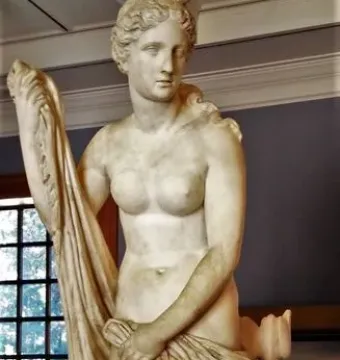
October 2016 © Accord14 · CC BY-SA 4.0
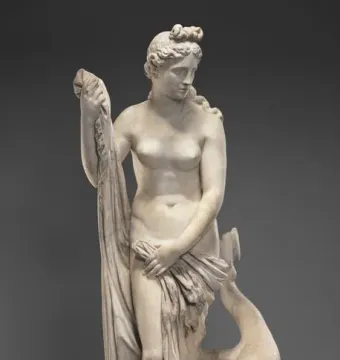
© J. Paul Getty Museum · No restrictions
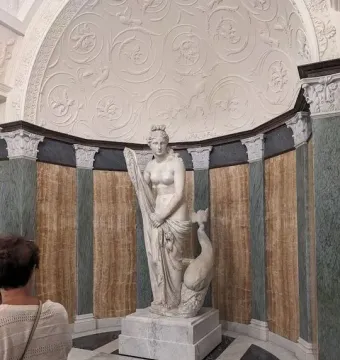
August 2023 © Doughbo · CC0
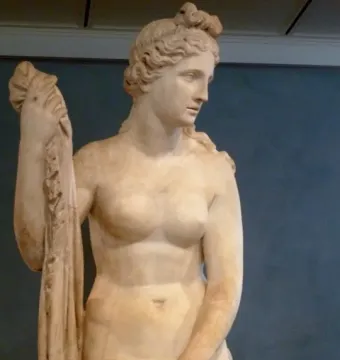
December 2010 © Dave & Margie Hill / Kleerup · CC BY-SA 2.0
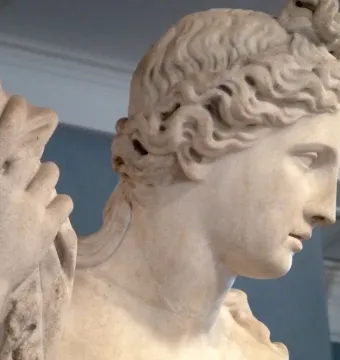
December 2010 © Dave & Margie Hill / Kleerup · CC BY-SA 2.0
Identification | |
| Title | Statue of Venus |
| Alternative name | Mazarin Venus |
| Alternative name | Venus Mazarin |
Historical context | |
| Type | Roman marble sculpture |
| Date | 2nd century AD |
Creator | |
| Attribution to Cardinal Mazarin | Some art historians believe the statue belonged to Cardinal Mazarin, but this is now considered unlikely |
Discovery and provenance | |
| Discovery location | Rome, Italy |
| Discovery date | 1509 or about 1510 |
| Provenance | No provenance details are provided in the fragment |
Physical characteristics | |
| Head | Probably belongs to another ancient statue |
| Condition | The statue was restored repeatedly, especially some parts of the body, the drapery, and the dolphin |
| Height | 184 cm |
Materials | |
| Material | Marble |
Appearance | |
| Subject | The goddess Venus/Aphrodite |
| Pose | Venus stands nude, resting on her left leg |
| Right hand | Holds a piece of cloth that passes behind her |
| Left hand | The cloth ends in the left hand and covers part of the body below the waist |
| Hair | Arranged in curls falling onto the shoulders |
Iconography and meaning | |
| Associated attribute | A dolphin accompanies the goddess; it is one of her attributes and the creature that helped her emerge from the sea |
Location and ownership | |
| Current location | Getty Villa |
| Current collection | Permanent collection of the Getty Museum in the United States |
| Current display status | On view |
Other | |
| Type note | One of the few ancient sculptures of Venus/Aphrodite located in the United States |