
Morianbron
Morianbron is a small wooden bridge in the gardens of Ulriksdal Palace in Solna, Sweden, and is said to be one of the smallest bridges in the Swedish capital. It crosses the small stream Igelbäcken and takes its name from the pair of sculptures standing on either side. The figures are bronze sculptures painted black, showing two black men in loincloths pulling a fishing net beneath the bridge. They were modelled in the early 19th century by the sculptor Per Lundgren and brought to Ulriksdal Palace from the royal gardens at Hagaparken, where they once stood by the canals.
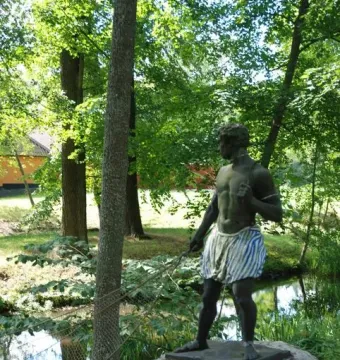
August 2011 © Boberger · CC BY-SA 3.0
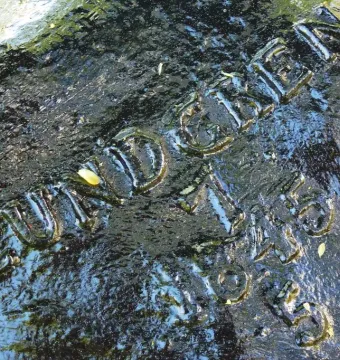
May 2015 © Holger.Ellgaard · CC BY-SA 4.0
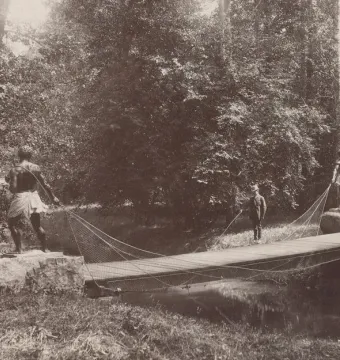
1890 © Axel Sjöberg (1865-1936) · Public domain
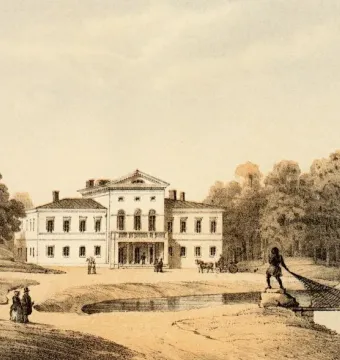
© Johan Thorsøe · Public domain
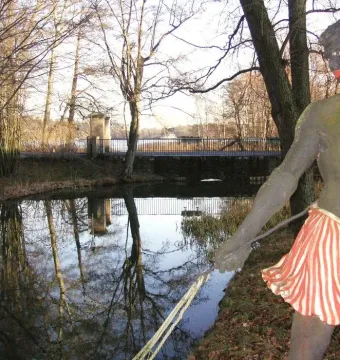
January 2008 © Holger Ellgaard · CC BY-SA 3.0
Identification | |
| Title | Morianbron |
| Type | Decorative bridge sculpture; a bridge setting with two sculptural figures |
| Alternative name | Moorish Bridge |
Historical context | |
| Date of creation | Early 19th century |
| Cultural context | Reflects the 18th- and early 19th-century fashion for exotic figures and garden caprices |
Creator | |
| Designer | Per Henrik Lundgren |
| Designer occupation | Swedish sculptor and medallist |
Discovery and provenance | |
| Foundry | Ludvigsberg foundry, Stockholm |
| Original location | Haga Park, Stockholm |
| Original setting | Originally intended for the Haga Palace and park ensemble under King Gustav III's grand project, which was not realized |
| Former location | By the network of canals that once flowed through Hagaparken, in front of the Haga Palace that was actually built |
| Relocation | Moved to Ulriksdal Palace Park in 1863 after the channel in Haga Park dried up |
| Later location | Ulriksdal Palace Park, Solna, Sweden |
Physical characteristics | |
| Bridge structure | A small cast-iron pedestrian bridge without railings, topped with wooden decking |
| Stream below | Igelbäcken |
| Figure placement | One figure at each end of the bridge, installed on natural boulders and set diagonally opposite each other |
| Number of figures | 2 |
| Figure height | Approximately human height |
Materials | |
| Material | Bronze; cast iron |
| Bridge surface | Wooden decking |
| Surface color | Painted black |
| Decoration | Traditionally painted in colors; paint is periodically refreshed |
Appearance | |
| Depicted figures | Two black men dressed only in loincloths, pulling a fishing net |
| Loincloth colors | One red-and-white striped, one blue-and-white striped |
Iconography and meaning | |
| Comparative reference | Mentioned in relation to artists such as Eugène Delacroix |
| Subject | Blackamoors (Moorish figures) |
| Anecdotal association | A story says a lady on the bridge fell in love with the two men and threw herself into the stream when she could not choose between them |
| Iconographic setting | Associated with a romantic and picturesque setting |
Location and ownership | |
| Current location | Ulriksdal Palace Park, outskirts of Stockholm, Sweden |
| Associated bridge | Morianbron; a small bridge over Igelbäcken, possibly the smallest bridge in the Swedish capital |
History and restoration | |
| Relocation date | 1863 |
| Date of figure casting | 1845 |
| Restoration | Painted in 2015 to renew the historical color scheme |
Significance | |
| Status | The picturesque bridge still stands in Ulriksdal Palace Park |