
Erill la Vall Descent from the Cross
Erill la Vall Descent from the Cross is a sculptural group from the church of Santa Eulalia de Erill-la-Vall. Its distinctive feature is that it is made up of seven figures. Two carvings are preserved in the MNAC, while the remaining pieces are in the Episcopal Museum of Vic. Some of the figures still show traces of their original polychromy, and the detailed work on the garments stands out. Studies date the ensemble to the late 12th or early 13th century. Today, a reproduction of the seven figures can be seen in the position that seems to have been the original one, above a beam at the opening of the apse.
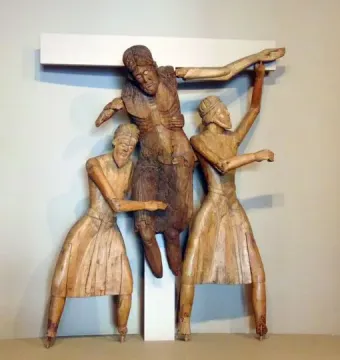
August 2019 © Josep Maria Viñolas Esteva · CC BY 2.0
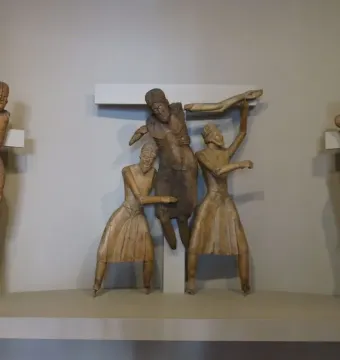
August 2021 © Enric · CC BY-SA 4.0
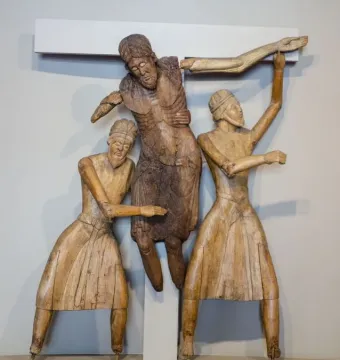
August 2019 © Ángel M. Felicísimo · CC BY 2.0
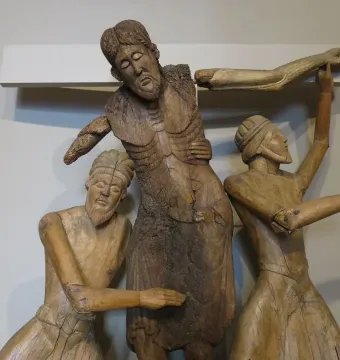
August 2021 © Enric · CC BY-SA 4.0
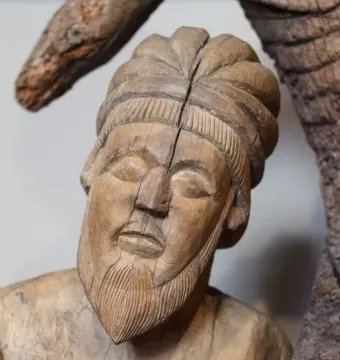
August 2019 © Ángel M. Felicísimo · CC BY 2.0
Identification | |
| Title | Descent from the Cross of Erill la Vall |
| Type | Romanesque polychromed wooden sculptural group |
| Subject | The Descent from the Cross of Jesus Christ |
Historical context | |
| Date | Late 12th century to early 13th century |
| Region | Catalonia, especially the Catalan western Pyrenees and the Boí Valley |
| Cultural context | Catalan art |
| Historical context | Linked to the time of Saint Raymond, bishop of Roda (1104–1126) |
Creator | |
| Patronage and supervision | Many comparable groups were commissioned and supervised by the barony of Erill |
Discovery and provenance | |
| Origin | Erill la Vall, Catalonia |
| Original location | The Church of Santa Eulalia de Erill la Vall, probably above a beam at the mouth of the apse |
| Discovery | Discovered and made known in 1907; first catalogued on 5 September 1907 during the archaeological-legal mission of the strip of Aragon |
| Related mission | Archaeological-legal mission of the strip of Aragon, organized by the Institute of Catalan Studies to protect Catalan artistic heritage |
Physical characteristics | |
| Number of figures | Seven |
| Figures represented | Christ, Joseph of Arimathea, Nicodemus, the Virgin Mary, John the Baptist, Dismas, and Gestas |
| Style | Romanesque |
| Appearance | Detailed carving, especially in the garments; figures wear the traditional attire of their characters |
Materials | |
| Material | Wood, specifically poplar wood |
| Polychromy | Polychromed; some carvings preserve remains of the original paint |
Technique | |
| Construction | Set of seven carved wooden figures |
Iconography and meaning | |
| Iconography | A distinctive Catalan Descent from the Cross type with seven figures, including a thief at each end |
| Liturgical context | Probably used in medieval liturgical drama |
| Possible meaning | May have had Eucharistic meaning and may have served as a response to Cathar denial of Christ's death and of the Eucharist |
| Narrative character | The Descent theme gives the Passion a more narrative and dramatic presentation |
| Variation in depiction | In different regions, Christ may be shown still nailed to the cross, with only the right hand detached, or fully detached from the cross |
Location and ownership | |
| Current location | The figures are split between the National Art Museum of Catalonia (John the Baptist and the Virgin Mary) and the Episcopal Museum of Vic (Jesus, Joseph of Arimathea, Nicodemus, Dismas, and Gestas) |
| Current display | A reproduction of the complete seven-figure group is displayed in the church at the presumed original site |
| Associated church | Church of Santa Eulalia, Erill-la-Vall |
History and restoration | |
| Heritage status of associated church | Declared a historic-artistic monument in 1962 and recognized as an asset of cultural interest in 1982 |
Significance | |
| Art historical importance | Considered a masterpiece of Romanesque carving in Catalonia and one of the most singular and outstanding Romanesque sculptural ensembles |
| Completeness | Described as the most complete known group from the Catalan western Pyrenees |
| Regional significance | More than half of comparable monumental Descent groups come from the Pyrenean areas of Pallars, Ribagorza, and Urgell |
| Related works | Comparable groups include the Descent from Santa Maria de Taüll and the remains of the one from Durro |