
Equestrian Statue of the Duke of Wellington
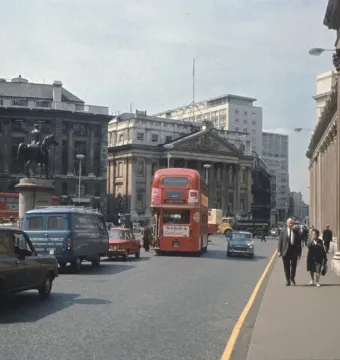
The Equestrian statue of the Duke of Wellington is an outdoor sculpture of Arthur Wellesley, 1st Duke of Wellington, a British soldier and statesman. It stands at the Royal Exchange in London and overlooks Bank junction in the historic City of London. The statue was sculpted by Francis Leggatt Chantrey. It commemorates Wellington’s assistance to the City of London in helping ensure that a bill was passed to allow the rebuilding of London Bridge. The base of the statue also serves as a ventilation shaft for Bank and Monument stations on the London Underground, and it was converted during the expansion of Bank station in 1994.
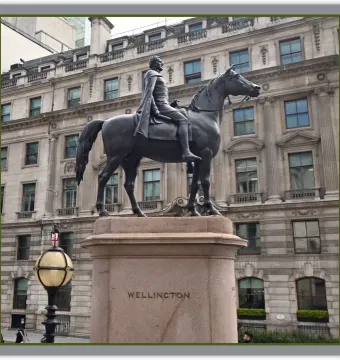
© Loco Steve · CC BY-SA 2.0
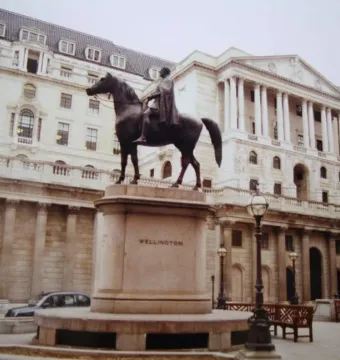
June 2000 © Gary Todd · CC0
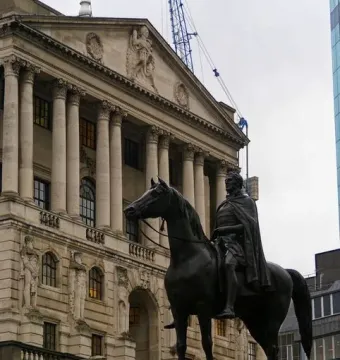
January 2009 © Txllxt TxllxT · CC BY-SA 4.0
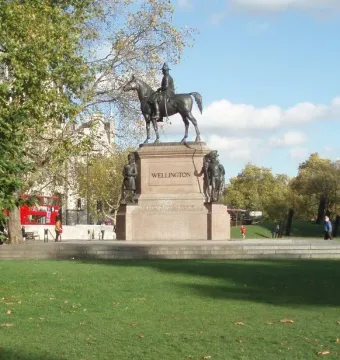
October 2010 © N Chadwick · CC BY-SA 2.0
March 2019 © Victor Grigas · CC BY-SA 2.0
Identification | |
| Title | Equestrian statue of the Duke of Wellington |
| Subject | Arthur Wellesley, 1st Duke of Wellington |
| Type | Equestrian statue |
Historical context | |
| Depicted person's roles | British soldier and statesman |
| Depicted person's significance | Remembered for his participation in the Peninsular War and the Battle of Waterloo |
| Commemorated event | Battle of Waterloo |
| Connection to Wellington | Wellington led an allied army to victory against Napoleon at Waterloo in 1815 |
| Reason for erection | To show the City's gratitude for Wellington's assistance in passing the London Bridge Approaches Act 1827, which led to the creation of King William Street |
Location and ownership | |
| Location | Royal Exchange, London |
| Setting | Overlooks Bank junction in the historic City of London |
Creator | |
| Sculptor | Francis Leggatt Chantrey; completed after his death by his studio assistant Henry Weekes |
| Completed by | Henry Weekes |
History and restoration | |
| Attendee at unveiling | Frederick Augustus II, King of Saxony, who was in London visiting Queen Victoria at the time |
| Base conversion date | Converted during the 1994 expansion of Bank station |
| Unveiling date | 18 June 1844 |
| Unveiling context | Chosen to commemorate the Battle of Waterloo |
| Unveiled by | Wellington attended the unveiling |
Physical characteristics | |
| Base function | Ventilation shaft for Bank and Monument stations on the London Underground |
| Inscription | "Wellington" is inscribed on each side of the plinth; "Erected 18 June 1844" is inscribed on the ends |
| Plaque | A brass plaque is located at the base of the plinth |
Discovery and provenance | |
| Associated nearby object | A piece of granite from London Bridge (1825–1967) is placed in the pavement beside the statue by the City of London Corporation |
| Related historical note | The bridge's elevation stone was re-erected over the Colorado River in Lake Havasu City, Arizona, in 1971 |
Other | |
| Associated artist mentioned in relation to Wellington | Charles Robert Leslie |
| Related portrait context | While sitting for a later portrait by Charles Robert Leslie, Wellington recalled that Chantrey had told him he had a square head |