
Bronze Soldier of Tallinn
Bronze Soldier of Tallinn is a controversial Soviet World War II memorial in Tallinn, Estonia. Unveiled on 22 September 1947, it consists of a two-metre bronze statue of a soldier in a World War II-era Red Army uniform set against a stonewall structure made of dolomite. The memorial was originally placed in a small park on Tõnismägi above a burial site of Soviet soldiers' remains. In 2007, the Estonian government relocated the monument and the exhumed remains to the Defence Forces Cemetery of Tallinn, though some remains were reburied elsewhere at the request of relatives. The relocation sparked major political tensions, riots, and international reactions.
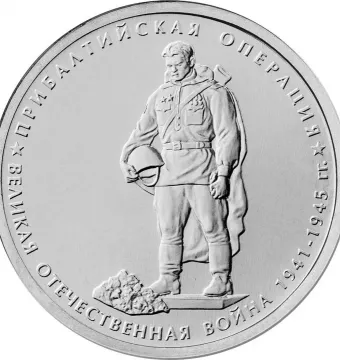
November 2014 © Банк России · Public domain
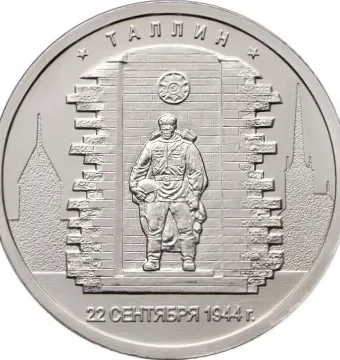
August 2016 © Банк России · Public domain
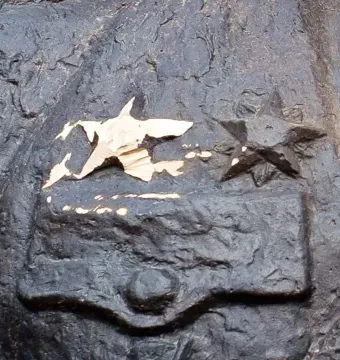
April 2022 © Aaron Filbert · CC BY 2.0
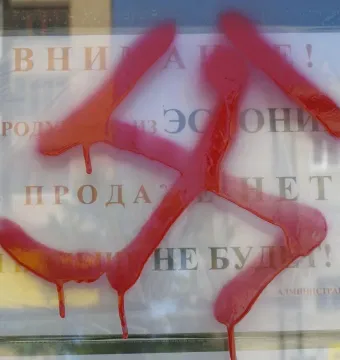
May 2007 © RG72 · CC BY-SA 4.0
© Dorota.the.falcon · CC BY-SA 4.0
Identification | |
| Title | Bronze Soldier of Tallinn |
| Official name | Monument to the Fallen in the Second World War |
| Former official name | Monument to the Liberators of Tallinn |
| Type | Soviet World War II memorial sculpture |
| Other names | Bronze Soldier; Pronkssõdur; Tallinna vabastajate monument; Монумент освободителям Таллина; Tõnismäe Monument; Alyosha (also Aljoša/Aljoša) |
Historical context | |
| Original setting | Built beside a small burial site/mass grave of Soviet soldiers' remains |
| Preceding memorial | Replaced a small blue wooden pyramid topped with a red star, destroyed on the night of 8 May 1946 |
| Original site | Tõnismägi hill in central Tallinn, Estonia, then known as Liberators' Square |
| Historical context | Erected on the third anniversary of the Red Army’s entry into Tallinn on 22 September 1944, which Soviet sources viewed as liberation and Estonian sources as occupation |
| Purpose | Commemorate Soviet dead from World War II and the Soviet liberation/recapture of Tallinn |
Creator | |
| Sculptor | Enn Roos |
| Architect | Arnold Alas |
Discovery and provenance | |
| Associated burials | The monument site contained the remains of Soviet soldiers reburied there in April 1945; the exact number and identities were not established with certainty before the 2007 excavations |
| Official burial record | According to Military Commissariat records, 13 soldiers were reburied there in April 1945 |
| Exhumation findings | 2007 excavations exhumed the remains of 12 persons; initial DNA analysis identified 11 male and 1 female remains |
Physical characteristics | |
| Components | A dolomite stone wall or mastaba-like structure with a bronze soldier statue |
| Figure height | About 2 metres |
| Figure | A soldier in a World War II-era Red Army uniform, shown bowing his head in mourning |
Materials | |
| Statue material | Bronze |
| Wall material | Dolomite |
Appearance | |
| Eternal flame | Installed in 1964; extinguished and removed in 1991 |
| Inscription | In 1994, the name plaques were replaced with plaques reading 'Fallen in the Second World War' in Estonian and Russian |
| Wall details | Originally included plaques bearing the names of the fallen and an image of the Order of the Patriotic War |
Location and ownership | |
| Current location | Tallinn Military Cemetery, Tallinn, Estonia |
| Former location period | 1947–2007 |
| Relocation destination | Military Cemetery of the Estonian Defence Forces in Tallinn, on Filtri Street |
History and restoration | |
| Reburial of remains | The exhumed remains were reburied at the military cemetery; 8 servicemen were reburied on 3 July 2007 |
| Site of earlier burials | The site was chosen in part because Soviet soldiers had been buried there after the 1944 Tallinn operation and in April 1945 |
| Earlier memorial on the site | A previous monument was destroyed by Aili Jürgenson and Ageeda Paavel on the night of 8 May 1946; they were later arrested by the NKVD and sent to the Gulag |
| Relocation of remains | Some identified remains were returned to relatives or reburied elsewhere at relatives' request |
| Demolition and relocation dates | The monument was removed/demolished on 26–27 April 2007 and relocated to the military cemetery on 30 April 2007 |
| Restoration/reconstruction | The memorial was partially rebuilt in reduced form by the end of June 2007 |
| Relocated by | The Government of Estonia |
| Relocation date | April 2007 |
| Unveiling date | 22 September 1947 |
Significance | |
| Symbolic meaning | A politically contested memorial associated with differing Estonian and Russian interpretations of World War II and the Soviet period; seen by many Estonians as a symbol of Soviet occupation and by many Russians/Russophone Estonians as a symbol of Soviet victory over Nazism |
| Controversy and unrest | The 2007 relocation sparked major controversy, two nights of riots in Tallinn known as the Bronze Night, protests at the Estonian embassy in Moscow, and cyberattacks on Estonian organizations |
| Later vandalism | The monument was vandalized again after the Russian invasion of Ukraine in 2022 |
Other | |
| Possible model | Uncertain: suggested by some to be Kristjan Palusalu; Enn Roos denied this and said he used a nearby young worker, possibly carpenter Albert Johannes Adamson; another claim identified Vello Rayanngu/Voldemar Trolla as the prototype |