
The Man by the Sea
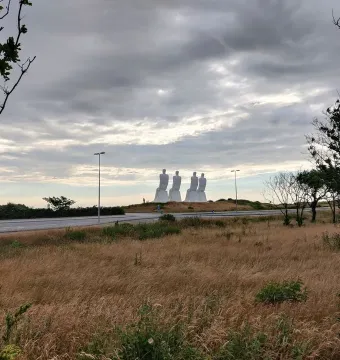
The Man by the Sea is a nine-metre-high sculpture group in white concrete by sculptor, painter, and graphic artist Svend Wiig Hansen. It stands at Sædding Strand northwest of Esbjerg’s city centre, near the Fisheries and Maritime Museum. Commissioned in 1994 to mark Esbjerg’s 100th anniversary as an independent rural municipality, it was unveiled to the public on 28 October 1995. The sculpture has become a landmark of the city and can be seen from the sea in good weather at a distance of up to ten kilometres. Its pose and scale were inspired by Ramses at Abu Simbel, and also by the Moai.
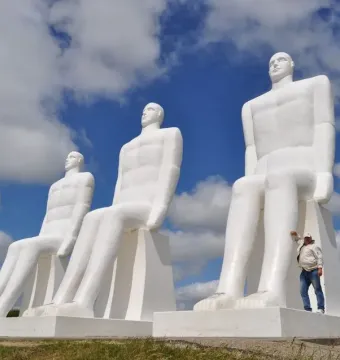
June 2014 © Chron-Paul · CC BY-SA 3.0
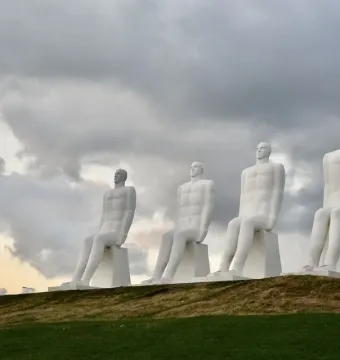
© Jérémy Toma · CC BY-SA 4.0
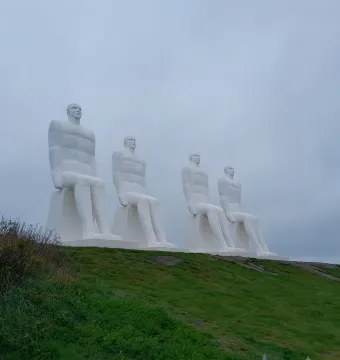
© JakobHosp · CC BY 4.0
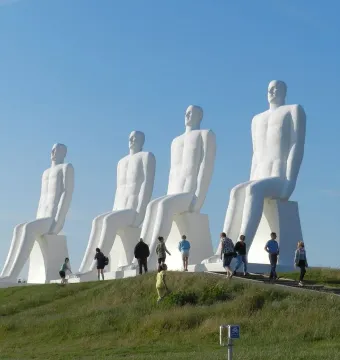
July 2013 © JorindeFTS · CC BY-SA 3.0
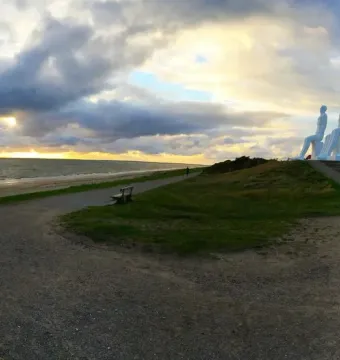
September 2015 © Jazia · CC BY-SA 4.0
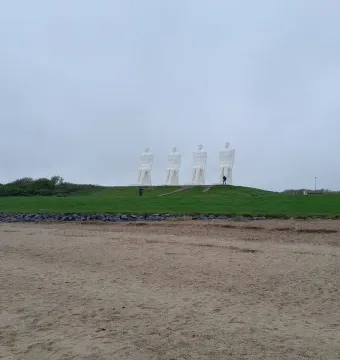
© JakobHosp · CC BY 4.0
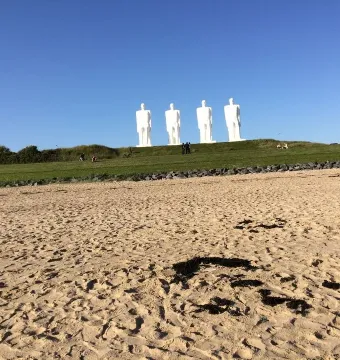
June 2015 © Sabbe · CC BY-SA 3.0
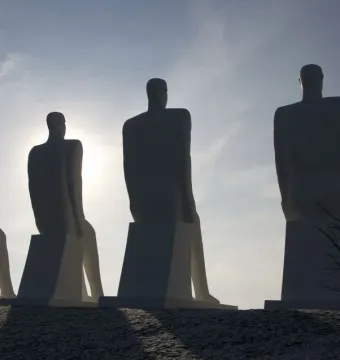
January 2012 © Martin Nikolaj Christensen · CC BY 2.0
· CC BY-SA 4.0
· CC BY-SA 4.0
Identification | |
| Title | Men at Sea |
| Original title | Mennesket ved Havet |
| Alternative title | Man meets the sea |
| Type | Monument; sculpture group |
Historical context | |
| Design year | 1954 |
| Commissioned | 1994 |
| Commissioned for | Esbjerg's 100th anniversary as an independent rural municipality |
| Unveiled | 28 October 1995 |
Creator | |
| Artist | Svend Wiig Hansen |
| Occupation | Sculptor, painter, and graphic artist |
Discovery and provenance | |
| Funding | Municipality of Esbjerg, Statens Kunstfond, and multiple private sponsors |
| Original intended location | Grenen, north of Skagen |
Location and ownership | |
| Location | Sædding Strand, west of Esbjerg, on the southwest coast of Denmark, near Sædding Beach, in front of the Fisheries and Maritime Museum |
Physical characteristics | |
| Height | 9 metres (30 feet) |
| Number of figures | Four |
| Figures | Four seated men |
Materials | |
| Material | White concrete |
Appearance | |
| Color | White |
| Visibility | Visible from the sea in good weather, and from ships entering or leaving Esbjerg harbour at a distance of up to 10 kilometers |
| Depicted subject | Four seated men looking out toward the sea |
Iconography and meaning | |
| Inspirations | Ramses at the Temple of Abu Simbel and the Moai |
| Symbolism | A symbol of Esbjerg |
Significance | |
| Status | A landmark of Esbjerg and one of the area's main tourist attractions |