
Nautae Parisiaci Pillar
The Nautae Parisiaci Pillar is a monument featuring depictions of various deities from Roman and Gallic mythology. It is dated by its dedicatory inscription to the first quarter of the 1st century AD and was likely originally placed in a sanctuary in the Gallo-Roman civitas of Lutetia, now Paris. The pillar is one of the earliest examples of inscriptions in figurative Gallic art. Today, it is held in the Musée national du Moyen Âge.
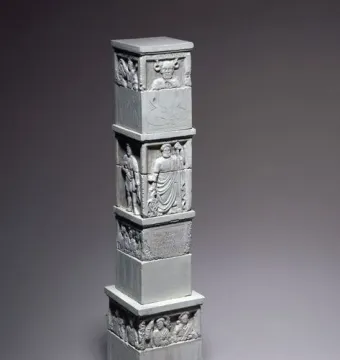
© Renou, Laurent (Paris, 1947), maquettiste · CC0
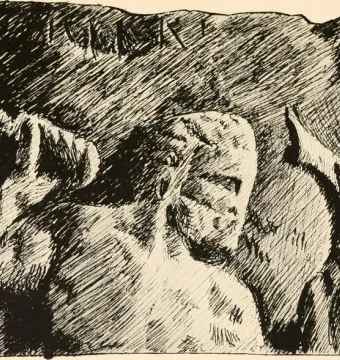
1918 © Internet Archive Book Images · No restrictions
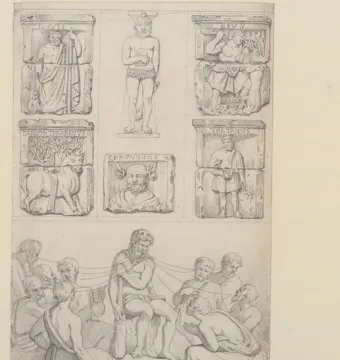
· Public domain
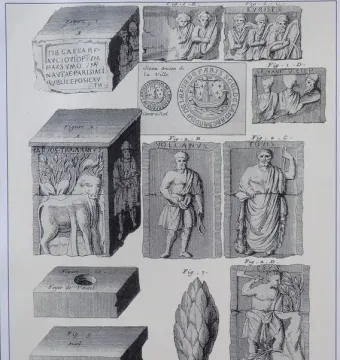
© Michel Félibien · Public domain
February 2016 © Adolphe Martial Potémont · Public domain
Identification | |
| Title | Pillar of the Boatmen |
| Names | Pfeiler der Nautae Parisiaci; Pariser Nautenpfeiler; Pilier des nautes; Il pilastro dei nauti; El Pilar de los Nautas; Pilier des Nautes |
| Type | Monumental Gallo-Roman column |
Historical context | |
| Date | 1st century AD, probably during the reign of Tiberius |
| Original location | Probably a sanctuary in Lutetia (present-day Paris) |
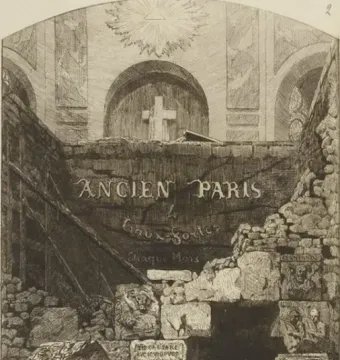
| Discovery | Found in the 18th century during excavations under Notre-Dame Cathedral in Paris, re-used in the 4th-century city wall on the Île de la Cité |
Discovery and provenance | |
| Discovery date | 15 or 16 March 1711 |
| Discovery context | Unearthed during construction of a crypt under Notre-Dame Cathedral in excavations undertaken to fulfill a vow of Louis XIII |
| Publication/reporting | Reported by Baudelot, who described the discovery in a work on the bas-reliefs found in the cathedral |
Creator | |
| Dedicator | The Nautae Parisiaci, the guild of boatmen/shipowners of Lutetia |
| Dedicated to | Jupiter Optimus Maximus |
| Associated people | The Nautae were a brotherhood of shipowners and river mariners of the Parisii, probably fairly wealthy shipowners or merchants |
Materials | |
| Material | Saint-Leu-d'Esserent limestone (Oise stone) |
Physical characteristics | |
| Condition | The pillar is fragmentary; one level survives intact, and of the other three levels only the upper half remains |
| Structure | Originally four stacked square blocks or altars, tapering upward; the exact arrangement of the blocks is uncertain and an alternative interpretation is that they were two pairs of altars |
| Top width | 0.74 m |
| Base width | 0.91 m |
| Height | About 5.24 m |
Technique | |
| Decoration | Bas-reliefs on all four faces; one block bears a dedicatory inscription |
Iconography and meaning | |
| Depicted subjects | Roman and Gaulish deities, including Jupiter, Mars, Mercury, Venus, Fortuna, Esus, Smertrios, Tarvos Trigaranos, Cernunnos, Castor and Pollux, plus other unidentified figures |
| Inscription language | Latin with Gaulish features |
| Inscription content | The inscription dedicates the monument to Jupiter and names Tiberius; it also includes the names of the Nautae, publice posierunt |
| Inscriptions on figures | Named figures include Iurises/Eurises, Senani U[s]eiloni, and Cernunnos, the only undisputed ancient attestation of that divine name |
| Interpretation | The Gaulish divine names appear as deity names in their own right, not as epithets for Roman gods |
| Figure scenes | Cernunnos with antlers and torcs, likely seated cross-legged; Smertrios attacking a snake with a club or sickle; Castor and Pollux beside their horses with spears; Jupiter with spear and thunderbolt; Esus cutting a willow tree with an axe or sickle; Tarvos Trigaranos as a bull with cranes; Vulcan with smith's tools; Mars with spear and sword; Mercury with caduceus; Fortuna and other female companions |
Location and ownership | |
| Current location | Musée de Cluny, displayed in the frigidarium of the Thermes de Cluny |
History and restoration | |
| Later reuse | In the 4th century the stone blocks were broken and reused to reinforce the foundations of the walls along the Seine |
| Reconstruction | The monument has been reconstructed in modern scholarship, including a stacked pillar reconstruction by Jean-Pierre Adam |
Significance | |
| Historical significance | One of the earliest pieces of representational Gallo-Roman art to carry a written inscription; regarded as the oldest dated indigenous monument in Paris and the first known society attested in Paris |
Other | |
| Language of article fragment | German |