
Eternal Silence
Eternal Silence, also known as the Monument to Dexter Graves or the Statue of Death, is a monument in Chicago’s Graceland Cemetery. Created by American sculptor Lorado Taft in 1909, it features a bronze sculpture placed on black granite with a backdrop. The monument commemorates Dexter Graves, who led thirteen families from Ohio to settle in Chicago in 1831. Funds for the work came from the will of Graves’s son Henry, who died in 1907. The sculpture has been cited as one of Taft’s most important works, and its image has influenced other artists. A popular legend says that looking into the hooded figure’s eyes reveals a vision of one’s own death.
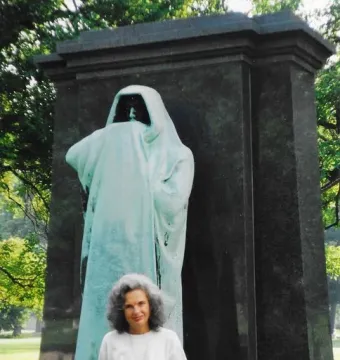
January 2000 © Onasill - Bill Badzo - 144 Million Views · CC BY-SA 2.0
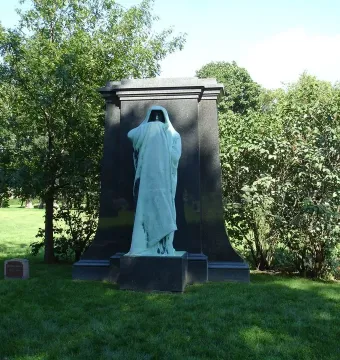
August 2011 © IvoShandor · CC BY-SA 3.0
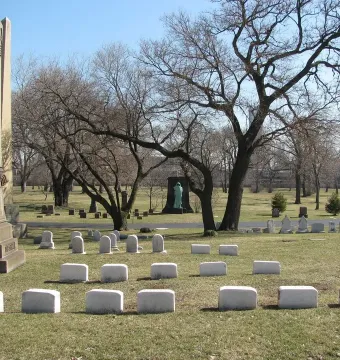
March 2009 © swimfinfan · CC BY-SA 2.0
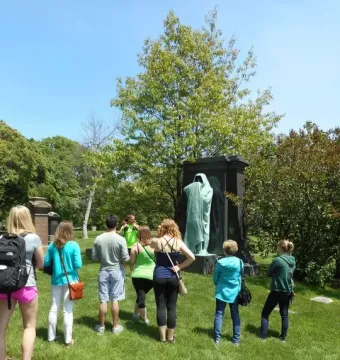
May 2018 © Marlin Keesler · CC BY 2.0
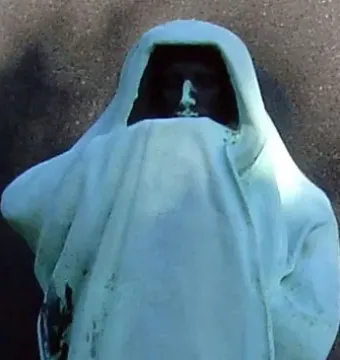
August 2011 © Chicago,_Illinois_Eternal_Silence1.jpg · CC BY-SA 3.0

Identification | |
| Title | Eternal Silence |
| Original-language title | Silencio eterno |
| Type | Monument |
| Alternative names | Dexter Graves Monument; Statue of Death |
Historical context | |
| Date created | 1909 |
| Dexter Graves death date | 29 April 1845 |
| Dexter Graves birth | circa 1793 |
| Dexter Graves historical note | Led a group of 13 settler families from Ohio to Chicago in 1831 |
| Commemoration timing | Graves died 75 years before the sculpture was created and 16 years before Graceland Cemetery was founded |
Creator | |
| Artist | Lorado Taft |
| Artist nationality | American |
| Caster | Jules Bercham |
Location and ownership | |
| Location | Graceland Cemetery, Chicago |
| Commemorated person | Dexter Graves |
Discovery and provenance | |
| Additional bequest | $40,000 for a monument to Henry Graves's favorite racehorse, Ike Cook |
| Unrealized related monument | A monument to Ike Cook was planned for Washington Park beside a drinking fountain for horses, but it was never realized despite a model being made |
| Replacement work | In 1920, Fountain of Time by Lorado Taft was built in its place |
| Henry Graves death year | 1907 |
| Burial relocation | His body was presumably moved from the old City Cemetery, now the site of Lincoln Park |
| Funding | Funded by the will of Henry Graves; $250,000 was provided for the monument |
Physical characteristics | |
| Height | 3 meters |
| Figure | A hooded and draped figure |
Materials | |
| Sculpture material | Bronze |
| Base material | Black granite |
| Composition | The bronze figure stands on black granite with a black granite backdrop |
Technique | |
| Foundry inscription | Am. Art Bronze Foundry J. Bercham -Chicago- |
| Signature | Taft engraved his signature on the north side of the pedestal |
Appearance | |
| Surface condition | Heavily oxidized with a green patina |
| Style | Art Nouveau |
Iconography and meaning | |
| Iconography | Based on traditional depictions of the Grim Reaper |
| Related artistic parallels | Similar to the funeral procession on the Tomb of Philip the Bold in Dijon and Augustus Saint-Gaudens's Adams Memorial in Washington, D.C. |
| Influence | Shaped by Taft's own ideas about death and eternal rest |
History and restoration | |
| Former maintenance | The cemetery previously polished the statue to restore its original bronze shine |
| Current maintenance | The green patina is now left on the sculpture |
| Public reaction | The polishing drew complaints and requests to keep the green sheen |
Significance | |
| Assessment in literature | Listed by Ada Bartlett Taft in Lorado Taft; Sculptor and Citizen (1946) as one of the artist's most important works |
| Reputation | Considered Graceland Cemetery's most unforgettable monument |
| Later artistic influence | Images of the sculpture have been used in other works of art, including by Claes Oldenburg |
| Folklore | A local legend says that looking into the statue's eyes causes a vision of one's own death |